

Hair conditioner fragrance evaluation should follow the stages users actually experience: the product in the container, application, rinsing, dry hair and a later observation such as the next day. A pleasing jar opening does not guarantee the preferred dry-hair scent. For B2B development, compare suitable fragrance concentrates in a controlled conditioner system and record character, intensity and unwanted notes separately at each stage.
Define the product and the evaluation endpoint
A rinse-off conditioner and a leave-in product create different exposure and use conditions. Specify the intended product, base, fragrance loading and target experience before selecting samples. Givaudan describes fragrance performance as a sequence of consumer-use moments rather than one isolated bottle observation. That principle supports stage-based evaluation, but its technology descriptions are not evidence that any particular sample deposits or lasts on your hair substrate. State the outcome you want to test without turning it into a promised claim. Givaudan: fragrance performance across the product-use journey
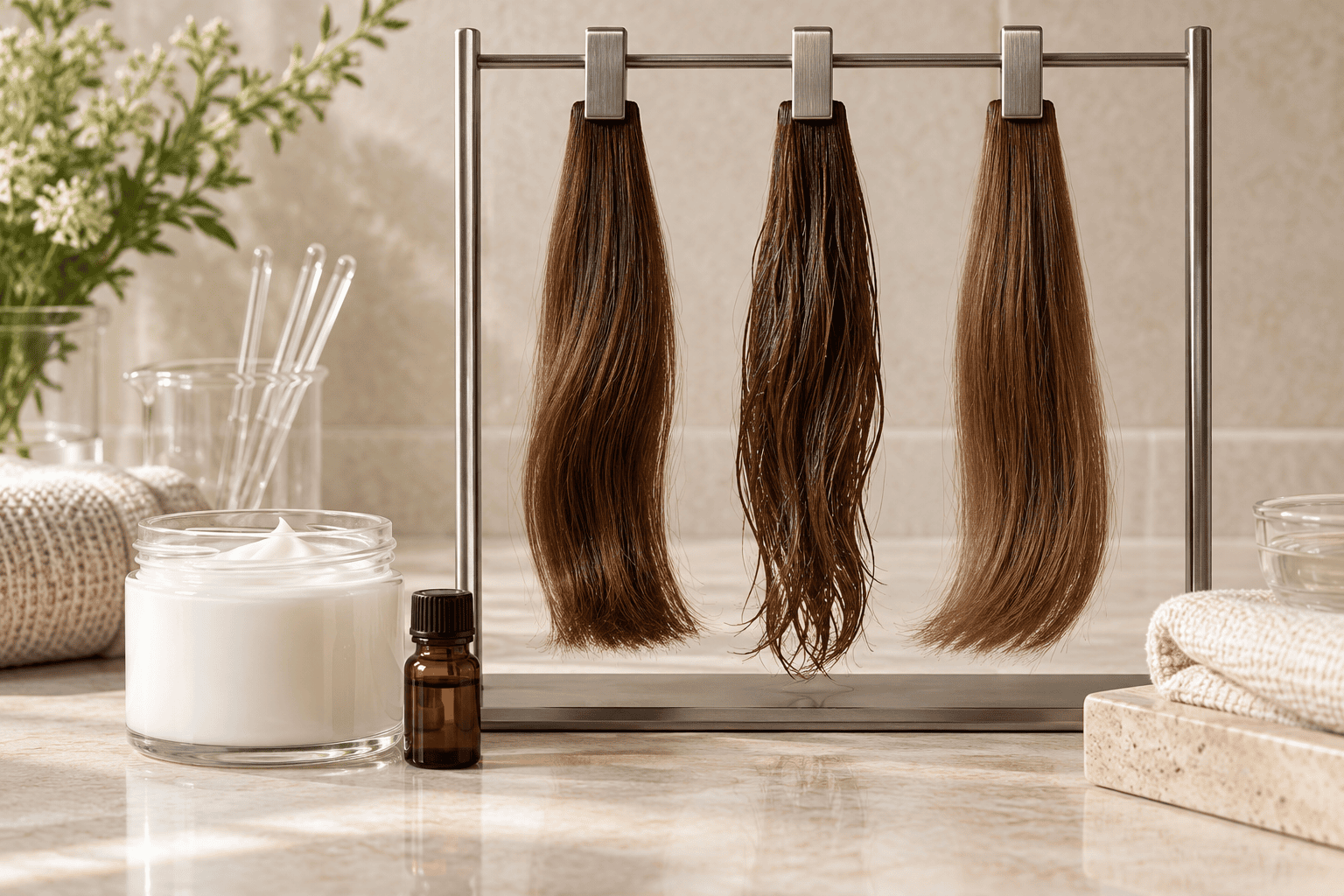
Use matched hair tresses for a controlled first comparison
For an internal development screen, use comparable tresses with documented hair type, treatment history and preparation. Keep the tress mass, cleansing step, product dose, contact time and rinse procedure consistent. Include the same unfragranced conditioner when useful to identify the base odor. Do not apply neat fragrance concentrate to hair or skin. Any human-use study requires an appropriately assessed finished formulation and a suitable protocol; a bench comparison is not a substitute for product safety review.
Record wet-hair observations without changing the procedure
Evaluate the agreed application and post-rinse stages at consistent times. Note whether the fragrance remains balanced, becomes too strong or reveals an off-note that was not obvious in the container. Keep water conditions and handling comparable so differences are not caused by the process. Avoid changing fragrance loading during the same comparison unless the trial is explicitly designed for that purpose. A preference for the wet stage should not automatically outweigh an unsuitable dry-hair result if the latter is central to the brief.
Control drying before comparing the dry-hair scent
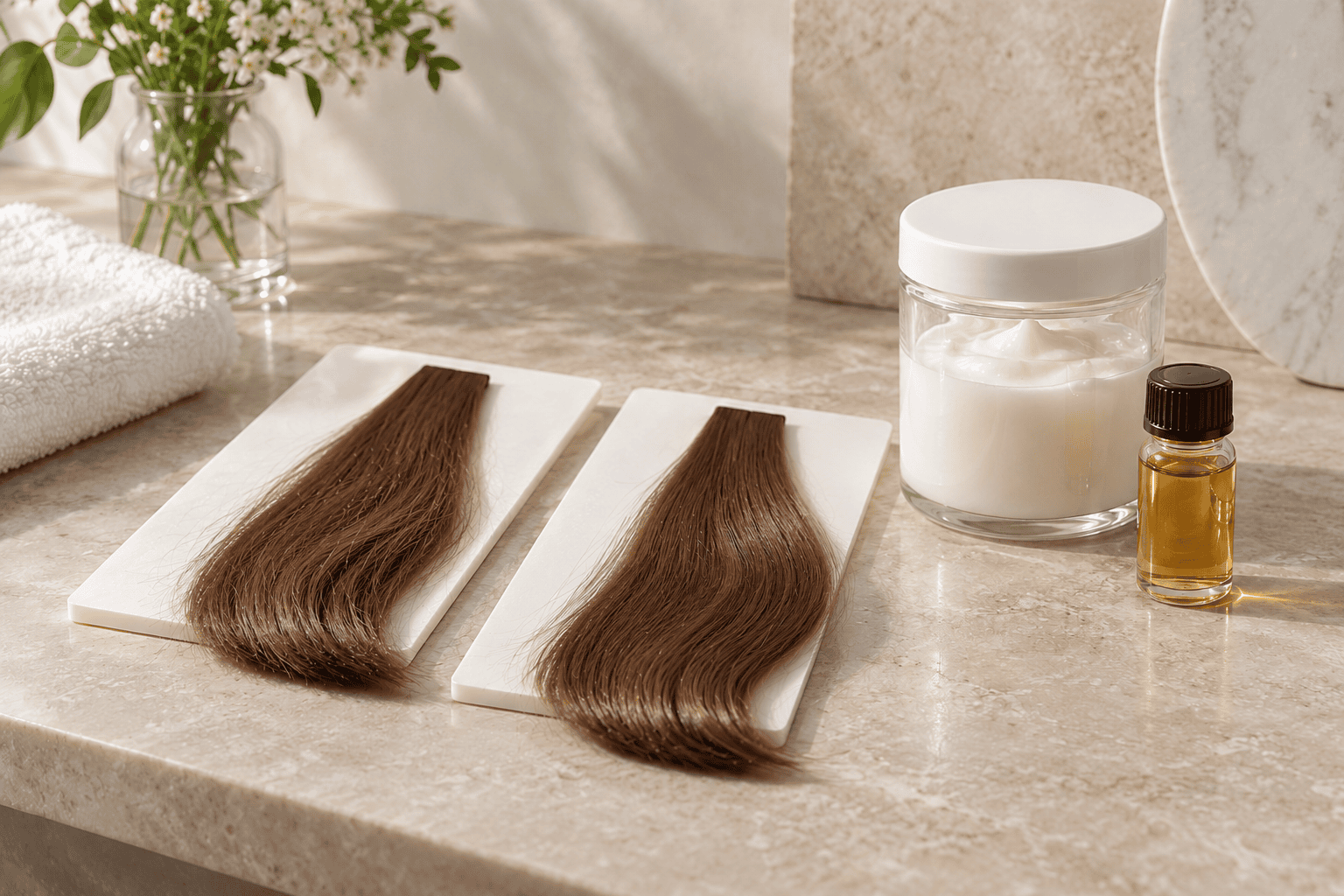
Use the same defined drying method for all candidates and record it. If a blow-drying procedure is relevant, standardize the conditions sufficiently for a fair comparison rather than varying heat and duration casually. Assess intensity and recognizable character after the selected drying endpoint. The concentrate that gives the loudest application signal may not deliver the most suitable dry-hair profile. Treat such differences as observations requiring explanation, not automatic proof of a specific deposition or encapsulation mechanism.
Make the next-day check reproducible
Store or condition the tresses in a way that minimizes cross-contamination and record the elapsed time, environment and any handling. Assess both close-range character and the agreed noticeability condition. Next-day is a useful planning label only if the actual interval is recorded. The table below is a suggested framework, not a universal standardized method or evidence of measured performance. Replicate the comparison as appropriate, and investigate inconsistent results before approving a sample or making a persistence claim.
| Stage | Keep consistent | Record separately |
|---|---|---|
| Application | Product dose and contact procedure | Character and intensity |
| After rinse | Water and rinse conditions | Residual fragrance and off-notes |
| Dry hair | Drying method and endpoint | Identity and noticeability |
| Later check | Elapsed time and storage conditions | Persistence against the agreed endpoint |
Send stage-specific feedback to the fragrance supplier
Instead of saying the scent disappears, identify whether the loss occurs during rinsing, drying or the later observation, and whether intensity or identity is the problem. Share the base constraints and the desired wet-to-dry balance with SHEAIN when requesting conditioner fragrance samples. The supplied product is a fragrance concentrate, not a finished conditioner. Availability, formula compatibility and supporting documents must be confirmed for your project, and commercial claims should reflect actual validated finished-product evidence.
Frequently Asked Questions
Can I choose conditioner fragrance from the jar alone?
Jar evaluation is a useful first screen, but it does not establish the wet, rinsed or dry-hair experience. Include the stages relevant to your product brief.
Does a next-day scent prove deposition technology?
No. A sensory observation alone does not identify the mechanism. Technical claims need evidence appropriate to the actual formulation and technology.
Can the same protocol be used for leave-in conditioner?
Not unchanged. Adapt the dose, application procedure, assessment stages and safety review to the actual product and its intended use.
Related Guides and Application Support
- Shampoo Fragrance Performance: Surfactants, Rinse-Off and Hair Retention
- Fragrance Sensory Evaluation: How to Build a Reliable Sample-Scoring Process
Contact SHEAIN with your end-use application, target market and scent brief to discuss fragrance oil concentrate samples.


