

Fragrance projection vs longevity compares two different observations: how noticeable a scent is at a defined distance and how long it remains detectable under defined conditions. A fragrance can be quiet but persistent, or very noticeable initially and short-lived. For B2B selection, use separate evaluation questions so a strong opening does not conceal a weak later-stage experience, or a long dry-down does not get mistaken for room-filling performance.

Define the experience before choosing a test
Projection means little without specifying the product, distance, environment and time after use. Longevity also needs an endpoint: detectable at close range, still recognizable or still above an agreed intensity threshold. Decide which of these matters to the customer. Givaudan discusses fragrance performance across different stages of product use, reinforcing the need to assess the relevant moment rather than one generic strength score. Its commercial technologies are examples, not evidence that a particular SHEAIN sample has those capabilities. Givaudan: fragrance performance across the product-use journey
Keep distance and elapsed time as separate variables
For projection, compare samples at the same planned observation time and distance under similar room conditions. For longevity, compare the same type of observation at several defined times. Do not change the room, dose and distance together and then attribute the result to the fragrance. Record airflow, temperature and other conditions relevant to the application. The exact protocol should be selected by the responsible team; the framework here is illustrative and is not a validated method for every product category.
Measure recognizability as well as intensity
A sample may remain detectable while losing the characteristic citrus or floral identity that justified selecting it. Ask assessors to record intensity and whether the intended scent character is still recognizable. A persistent generic base is not the same outcome as a persistent preferred signature. Include an unfragranced product control when useful to distinguish the base odor. Avoid assigning performance from a concentrated bottle or from a fragrance family name; neither supplies the finished-product evidence the purchasing decision needs.
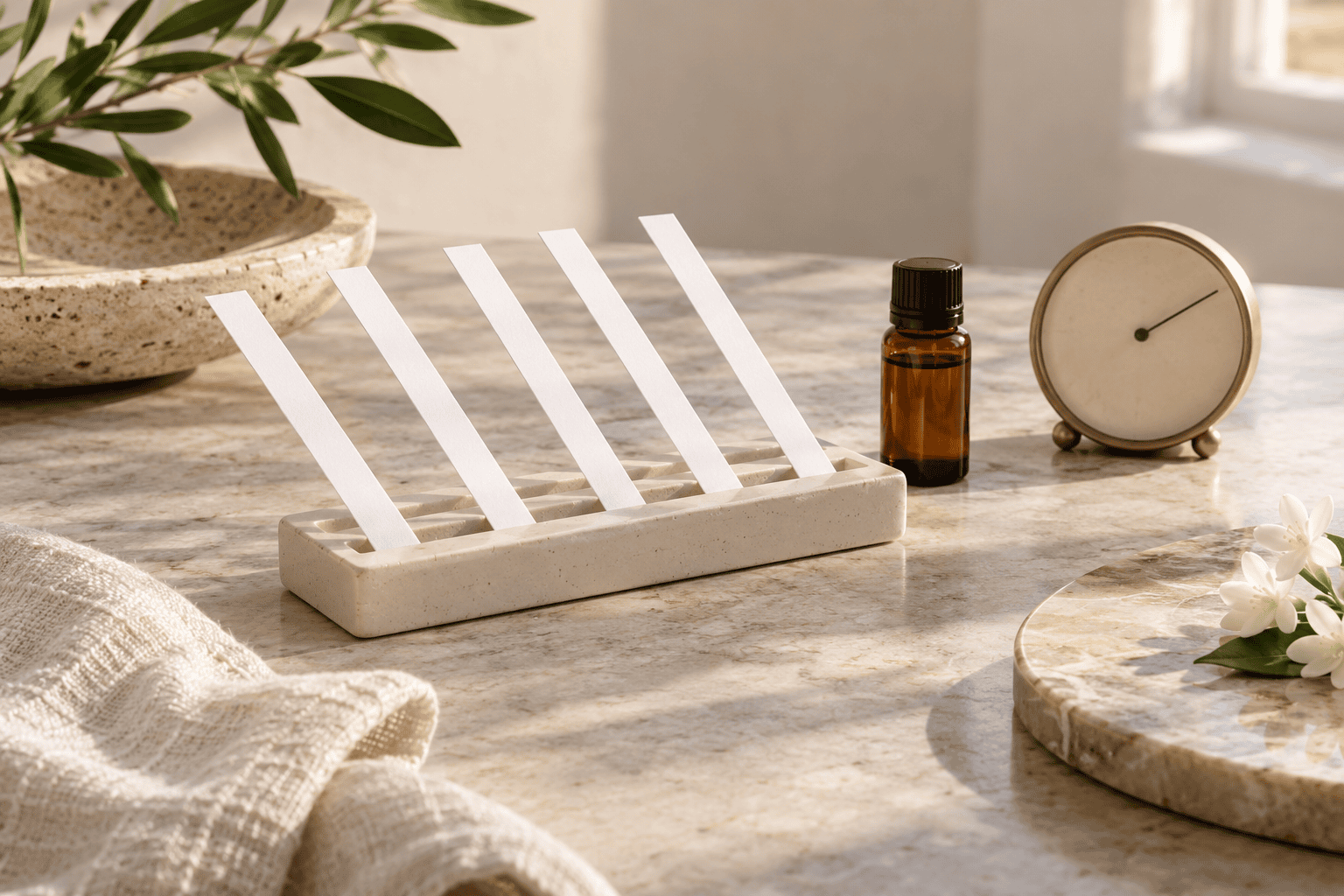
Reduce bias and sensory fatigue during comparison
Blind-code samples, limit the number assessed in a session and allow appropriate fresh-air breaks. Standardize the order or rotate it across sessions so the first sample does not always receive an advantage. Avoid repeated close sniffing that changes the assessor’s exposure before a distance assessment. Record observations before discussing preferences with the group. If assessors disagree, inspect the conditions and repeat the comparison rather than forcing a precise-sounding average from inconsistent observations. The objective is a reproducible decision, not a dramatic performance claim.
Use a two-axis decision rather than one overall winner
Define acceptable projection and persistence for the specific concept. A subtle leave-on experience may intentionally prioritize a quiet, recognizable dry-down, while another application may need a noticeable early signal. Do not label the quieter sample inferior if it meets the intended use. The table below separates questions that are commonly collapsed into strength. Set acceptance criteria before seeing the results, and keep technical suitability and product safety as independent requirements alongside the sensory decision.
| Question | Control | Record |
|---|---|---|
| Projection | Defined distance and observation time | Noticeability and intensity |
| Longevity | Repeated assessment under defined conditions | Time until agreed endpoint |
| Identity | Consistent reference vocabulary | Whether the intended character remains |
| Preference | Same use context | Liking separately from strength |
Write the supplier brief around the missing behavior
If projection is adequate but later identity disappears, request better retention of the desired character at the relevant stage. If the scent persists but overwhelms the user initially, request a softer opening without losing the preferred dry-down. Those instructions are more actionable than make it stronger. Discuss the actual base, loading and use conditions with SHEAIN when requesting samples. Performance must be established in your application, and no universal number of hours or distance should be promised without supporting tests.
Frequently Asked Questions
Does longer-lasting mean stronger?
No. A low-intensity scent can remain detectable for a long time. State the distance and detection endpoint before comparing persistence.
Will a higher fragrance loading improve both?
Not reliably, and loading changes require technical and safety review. Evaluate a suitable formulation rather than assuming that increasing concentrate solves every performance issue.
Can I compare two oils on blotters only?
Blotters help compare scent development, but the finished product and use conditions need their own assessment. Treat blotter observations as screening information, not final application proof.
Related Guides and Application Support
- Fragrance on Blotter vs Skin: Why Finished Perfume Smells Different
- Reed Diffuser Olfactory Fatigue: Has the Scent Faded or Have You Adapted?
Contact SHEAIN with your end-use application, target market and scent brief to discuss fragrance oil concentrate samples.


