

Looking for vanilla fragrance oil that is not too sweet? Ask for a recognizable vanilla character with a specific limit on sugary, caramel or dessert-like effects. Simply requesting a weaker vanilla can remove the identity you wanted to keep. For a B2B sample brief, separate sweetness, creamy texture and dry pod-like character, then evaluate those dimensions in the product base rather than judging the concentrate alone.

Name the part of sweetness you want to reduce
Too sweet can describe several different impressions: confectionery sugar, cooked caramel, buttery custard or a dense vanilla background. These are not interchangeable complaints. Write down the association that bothers you and the feature you still like. For example, a buyer might want the recognizable warmth of vanilla but not a cake-frosting impression. That gives the supplier a direction to modify without simply making every part of the fragrance quieter. Include one accepted reference and one rejected reference if available.
Compare pod-like, creamy and caramel directions
For an initial selection, request three deliberately separated interpretations: a drier pod-inspired vanilla, a rounded creamy vanilla and a more caramelized gourmand reference. Treat these as descriptive sample directions, not standardized grades. IFF’s vanilla vocabulary also distinguishes woody, creamy and caramelized facets. IFF: vanilla sensory vocabulary That source concerns flavor description; it is not a formula or approval for fragrance use. In this guide, the terms describe smell only. A fragrance concentrate must never be treated as an edible vanilla product.
Keep creamy texture separate from sugary character
A smooth, enveloping impression does not have to be the same purchasing objective as high sweetness. Ask assessors to score creaminess and sugary association independently. If a sample is pleasantly rounded but reads as dessert, record the specific food association rather than rejecting all creamy versions. Conversely, a dry interpretation may lose too much softness for your intended concept. The useful target is a balance that suits the finished product, not the lowest possible score on every sweet-related descriptor.
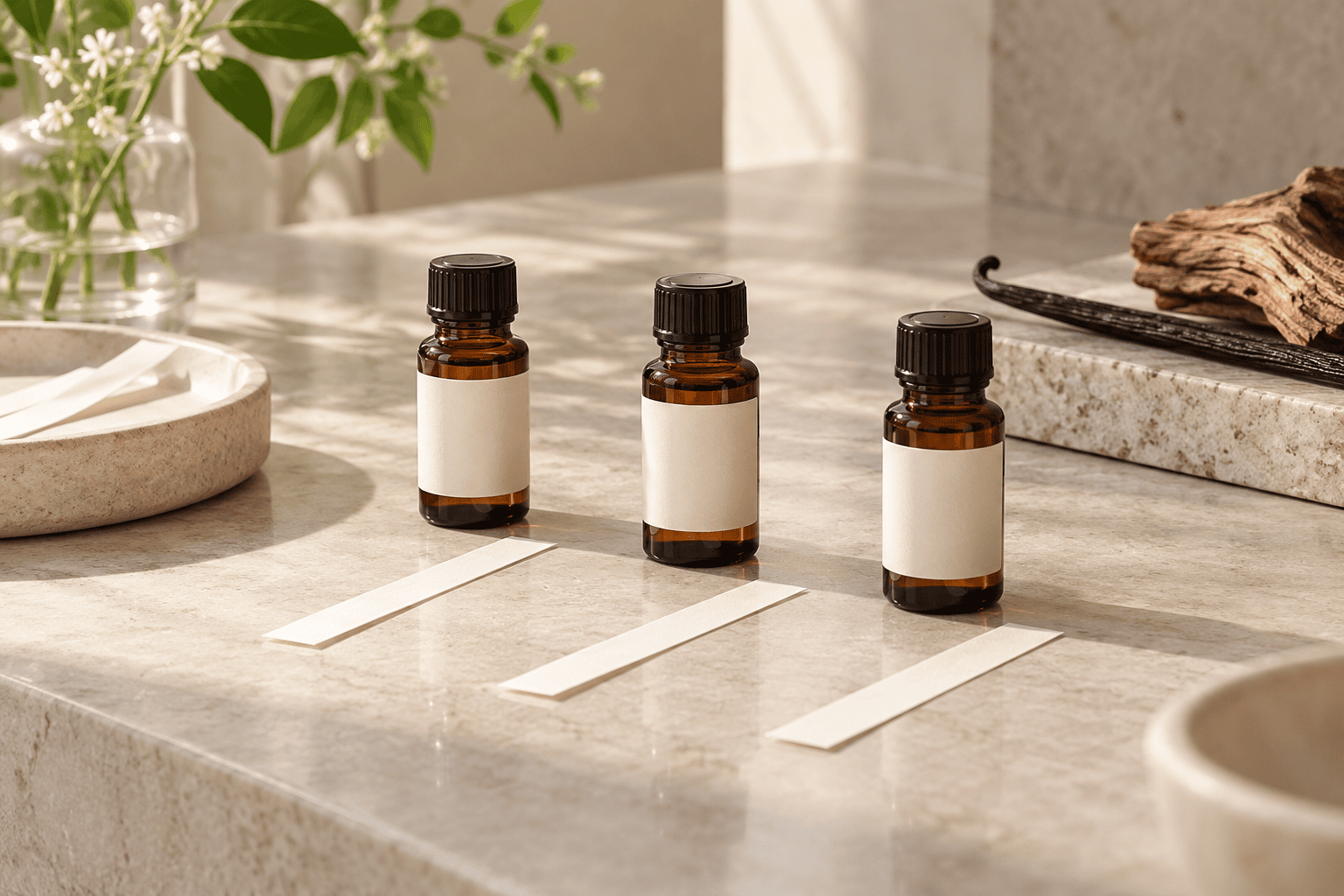
Check the direction in the actual application
Compare candidates in the intended base at a technically reviewed loading, with the same preparation and observation conditions. A fragranced lotion, room product and candle offer different evaluation contexts; approval in one does not qualify the others. Start with a small set of samples so your team can describe differences clearly. This article addresses vanilla scent selection, not the separate question of candle discoloration. Physical stability, safety and packaging suitability still require their own checks before a fragrance is released for production.
Write feedback that preserves the useful vanilla identity
Replace vague comments such as less sweet with a request that identifies both the change and the invariant. An example brief is: keep the recognizable vanilla core and soft finish, reduce caramel and frosting associations, and add a drier pod-like edge without a smoky effect. This is an illustrative brief, not a claim about a stocked SHEAIN formula. Evaluate a revised version against the previous one under the same conditions so the supplier can see whether the requested change actually improved the fit.
| Direction | What to assess | Useful feedback |
|---|---|---|
| Pod-inspired | Dryness and recognizable vanilla | Keep the vanilla; reduce syrupy associations |
| Creamy | Softness versus dessert character | Preserve smoothness without frosting |
| Caramelized | Cooked-sugar impression | Reduce this facet if it dominates |
| Finished product | Fit with the base and use | Compare at the same reviewed loading |
Approve the sample as part of a product specification
Record the selected fragrance code, revision, application, loading and sensory reference together. Do not approve a name such as dry vanilla without retaining the actual accepted sample and its evaluation record. Ask SHEAIN about sample feasibility for your base and market, including the documents needed by your responsible technical team. A sensory preference does not establish a universal use level or ingredient origin. Keep those commercial and technical confirmations separate from the descriptive scent brief.
Frequently Asked Questions
Does less sweet mean less fragrance?
No. Lower intensity may reduce the entire scent rather than its sugary character. Discuss a profile change separately from a change in loading.
Is vanilla fragrance oil the same as vanilla extract?
No. These are different product categories. A vanilla fragrance name describes an odor direction and does not establish food suitability or natural extract content.
Can SHEAIN supply a dry vanilla sample?
Share your application, preferred reference and unwanted facets for a feasibility discussion. Availability and final suitability must be confirmed for the specific project.
Related Guides and Application Support
- Custom Fragrance Development: From Creative Brief to Approved Formula
- Fragrance Sensory Evaluation: How to Build a Reliable Sample-Scoring Process
Contact SHEAIN with your end-use application, target market and scent brief to discuss fragrance oil concentrate samples.


