

A coconut fragrance oil scent profile can suggest fresh white flesh, creamy coconut milk or a familiar tropical lotion. The right choice depends on which association belongs in your product. If a sample reminds your team of sunscreen, that does not prove it contains sunscreen ingredients: it may simply resemble a fragrance style they recognize. Clarify the unwanted association before requesting a replacement sample.

Start with the coconut association you intend to communicate
A product named fresh coconut may disappoint if the fragrance immediately suggests sweet tropical dessert. A rich body-care concept may benefit from a creamy direction that feels wrong in a light air-care product. Before assessing samples, write a short target statement covering freshness, creaminess, sweetness and floral background. Avoid treating a coconut photograph on a mood board as a complete fragrance specification. Different team members may imagine coconut water, flesh, milk or beach lotion from the same image.
Understand why a lotion association can appear
The impression can come from the overall creamy, floral and sweet balance rather than one identifiable ingredient. Givaudan describes one perfumery material using coconut-milk and creamy facets. Givaudan: Methyl Laitone olfactive profile This is vocabulary context, not evidence that the material is present in a SHEAIN blend. Do not infer formula composition by smelling a finished fragrance. For sample feedback, specify whether the unwanted effect is powdery cosmetic softness, heavy creaminess or a tropical floral background, because each suggests a different creative correction.
Separate fresh flesh, milky and tropical directions
Request a small set with genuinely different briefs. A flesh-inspired direction can emphasize a cleaner, less dessert-like impression; a milky version can prioritize roundness; a tropical interpretation can include a more obvious floral or fruity setting. These are suggested comparison categories rather than universal definitions. Record how clearly each sample still reads as coconut after its opening. A very fresh candidate may meet the lightness target while losing the main scent identity, which is a different compromise from excessive sweetness.
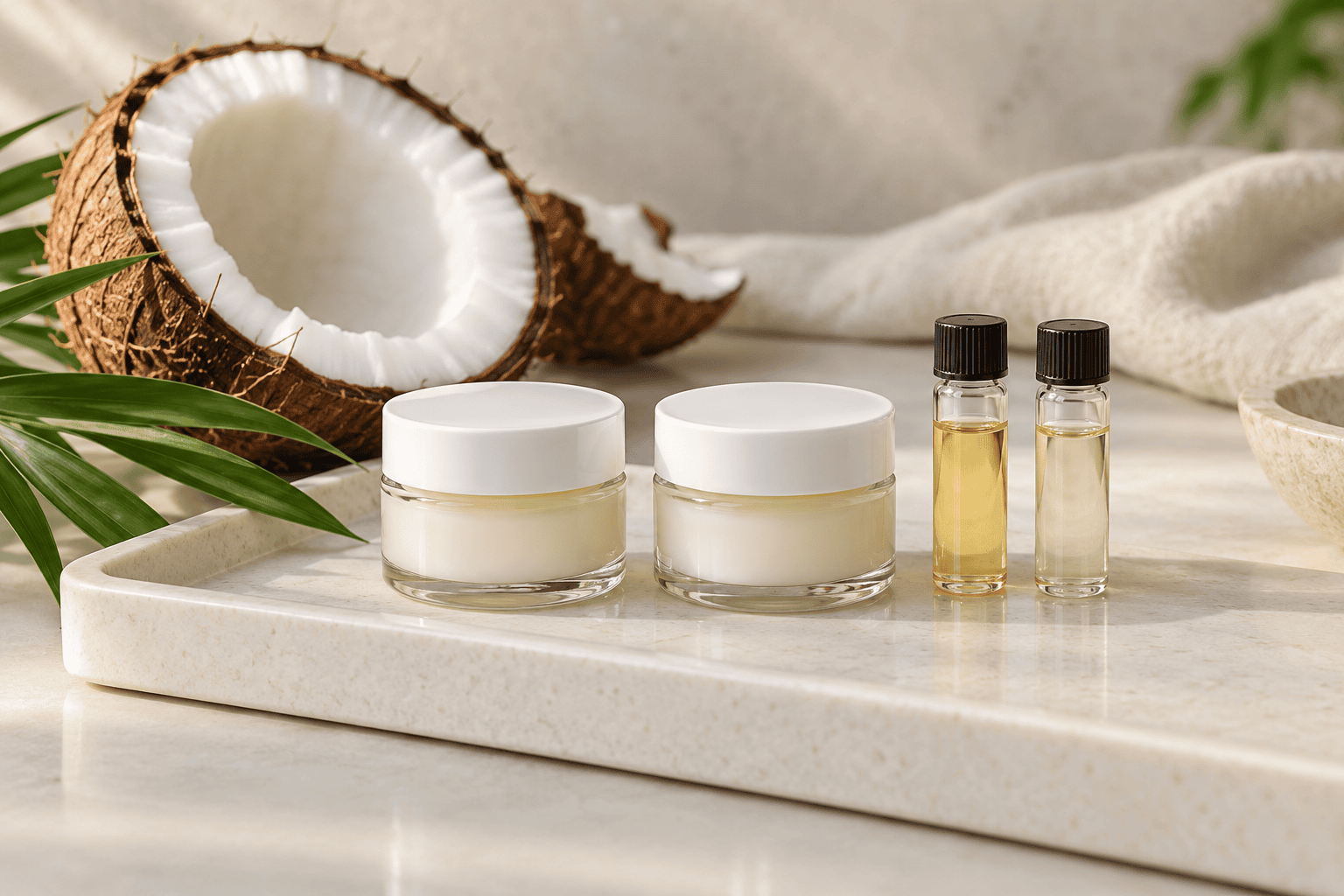
Evaluate the base before deciding that the fragrance is wrong
An unfragranced product control helps your team distinguish the base’s own odor from the fragrance effect. Compare samples at the same technically reviewed loading and allow the same preparation interval. A cream, surfactant product or air-care carrier can present the fragrance differently. Note the stage at which the lotion association becomes noticeable: opening the package, spreading the product where appropriate, or evaluating the later odor. Describe that observation without claiming a chemical cause that has not been investigated.
Give the supplier a direction, not just a rejection
Useful feedback might read: retain coconut recognition, reduce powdery tropical-lotion associations and avoid adding a dominant pineapple effect. Another brief might intentionally request a softer milky coconut for a rich cosmetic concept. Use the table as an illustrative selection aid and keep overall liking separate from technical suitability. A formula can be enjoyable yet inappropriate for the application. Ask for controlled revisions so the next sample has a clear purpose rather than collecting several near-identical coconut options.
| Sample direction | Main comparison | Possible adjustment |
|---|---|---|
| Fresh flesh | Coconut recognition without heavy dessert | Keep freshness while restoring identity |
| Milky coconut | Creamy texture versus sweetness | Soften sugary facets |
| Tropical floral | Coconut versus floral background | Reduce floral dominance if unwanted |
| Lotion association | Specific powdery or creamy impression | Describe the association and stage |
Confirm the concentrate and end-use requirements separately
A coconut fragrance is not automatically coconut oil, a natural extract or a finished skin product. Request the relevant composition declarations and application documentation from the supplier; the name alone proves none of those properties. SHEAIN supplies fragrance concentrates, so provide the intended base, market and sensory direction when discussing samples. The finished-product team remains responsible for its formulation and required assessments. Do not add food coconut milk or other kitchen materials to a commercial fragrance concentrate to change its character.
Frequently Asked Questions
Why does my coconut sample smell like sunscreen?
Your team may associate its creamy-floral balance with scented sun-care products. That observation is not an ingredient analysis or evidence of sun protection.
Can a coconut fragrance be light rather than sweet?
That is a reasonable sample brief, but the actual result needs evaluation. Ask for a cleaner coconut direction and state which sweet or cosmetic facets to avoid.
Does coconut fragrance oil contain coconut oil?
Not necessarily. A scent profile is not an ingredient declaration. Confirm any required ingredient or origin claims through supplier documentation.
Related Guides and Application Support
- Fragrance Sensory Evaluation: How to Build a Reliable Sample-Scoring Process
- Custom Fragrance Development: From Creative Brief to Approved Formula
Contact SHEAIN with your end-use application, target market and scent brief to discuss fragrance oil concentrate samples.


