

A cherry fragrance oil scent profile can feel fresh and fruity, rich and jam-like, or strongly almond-associated. If a sample reminds your team of syrup, define whether the problem is sweetness, cooked-fruit density or the almond-like accent. Asking only for less cherry can remove the recognizable identity while leaving the unwanted background. A more precise brief makes the next sample round useful.
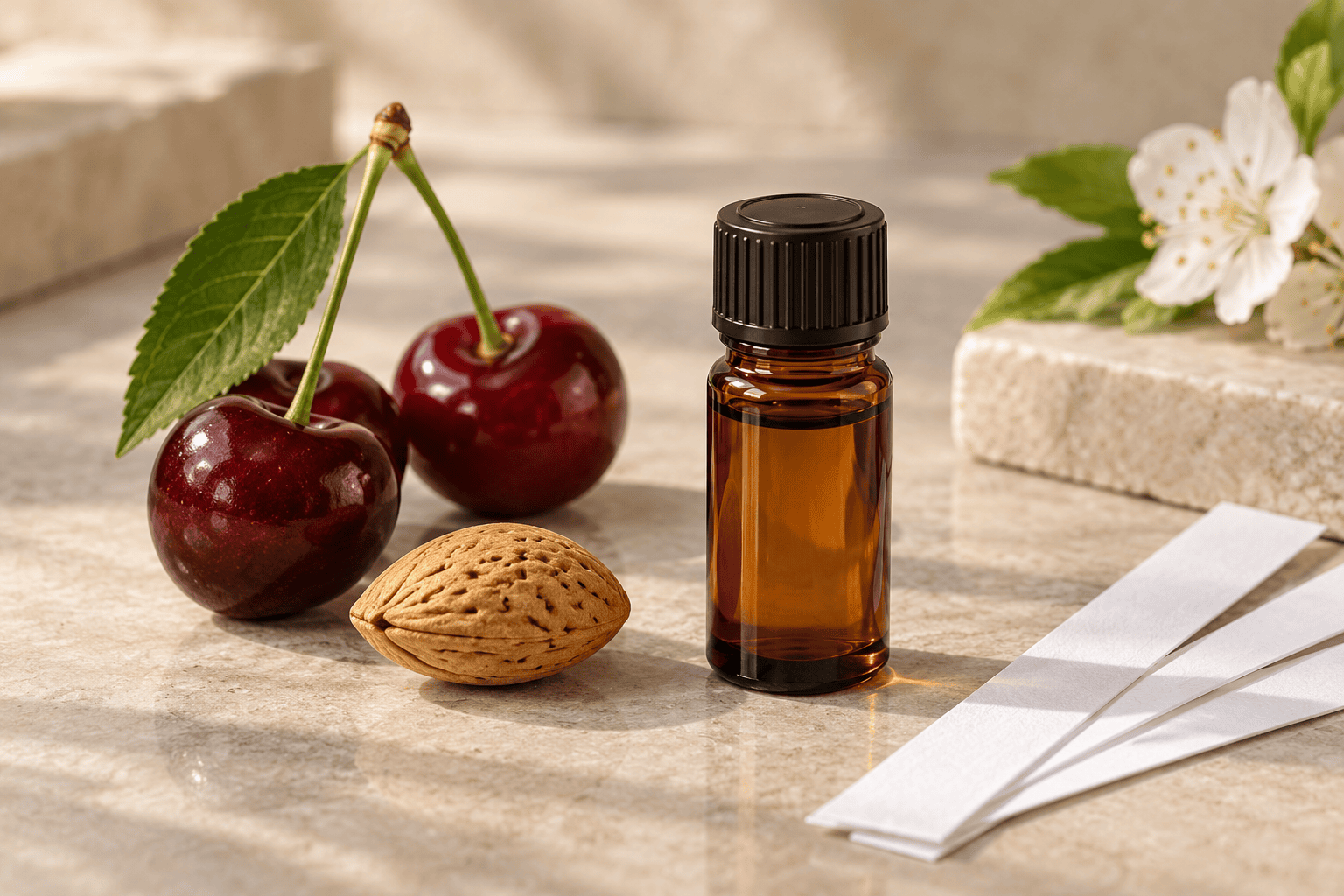
Decide which cherry image belongs in the product
Fresh fruit, preserved fruit and cherry dessert communicate different concepts. Choose the central image before comparing candidates, and record the associations that would conflict with the intended positioning. A dark color in the packaging does not require a heavy syrupy fragrance. Likewise, a light package does not prove customers want a very sharp fruit opening. Use the product concept and a relevant reference to set the target rather than treating visual design as a complete sensory specification.
Separate almond association from overall sweetness
Symrise lists almond and cherry among the odor descriptors for benzaldehyde. Symrise: Benzaldehyde DD olfactive profile This explains why the vocabulary can overlap; it does not prove that ingredient is present in a particular blend. Ask assessors to score almond-like character separately from sugary or jammy impressions. A revision that reduces sweetness alone may leave the almond association unchanged. Do not use an odor resemblance to infer allergens, natural content or chemical composition. Those questions need the actual concentrate documentation and a qualified review.
Describe syrupy character in terms the supplier can act on
A syrup impression might mean dense sweetness, cooked fruit or a familiar medicinal association. Ask the team which description is closest and whether it occurs immediately or later. Useful feedback might request a fresher fruit impression while preserving a small cherry-stone accent, or might remove the almond association for a cleaner fruit concept. These are alternative creative briefs, not instructions to add household materials. Avoid trying to correct a commercial concentrate by mixing in fruit juice or food flavorings.
Keep fruit recognition when reducing heaviness
A very restrained candidate may become a generic fruity fragrance with little cherry identity. Compare samples without names visible and ask what character remains after the initial opening. Record recognition separately from liking: a sample can be pleasant but fail the cherry concept. Keep one reference with the desired identity and another showing the unwanted syrupy extreme. That pair gives the supplier a practical range to work within instead of a long list of abstract adjectives with no shared sensory anchor.
Check the finished product rather than the oil alone
Use the intended base, consistent preparation and technically reviewed loading. A cream, wash product or air-care carrier may change the balance that looked promising on a blotter. Compare an unfragranced control when the base has a noticeable odor. Record sweetness, almond association and fruit clarity at the product stages that matter. The table is a suggested selection aid, not a universal formula or a claim of test results. Stability and end-use suitability must still be established separately.
| Direction | What to compare | Potential revision |
|---|---|---|
| Fresh fruit | Recognition without cooked-fruit density | Keep cherry while reducing heaviness |
| Jam-like | Ripe depth versus syrup | Reduce the cooked-sweet association |
| Almond accent | Supporting note versus main impression | Adjust independently from sweetness |
| Application | Balance in the real base | Recheck the selected version in use |
Confirm the fragrance category and accepted version
Cherry fragrance oil is a perfumery concentrate, not an edible cherry flavor or an ingredient for drinks. Share the application, market and desired scent direction with SHEAIN when requesting candidates. Confirm any special composition requirements through documentation, and approve a specific fragrance code and revision. Keep the evaluation record with the sample so the next buyer or production team understands why it was selected. A familiar fruit name is useful for communication but cannot replace a controlled purchasing specification.
Frequently Asked Questions
Why does cherry fragrance sometimes smell almond-like?
Some perfumery odor descriptions overlap between cherry and almond. That resemblance does not identify the actual formula or establish ingredient claims.
Can a cherry fragrance be less sweet?
That is a valid direction to request. Specify which sugary or jammy facets to reduce and which part of the cherry identity to preserve.
Can this fragrance be used as food flavoring?
No. Do not use a fragrance concentrate in food or drinks. Food uses require materials supplied and assessed specifically for that purpose.
Related Guides and Application Support
- Custom Fragrance Development: From Creative Brief to Approved Formula
- Fragrance Sensory Evaluation: How to Build a Reliable Sample-Scoring Process
Contact SHEAIN with your end-use application, target market and scent brief to discuss fragrance oil concentrate samples.


