

Cardamom vs clove fragrance is a useful comparison when a product needs spice but the word spicy is too vague. A cardamom-led brief may seek aromatic lift and a cooler impression, while a clove-led brief may emphasize warm, sweet-spice depth. These are sensory directions, not temperature effects or fixed formulas. The actual samples must be compared in the intended product before choosing a supplier code.
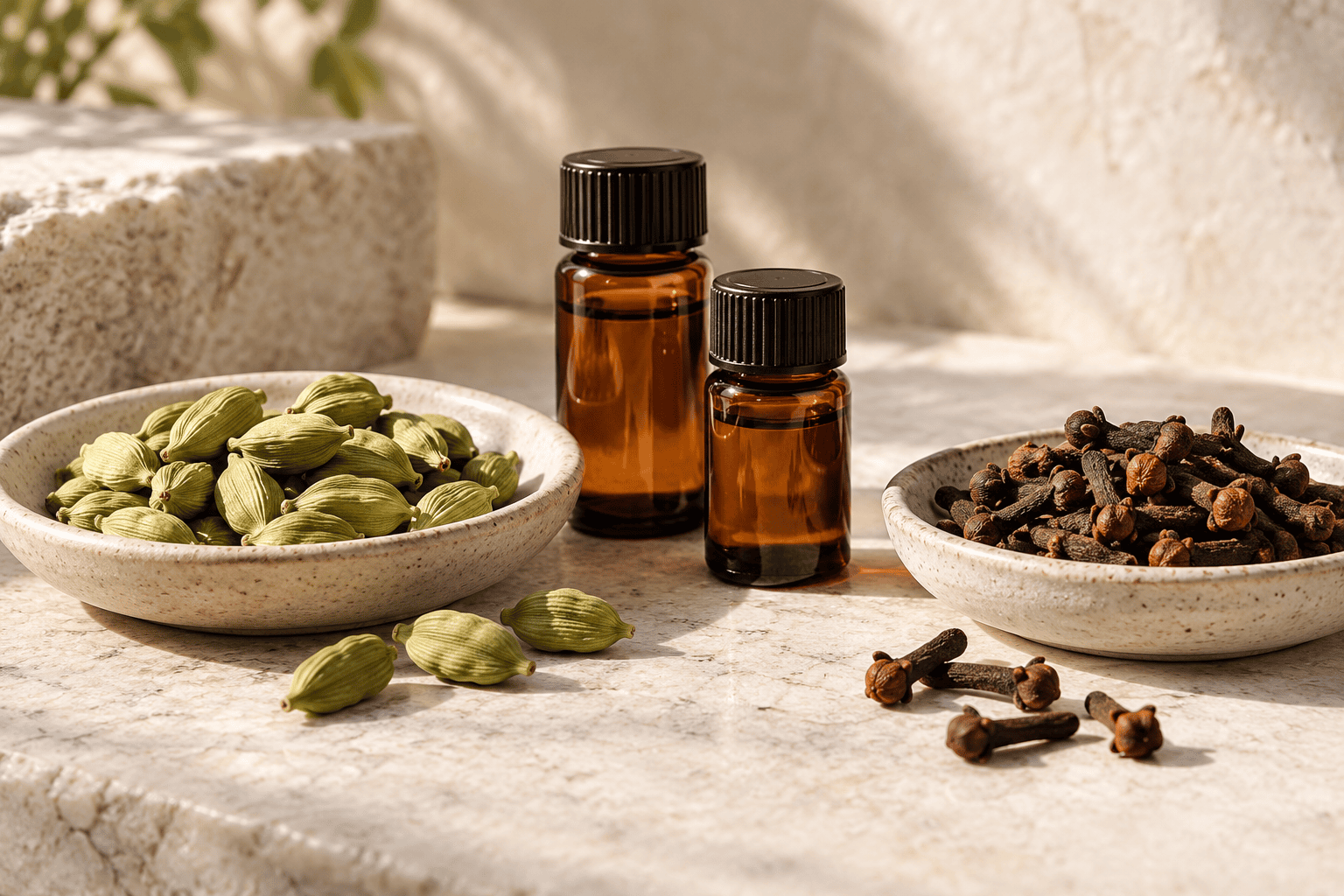
Define whether spice should lift the opening or deepen the background
Ask what role the spice plays in the concept. It might provide a bright contrast to tea, support a woody composition or add warmth to a gourmand idea. A sample can be attractive and still do the wrong job. Record the desired role before discussing specific notes. If the product already has a warm sweet background, a second warm-spice accent may make it feel crowded; a more aromatic direction may be worth comparing. That is a creative hypothesis to test, not a universal blending rule.
Explore cardamom beyond a simple cool-spice label
Firmenich’s cardamom description includes aromatic, camphoraceous and warm-spicy facets. Firmenich: Cardamom Absolute olfactive description This shows why a single cool-versus-warm label is incomplete. It does not establish the ingredients of a SHEAIN sample. Ask the team whether a cardamom-led candidate feels fresh, sharp, woody, sweet or medicinal-associated, and which of those impressions suits the project. Keep the desired aromatic lift distinct from any unwanted sharpness so the next revision can preserve its useful contrast rather than removing the spice entirely.
Describe the clove direction without relying on culinary labels
For a clove-led sample, compare warm spice, sweetness and any strong medicinal or holiday association your panel perceives. Those associations can be useful or undesirable depending on the product. Do not assume that everyone interprets clove as cozy or seasonal. Use an actual reference sample and ask assessors to record their descriptions before discussing them together. If one association dominates, specify it in feedback instead of saying only that the sample is too strong, which leaves the supplier unsure what to change.

Do not convert sensory language into safety conclusions
Cool, warm, soft and sharp describe perceived odor here. They do not establish skin tolerance, irritation potential or any physiological effect. A fragrance named after a culinary spice is not automatically edible or suitable for direct skin application. Ask the responsible technical team to assess the specific concentrate and finished use with the appropriate documents. Do not add ground spices or essential oils on your own to correct a commercial blend; that creates a different composition and can invalidate the original qualification work.
Run a comparison that separates identity from intensity
Prepare shortlisted candidates in the same intended base using technically reviewed levels and consistent conditions. Compare spice recognition, aromatic lift, warm depth and unwanted associations as separate dimensions. A louder sample should not automatically win if it conflicts with the product concept. Include your current fragrance if the goal is a range extension. The table gives a suggested vocabulary framework rather than a fixed sensory standard. Technical compatibility and stability still need their own evidence alongside the panel’s preference.
| Question | Cardamom-led comparison | Clove-led comparison |
|---|---|---|
| Role | Aromatic lift or contrast | Warm-spice depth |
| Unwanted association | Excessive sharpness or medicinal effect | Overly dominant medicinal or seasonal effect |
| Sweetness | Assess separately from freshness | Assess separately from warmth |
| Approval | Actual candidate in the base | Actual candidate in the same base |
Write the purchasing brief around the preferred role
An illustrative request might be an aromatic cardamom-like lift with restrained medicinal associations, or a rounded clove-led background without a dominant seasonal-dessert effect. State the application, market and accepted reference code when discussing samples with SHEAIN. Confirm ingredient-origin requirements independently if they matter to your claims. Approve a specific version and use rather than ordering by spice name alone. This preserves the intended product identity when purchasing, development and production teams hand the project from one person to another.
Frequently Asked Questions
Is cardamom fragrance always cool and clove always warm?
No. Those are useful briefing contrasts, not fixed properties. Blends can emphasize different facets and must be assessed directly.
Does a softer-smelling spice fragrance mean it is safer?
No. Odor softness is not a safety assessment. Suitability depends on composition, use and the finished-product review.
Can I mix spice oils into the supplied concentrate?
Do not assume the original approval covers a modified blend. Discuss a controlled revision with the supplier and responsible technical team.
Related Guides and Application Support
- Custom Fragrance Development: From Creative Brief to Approved Formula
- What Documents Should a Fragrance Oil Supplier Provide? IFRA, SDS, COA and Allergen Declarations Explained
Contact SHEAIN with your end-use application, target market and scent brief to discuss fragrance oil concentrate samples.


