

Fragrance oil for hanging air freshener cards must be evaluated as part of a card-and-package system. A pleasant oil can still create uneven uptake, oily transfer, print changes or disappointing scent release on a particular substrate. Start with the real card material, ink or coating and protective pouch. Qualification of a liquid air-care fragrance does not automatically qualify it for an absorbent hanging card.
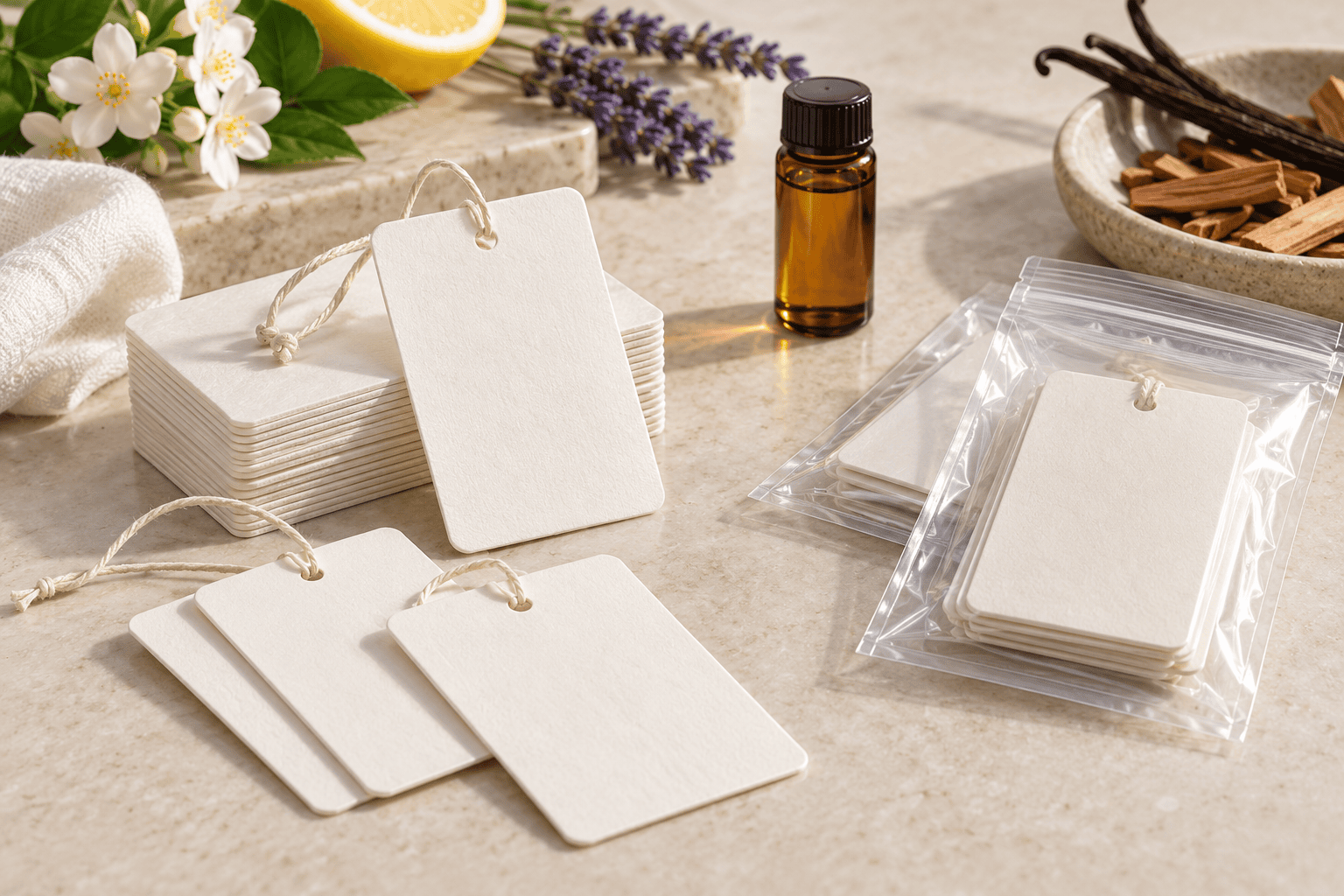
Define the complete card construction before sampling
Record the substrate type, thickness, dimensions, surface treatment, printing method, string or attachment and pouch material. Include the supplier and revision for each component where available. A plain absorbent coupon is useful for early screening, but it cannot establish compatibility with the final printed card. Ask the card converter which properties and evaluation methods it recommends. Share those details with the fragrance supplier so the sample brief concerns the actual system instead of a generic request for an air-freshener oil.
Measure fragrance uptake with a controlled mass record
Use an appropriate balance to record the dry card mass and the mass after the agreed loading and conditioning procedure. Keep that procedure consistent across candidates and record the amount applied, retained and lost where measurable. Do not infer absorbed fragrance from the number of drops alone. The suitable loading depends on the substrate, concentrate and finished design; this article does not prescribe a universal percentage. Begin with a technically reviewed screening range and let the responsible team define acceptance limits before comparing the results.
Inspect bleeding and transfer under relevant conditions
Check both card faces, edges, hanging hole and areas that contact the pouch. Record oily patches, visible migration or transfer using a consistent observation method. Avoid placing an experimental fragranced card directly against a vehicle dashboard, painted surface or other valuable material. If foreseeable contact is part of the product’s intended use, have the responsible team assess it with suitable test pieces and controls. A dry-looking surface at the first observation does not prove that no transfer will occur after storage.
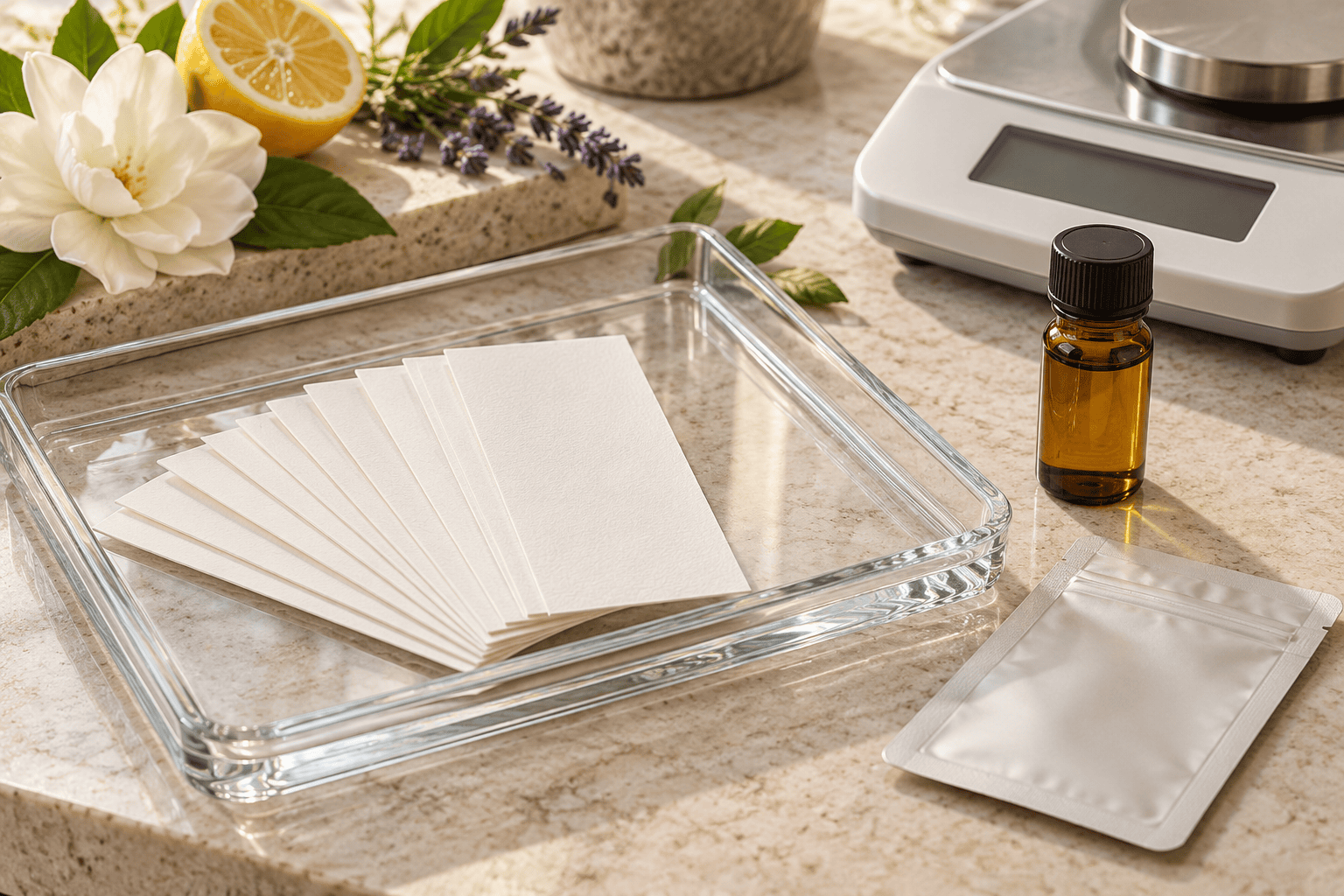
Include print, coating and pouch compatibility
Compare printed and unprinted controls so the team can identify where a change appears. Inspect color movement, smearing, tackiness, delamination and changes to the pouch or seal as appropriate to the design. Do not attribute every defect to the fragrance without checking printing, curing and packaging records. Retain photographs with sample codes and observation times. The purpose is to establish whether the actual combination remains acceptable, not to claim that every fragrance in the same scent family will behave identically with the same ink system.
Separate scent release from physical mass loss
A card losing mass does not by itself prove that its preferred scent identity remains noticeable. Evaluate fragrance character and perceived intensity at defined intervals under controlled conditions that reflect the intended use. Keep airflow, temperature and storage history consistent when comparing samples. Include sealed-storage and opened-use observations because they answer different questions. The table below is an illustrative qualification checklist rather than a universal service-life standard. Do not promise a fixed number of days from an oil-only or blotter-only assessment.
| Check | Use the actual component | Record |
|---|---|---|
| Uptake | Specified substrate and loading method | Mass before and after conditioning |
| Transfer | Card edges, surfaces and pouch contact | Visible oil or staining over time |
| Print compatibility | Final ink and coating | Smearing, color or adhesion changes |
| Scent release | Opened card under defined conditions | Character and intensity separately |
Approve the assembled system and its handling instructions
Lock the fragrance code, loading method, substrate, printing and pouch specification together with the accepted test record. Changes to any of these may require renewed review. Confirm the application documentation and finished-product requirements with qualified staff. SHEAIN’s role in this inquiry is fragrance-concentrate supply, not an assumed offer of printed cards or finished-product assembly. Send representative materials and a clear target to discuss feasibility, then retain an approved reference for subsequent production and supplier-change checks.
Frequently Asked Questions
Can any diffuser fragrance oil be used on a hanging card?
Do not assume so. The concentrate must be evaluated with the substrate, printing, loading and pouch used in the actual product.
Does adding more oil guarantee longer life?
No. Extra loading may create transfer or other compatibility problems and does not establish a longer acceptable scent experience.
Should testing use blank or printed cards?
Blank cards can support early screening, but final approval needs the actual printed and packaged construction, with appropriate controls.
Related Guides and Application Support
- Fragrance Oil Stability Testing: How to Check Compatibility Before Mass Production
- Fragrance Sensory Evaluation: How to Build a Reliable Sample-Scoring Process
Contact SHEAIN with your end-use application, target market and scent brief to discuss fragrance oil concentrate samples.


