

A pomegranate fragrance oil scent profile should specify more than a red-fruit name. Decide whether the product should suggest juicy arils, a drier peel-associated contrast or a richer blended fruit impression. These are creative directions rather than proof of pomegranate content. The useful purchasing question is which balance remains recognizable and appropriate after the concentrate enters your intended formulation.
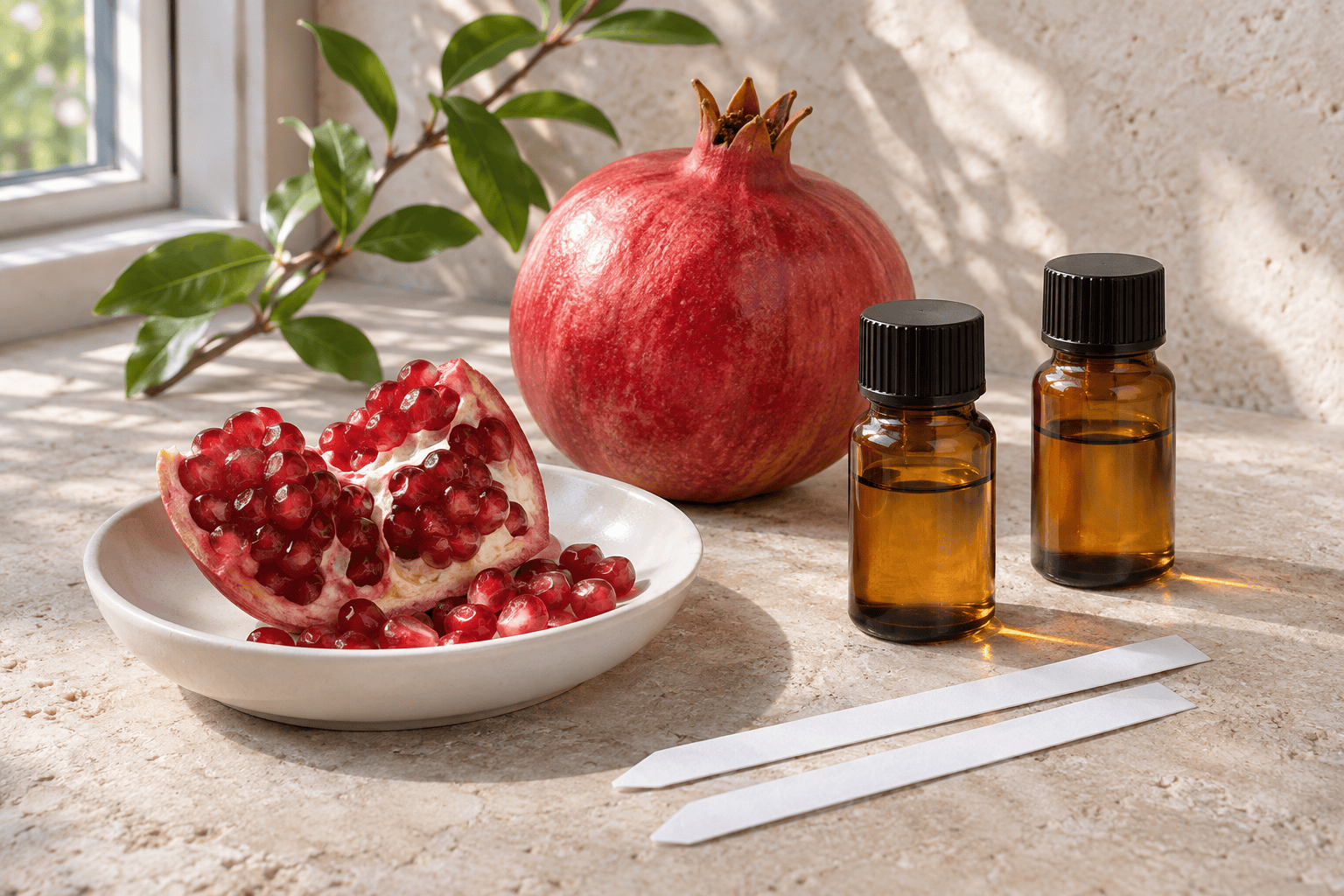
Define what pomegranate should mean for this project
Choose a leading impression before asking for samples. A supplier example shows how pomegranate may sit within a fruit-and-spice composition rather than act as an isolated note.Source: CandleScience: one pomegranate fragrance interpretation That example is not a SHEAIN formula or a universal pomegranate standard. State whether supporting fruit and spice are welcome, then identify an accepted reference and a sample that travels too far from the intended concept.
Keep peel-associated dryness separate from harshness
A buyer may use bitter, dry or astringent to describe an association with fruit peel. Those words do not measure the concentrate’s acidity or demonstrate the presence of tannins. Ask what is actually perceived: useful contrast, a sharp opening or an unpleasant background. Preserve the wanted fruit character while naming the unwanted association, rather than requesting that every dry facet be removed.
Decide how much syrup or berry support is acceptable
A pomegranate concept can drift toward generic sweet berries if the supporting character becomes dominant. Compare candidates without the marketing names and ask assessors to describe the main impression first. More sweetness is not automatically a quality defect; it may simply target another product. Write the permitted role of berry, syrup and spice separately so a revision does not solve one concern by creating another.
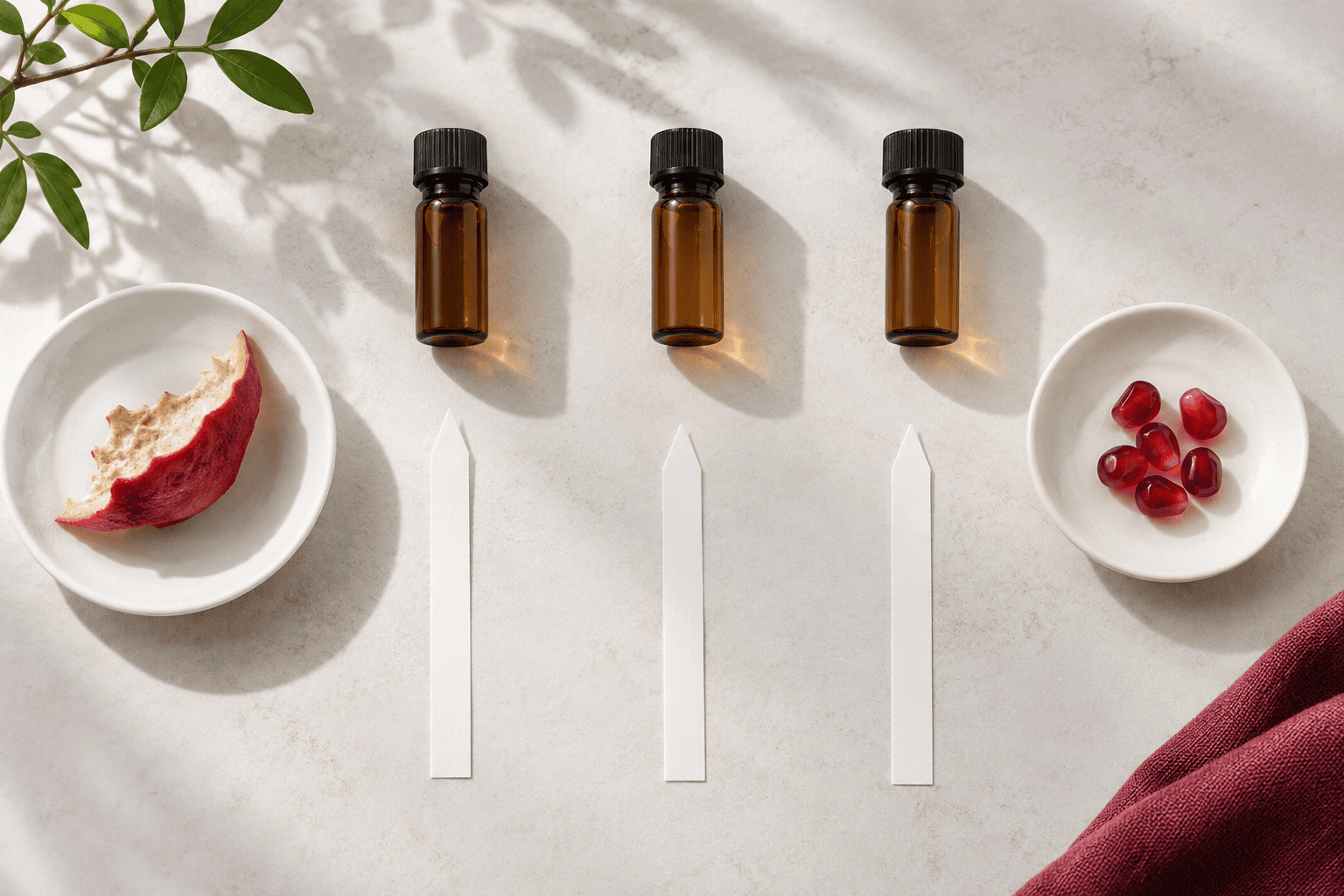
Evaluate identity before showing the red packaging
Packaging color and fruit imagery can help sell a concept, but they should not supply the recognition missing from the fragrance. Review coded samples alongside the closest existing fruity reference in your range. Ask whether the new version offers a meaningful difference beyond its name. Keep the observations specific to odor; photographs and product names cannot establish ingredient origin, natural content or finished-product suitability.
Check the chosen balance in the real product
Prepare candidates in the actual base using technically reviewed conditions, matched sample age and a documented observation schedule. Record pomegranate recognition, peel contrast and sweetness separately from overall liking. A blotter comparison cannot approve a candle, spray or cosmetic automatically. The table is a briefing aid, not measured performance data. Physical compatibility, safety and relevant documentation remain independent approval requirements for the exact application.
| Facet | Question to record | Briefing decision |
|---|---|---|
| Fruit | Recognizable pomegranate or general berries? | Protect the main identity |
| Peel | Useful dry contrast or unwanted sharpness? | Name the specific association |
| Support | Balanced sweetness or dominant syrup? | Set the support’s role |
| Application | Does the balance survive formulation? | Approve the tested combination |
Approve a revision that protects the main fruit
An actionable request could retain recognizable juicy pomegranate, allow a moderate dry edge and reduce dominant syrup or spice associations. Send SHEAIN the sample code, product base, market and important use stage to discuss feasibility. Confirm the actual concentrate and revision before ordering. If botanical content or another composition claim is required, specify it separately and obtain appropriate evidence rather than inferring it from the scent description.
Frequently Asked Questions
Does pomegranate fragrance oil contain pomegranate extract?
Not necessarily. The name describes an intended impression; composition and origin need separate documentation.
Does a tart-smelling sample have a lower pH?
Odor language does not establish acidity. Use a suitable technical assessment for the actual formulation question.
Should a peel-led fragrance be stronger?
Not by definition. Character and intensity are separate dimensions, so compare them separately.
Related Guides and Application Support
- Gourmand vs Fruity Fragrance: Why Not Every Sweet Scent Is the Same
- Lime Fragrance Oil Scent Profile: Fresh Juice, Zest or Candy?
Contact SHEAIN. Share your end-use application, target market and scent brief to discuss fragrance oil concentrate samples.


