

A useful lime fragrance oil scent profile starts with a choice: should customers imagine a freshly cut lime, the peel released while zesting it, or a sweet lime confection? Those are different briefs, not three quality grades. For fragrance buyers, separating fruit identity, peel sharpness and sweetness produces clearer sample requests than asking for a more natural lime.

Choose the lime moment you want to capture
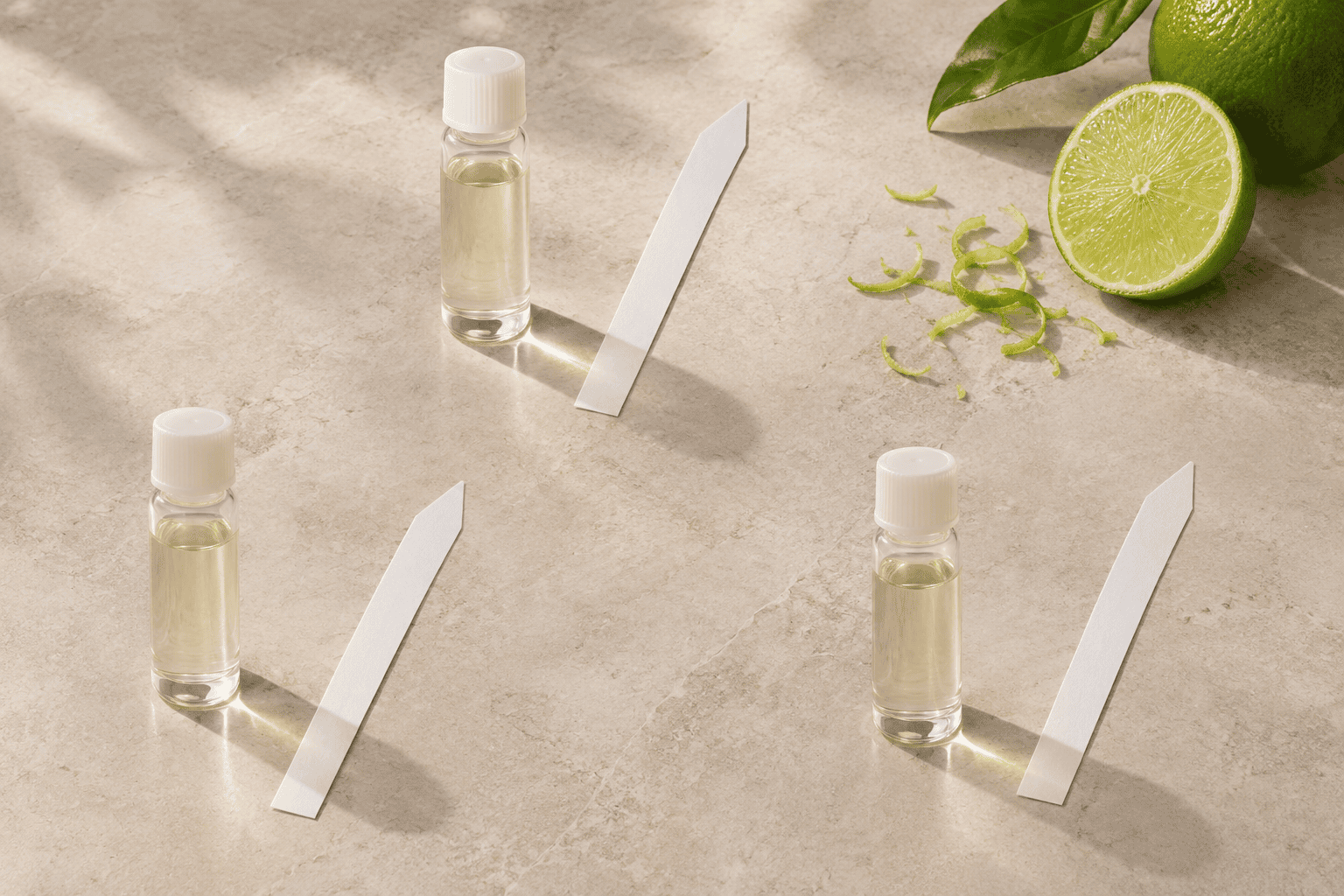
Write one sentence describing the intended impression before smelling samples. A fresh-cut direction can prioritize juicy brightness; a zest direction can prioritize green peel; a candy direction can deliberately emphasize sweet familiarity. These are editorial comparison categories, not standardized fragrance types. IFF documents cold-pressed Persian lime as one perfumery ingredient example. Source: IFF: Persian lime ingredient example That does not mean a lime-named concentrate contains this ingredient, or that fruit photography establishes the composition of your sample.
Separate green peel from unwanted harshness
Peel character can provide the contrast that keeps a lime concept distinct from a generic citrus blend. However, a buyer may describe an overly sharp opening as cleaner-like or abrasive. Ask which association is unwanted instead of deleting every green facet. Compare samples without revealing their marketing names, and record whether lime identity remains after the first impression. A quieter sample may still have the wrong character; reducing strength and improving the profile are separate decisions.
Set a sweetness boundary rather than banning sweetness
A little sweetness may support a ripe-fruit impression, while a dominant sugary effect may push the concept toward candy. Decide whether that shift is desirable for this product. Avoid assuming that sweet means cheap or dry means premium. Put an accepted reference and an overly sweet reference in the brief if available. Describe the desired distance between them using ordinary language, such as juicy but not syrupy, rather than an invented numerical sweetness specification.
Check whether lime remains the main identity
Supporting herbs, florals or woods can make the fragrance more complete but may also move it away from the intended lime theme. Ask evaluators to name the leading impression before presenting the product story. If they repeatedly identify a different theme, decide whether the label or the fragrance needs revision. Do not infer a specific ingredient from a descriptive response. The objective is agreement about the customer-facing scent identity, not chemical identification by smell.
Compare candidates in one controlled application
Use the same product base, preparation method, sample age and technically reviewed fragrance level for the first comparison. Record opening character and the relevant later-use impression separately. A blotter screen cannot establish candle performance, detergent compatibility or skin-use suitability. The table offers a briefing aid, not measured results. If a formula change is needed, compare the revised sample against the retained reference before changing several production variables at once.
| Direction | Look for | Watch for |
|---|---|---|
| Juice-led | Recognizable juicy lime | Generic sweet citrus |
| Zest-led | Green peel contrast | Unwanted harsh association |
| Candy-led | Intentional sweet identity | Mismatch with product positioning |
| Application | Same reviewed comparison conditions | Approving from bottle odor alone |
Send a revision request that protects what already works
An illustrative brief is: retain recognizable lime and a juicy opening, reduce candy associations, and keep a moderate peel edge without a cleaner-like impression. Include the sample code, intended application and target market. Ask SHEAIN to confirm concentrate feasibility and applicable documentation rather than assuming a particular stock formula. Final acceptance should identify the approved version and finished-product conditions, so a pleasant first impression does not become an unsupported promise of universal performance.
Frequently Asked Questions
Is lime fragrance oil the same as lime essential oil?
No. A fragrance can recreate a lime impression through a blend. Confirm composition and origin claims separately.
Does less candy sweetness mean using less fragrance?
Not necessarily. Lower loading changes overall intensity and may remove wanted lime character. Discuss profile balance first.
Can one lime fragrance be used in every product?
No universal suitability follows from the scent name. Each proposed application needs its own technical and safety review.
Related Guides and Application Support
- Bergamot vs Lemon Fragrance: Floral Citrus or Bright Zest?
- Fragrance Sensory Evaluation: How to Build a Reliable Sample-Scoring Process
Contact SHEAIN. Share your end-use application, target market and scent brief to discuss fragrance oil concentrate samples.


