

When comparing mandarin vs orange fragrance oil, do not assume the names guarantee a predictable difference. One supplier may offer a green-peel mandarin and another a soft sweet version. A useful comparison identifies the fruit impression, peel accent and supporting notes in actual samples. The buying decision is which direction fits the product, not which citrus name sounds more premium.
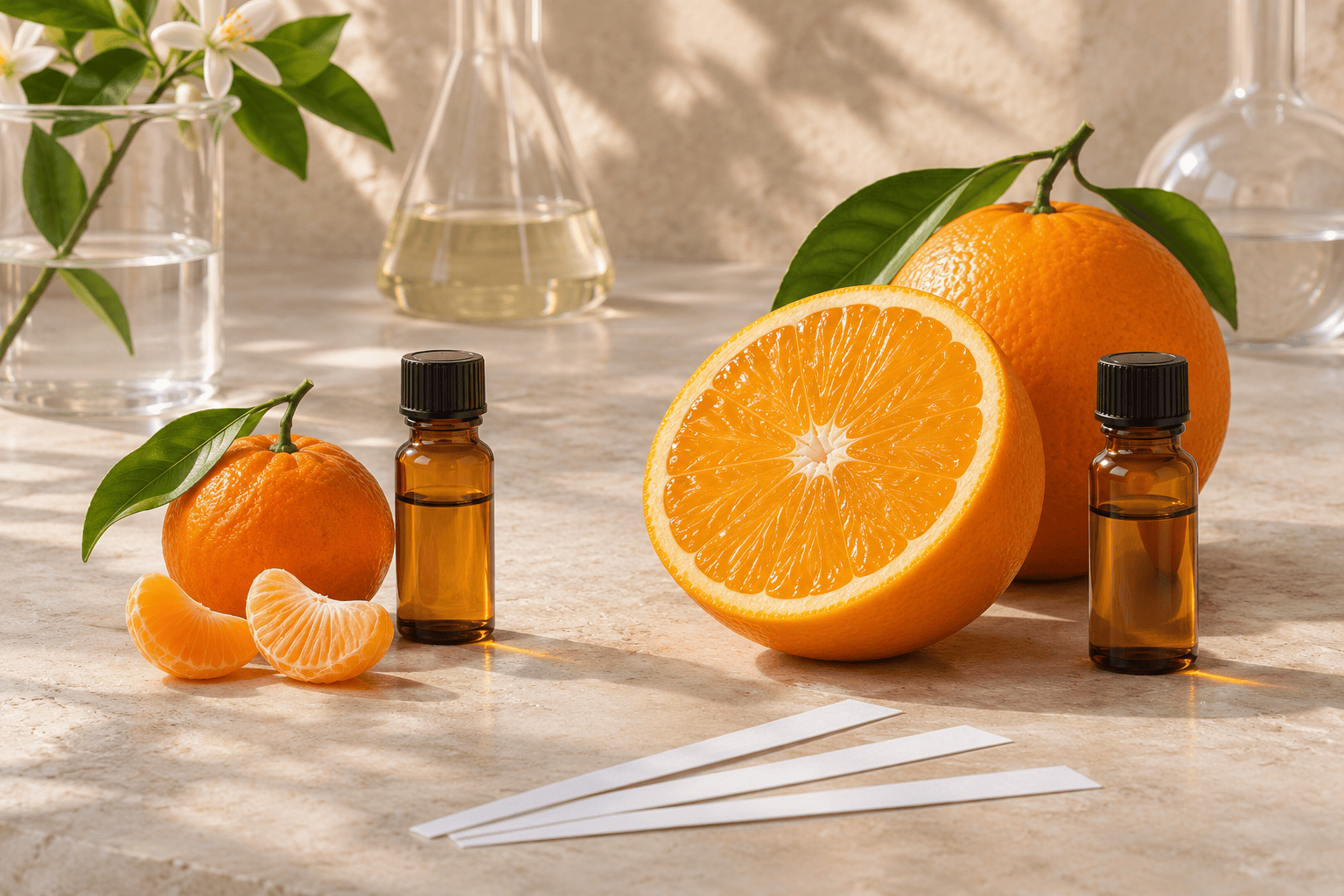
Make the comparison more precise than two fruit names
Define whether orange means sweet orange fruit, fresh peel or another interpretation; orange blossom is a separate floral brief. For mandarin, state whether you want an easy-peel fruit impression or a greener opening. IFF describes green mandarin through fruity, floral, sweet and zesty facets. Source: IFF: green mandarin olfactive description This is one ingredient reference, not a rule for every compounded fragrance. Keep the actual sample code alongside the name so the comparison remains reproducible.
Evaluate fruit character and sweetness independently
Give assessors separate questions: which fruit does the sample suggest, and how sweet does it seem? Combining these questions into a single preference score can hide a useful distinction. A strongly recognizable citrus may be too sweet for one brief but appropriate for another. Avoid adding age or gender assumptions to the description. Work from the intended product concept and feedback from relevant users rather than assuming all customers interpret mandarin and orange alike.
Compare peel accents at the same observation point
A peel-led opening may be welcome in a bright air-care concept but distracting in a softer personal-care direction. Evaluate candidates with matched preparation and timing. If one sample was freshly prepared and another has stood for much longer, the difference is not a clean comparison of fruit types. Record whether the unwanted facet is sharp peel, bitterness-associated odor or simply excessive intensity. That gives the perfumer more actionable information than a request to make it smoother.
Protect differentiation across a citrus product range
Place the proposed fragrance beside your existing citrus reference without showing the labels. Ask whether the new sample adds a distinct experience or merely a slight change in sweetness. If the two products cannot be meaningfully distinguished under the chosen conditions, reconsider the brief before commissioning packaging. Differentiation need not mean maximum intensity. A clear contrast in juicy fruit, peel texture or background character may serve the range better than simply making one product louder.
Use the finished base to settle the shortlist
Blotters can organize the initial choice, but approval belongs to the intended product. Prepare comparable trials with documented base, loading, sample age and observation stages. Keep physical compatibility and sensory preference as separate decisions. The comparison matrix below is a practical discussion structure, not a claim that mandarin always behaves one way and orange another. Any application-specific strength or stability statement must be supported by the actual formulation work.
| Comparison | Question | Decision record |
|---|---|---|
| Identity | Which fruit is perceived without its label? | Mandarin, orange or unclear |
| Sweetness | Does sweetness fit the concept? | Separate from fruit recognition |
| Peel | Helpful contrast or distracting opening? | Describe the specific association |
| Range | Distinct from the existing citrus product? | Retain both reference codes |
Turn the preferred contrast into a supplier brief
A useful request might be: keep the mandarin sample distinct from our sweet-orange reference through greener peel and lower syrupy sweetness, while preserving recognizable fruit. Attach both reference codes and identify the important stage of use. SHEAIN can discuss fragrance-concentrate options against that brief. Confirm feasibility, documentation and the accepted revision before ordering; a fruit name alone does not establish raw-material origin, safety limits or compatibility with several product bases.
Frequently Asked Questions
Is mandarin fragrance always sweeter than orange?
No universal ranking applies to composed fragrances. Compare the actual samples and their intended interpretations.
Does orange fragrance mean orange blossom?
No. Fruit and peel descriptions should be distinguished from an orange-blossom floral brief.
Should a brand keep both scents?
Only if each serves a clear product role. Test meaningful differentiation rather than relying on different names.
Related Guides and Application Support
- Bergamot vs Lemon Fragrance: Floral Citrus or Bright Zest?
- Fragrance Product Line Differentiation: Make Three New Scents Recognizably Different
Contact SHEAIN. Share your end-use application, target market and scent brief to discuss fragrance oil concentrate samples.


