

A thyme fragrance oil scent profile should distinguish a wanted herbal identity from an unwanted medicinal association. Those responses are subjective scent descriptions, not evidence of therapeutic action or product safety. Start with an agreed reference and a clear role for thyme in the product. Then evaluate whether the actual concentrate delivers that role without overwhelming the rest of the composition or the finished base.
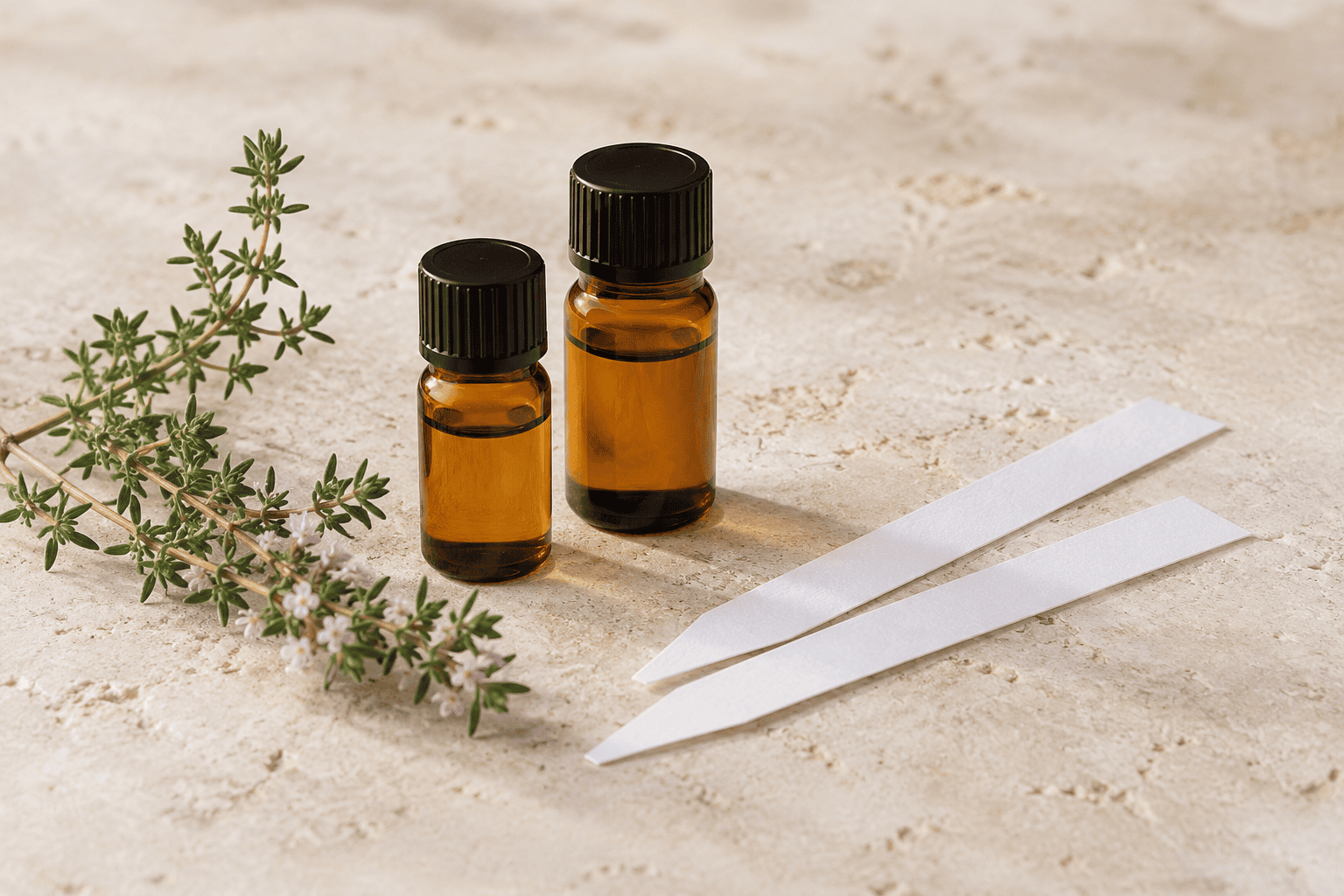
Choose a specific herbal reference
Robertet describes one red-thyme oil through aromatic and phenolic language.Source: Robertet: Thyme Red Oil olfactive description It is an ingredient example, not a specification for all thyme-inspired fragrance mixtures or a statement about SHEAIN’s materials. Use the reference to clarify vocabulary, not to infer a recipe. Ask whether the intended product should be herb-led or merely contain a restrained aromatic accent before choosing between samples.
Ask what medicinal means to the evaluator
An assessor may use medicinal for an intense opening, a particular aromatic association or a memory of another product. Ask for a concrete reference rather than accepting the word as a diagnosis. Do not infer a particular ingredient, contamination or health effect from that response alone. A useful revision instruction names the unwanted association while protecting the herbal feature that the project needs to retain.
Separate character changes from intensity changes
A candidate can have the desired herbal character at an unsuitable strength, or the wrong character even when weak. Evaluate these conditions separately. Lowering dosage without reviewing the profile may make an unwanted association quieter rather than correct it. Any trial levels still need technical review in the actual product. Keep a retained reference so the comparison does not depend on memory of an earlier bottle opening.
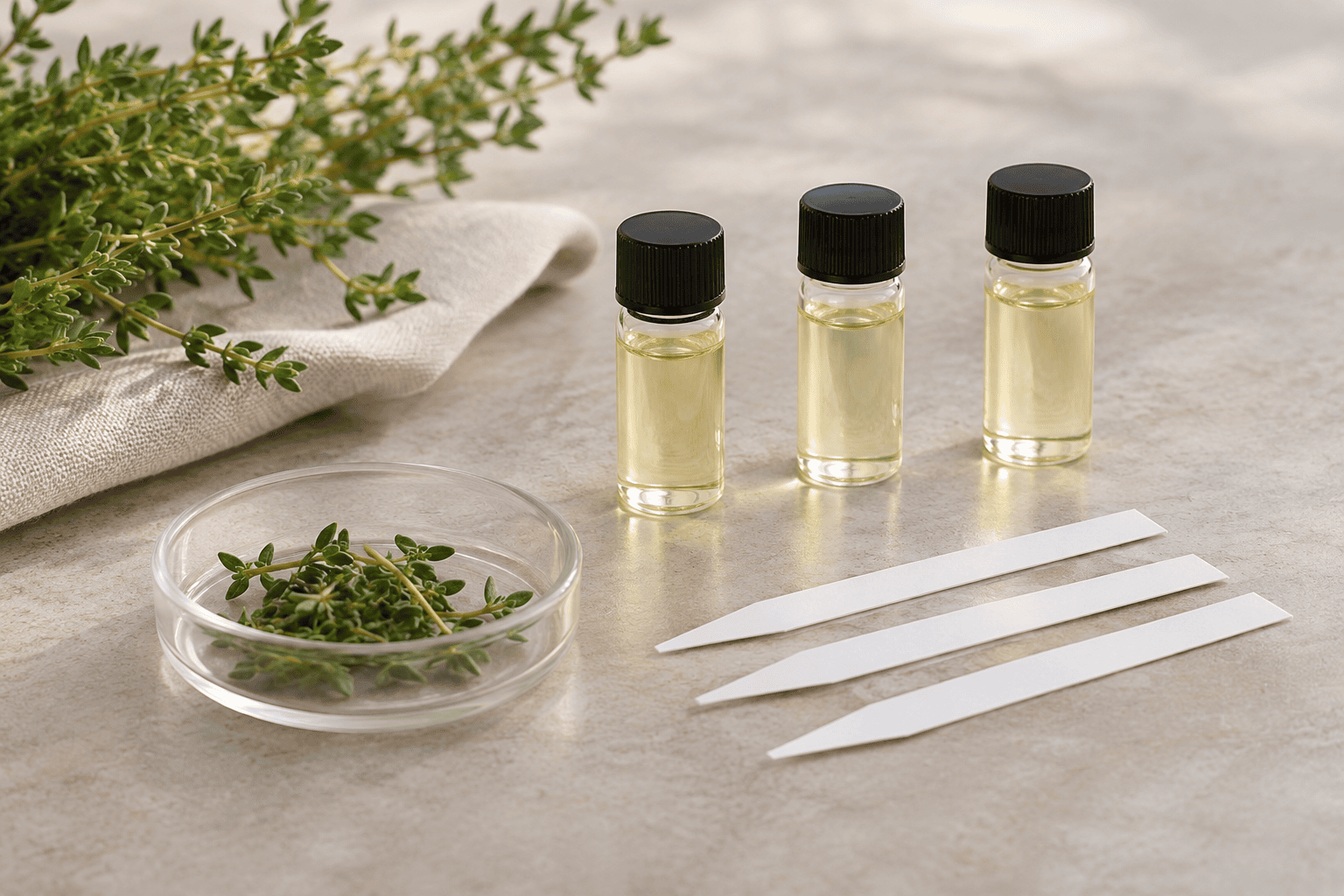
Give supporting notes a limited purpose
Citrus, floral or woody support may help achieve a target, but adding several themes can also obscure thyme entirely. Decide what the support should accomplish and ask evaluators to name the leading impression without seeing the brief. If the result no longer reads as the intended herb-inspired concept, revisit the hierarchy rather than accepting a more elaborate note list as proof of a better fragrance.
Confirm product fit without functional promises
Prepare candidates in the intended base with matched preparation, sample age and observation timing. Record herbal identity, strength and unwanted associations independently. A thyme-inspired scent does not demonstrate antimicrobial action, air purification or medical benefit. The table is an original briefing aid, not a study report. Physical compatibility, safety and applicable documentation remain separate checks for the exact mixture and end use.
| Dimension | Question | Action |
|---|---|---|
| Herb | Main thyme identity or background accent? | State its role |
| Association | What exactly seems medicinal? | Provide a concrete reference |
| Intensity | Wrong character or too much strength? | Keep the two decisions separate |
| Product | Appropriate at the important use stage? | Complete technical qualification |
Write an acceptance boundary the supplier can use
An illustrative request is a recognizable aromatic herb with controlled intensity, no dominant medicinal association and a restrained supporting background. Provide SHEAIN with the reference code, product base, target market and relevant use stage. Discuss feasibility and documents before approving a particular revision. Any botanical-content or origin requirement should be stated separately; sensory acceptance is not a substitute for the evidence needed to support such a claim.
Frequently Asked Questions
Does medicinal-smelling thyme fragrance have medical benefits?
No. An odor association cannot establish a therapeutic or antimicrobial effect.
Does a strong herbal smell mean the fragrance is unsafe?
Smell strength cannot determine safety. Review the exact mixture and intended use appropriately.
Is thyme fragrance oil necessarily thyme essential oil?
No. Confirm the product type and any origin or composition claim through supplier information.
Related Guides and Application Support
- Rosemary Fragrance Oil Scent Profile: Herbal, Woody or Camphoraceous?
- Malodor Control Fragrance: Masking, Neutralization and Sensory Testing Explained
Contact SHEAIN. Share your end-use application, target market and scent brief to discuss fragrance oil concentrate samples.


