

Candle fragrance sweating describes visible oil-like droplets or wetness at the candle surface, but that appearance alone does not identify the cause. Record the affected batch and hold an unapproved candle for review. The useful investigation compares the exact wax, fragrance, processing and storage history. Wiping away the surface material or adding a stronger scent is not a substitute for understanding the change and qualifying the finished design.
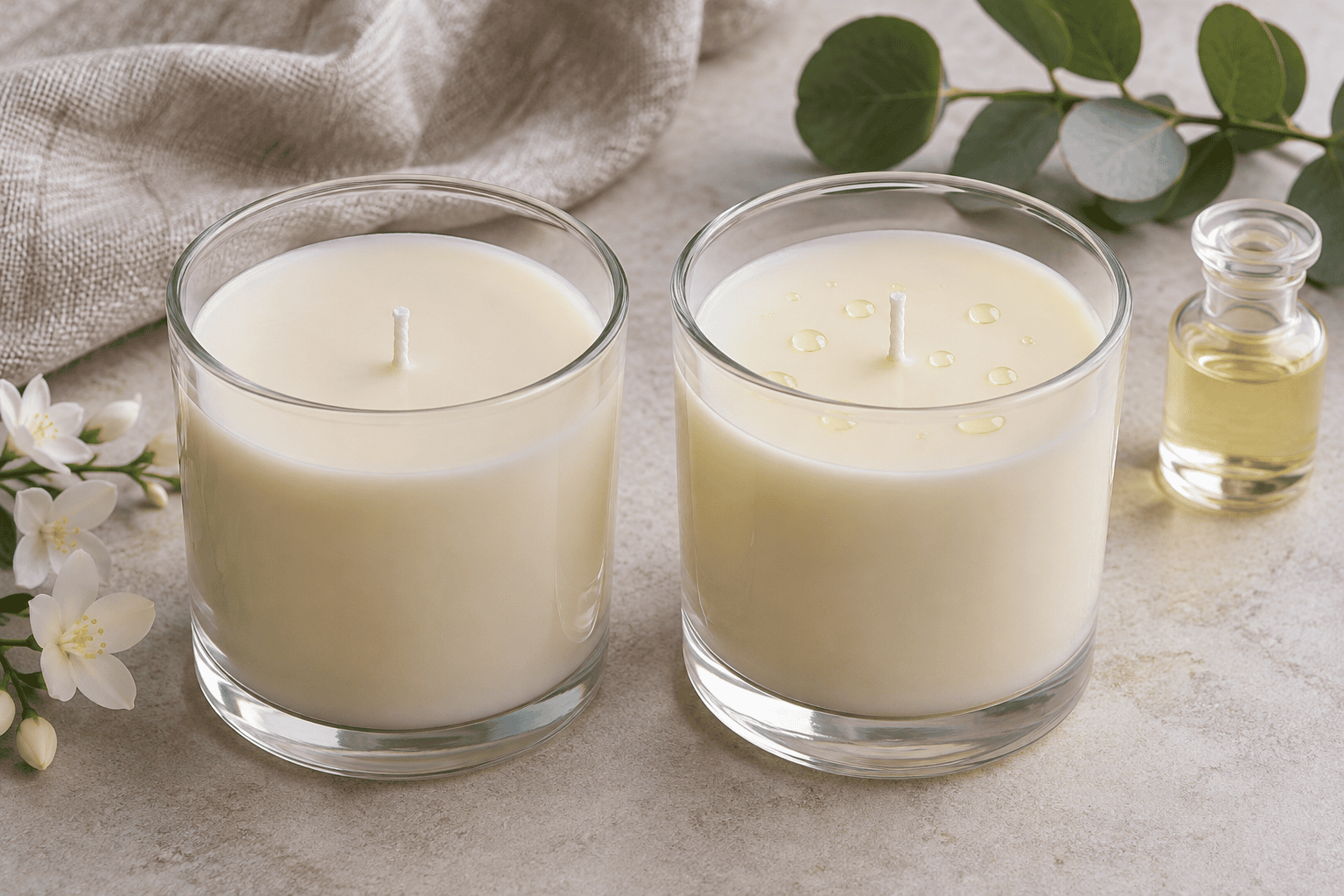
Describe the surface change accurately
CandleScience’s soy-wax troubleshooting guidance discusses surface oil among formulation and process concerns.Source: CandleScience: soy wax troubleshooting That source does not diagnose your candle or establish a rule for every wax. Record whether the observation is discrete droplets, a continuous wet film or another appearance. Take dated photographs and note when the change first appeared. Keep sweating separate from color change, frosting, container condensation and other observations that may need different investigations.
Preserve the complete batch record
Gather wax grade and lot, fragrance code and revision, loading calculation, mixing record, vessel, wick and any additives. Record how the candle was cooled, stored and transported. A photograph without this history is a weak basis for deciding which component caused the problem. Retain an affected sample and a known accepted reference under documented conditions rather than repeatedly reworking the only evidence available to the supplier.
Check the calculation before changing the formula
Confirm the weighing records and whether the stated percentage uses wax mass or total blend mass. Those are different calculation bases. Review the intended level against relevant supplier guidance and the actual application assessment. Do not assume more fragrance always gives a better candle. Correct a confirmed calculation error through a controlled trial; an arbitrary reduction may hide the symptom without explaining another process or compatibility issue.
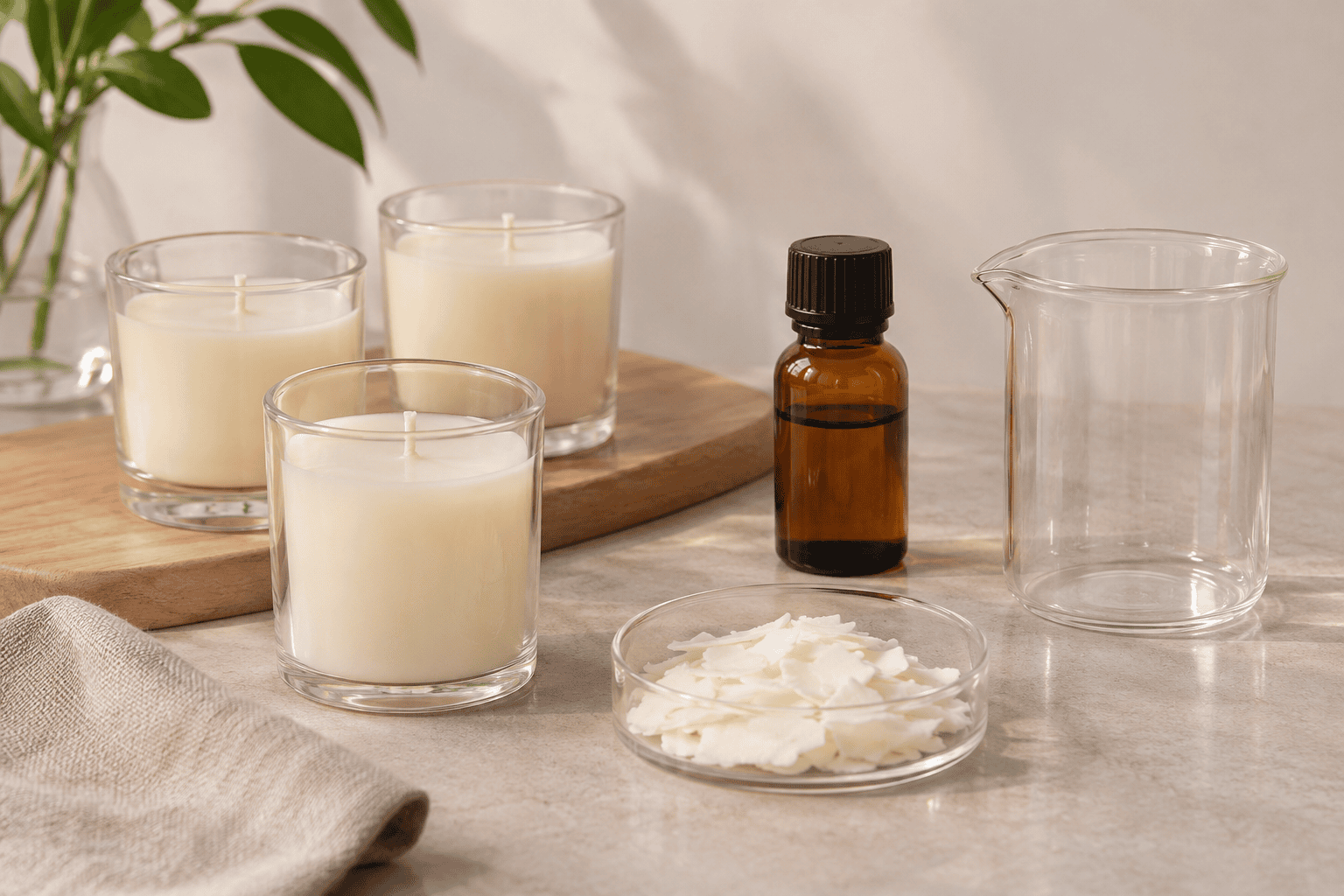
Compare process and storage variables deliberately
Use a small, documented investigation to compare the affected combination with an appropriate control. Keep unrelated variables constant where practical and use the wax supplier’s grade-specific guidance. Observe the candle after cooling and under relevant storage conditions. A change seen after transport does not prove heat was the only cause. State the limits of the comparison and avoid presenting a single attractive sample as a stable production result.
Assess more than the repaired appearance
A candle that looks dry after wiping or reheating has not necessarily passed physical or burning-stage qualification. Do not burn an anomalous or unapproved sample as an informal shortcut. Arrange the appropriate technical review and complete-candle assessment. The table is an editorial investigation checklist, not a validated test method or SHEAIN results. Establish acceptance criteria before judging whether a revised combination can be released.
| Observation | Check | Avoid |
|---|---|---|
| Surface oil | Time, location and appearance | Calling every mark sweating |
| Loading | Actual weights and percentage basis | An unexplained dose change |
| Process | Wax-grade guidance and batch history | Changing several factors at once |
| Release | Full reviewed candle qualification | Approving from a wiped surface |
Close the issue with a documented change
Send SHEAIN the fragrance and batch codes, wax details, exact calculation and dated observations to support a focused discussion. Include the supplier of the wax or other relevant components where necessary. Approve a specific corrected combination and retain evidence that it meets the agreed criteria. If the cause remains uncertain, say so; a clean-looking surface alone is not a defensible reason to blame or approve the concentrate.
Frequently Asked Questions
Does sweating prove the fragrance is defective?
No. The complete formulation, process and handling history require investigation.
Can I wipe the oil off and sell the candle?
Appearance correction is not qualification. Hold an unapproved combination until the issue is appropriately reviewed.
Is candle sweating the same as discoloration?
No. Surface wetness and color change are different observations, even if both occur in one sample.
Related Guides and Application Support
- Candle Fragrance Load Testing: Cold Throw, Hot Throw and Burn Performance
- Fragrance Oil for Paraffin Candles: Solubility, Scent Throw and Burn Tests
Contact SHEAIN. Share your end-use application, target market and scent brief to discuss fragrance oil concentrate samples.


