

Fragrance oil for wooden diffuser blocks should be selected for a specific passive wood carrier, not approved from the scent bottle alone. The wood’s own odor, surface finish and geometry are part of the product. Start with an unscented matched block, a defined liquid format and the intended use setting. This is a qualification framework for the complete carrier-and-fragrance combination, not a claim that all woods are interchangeable.
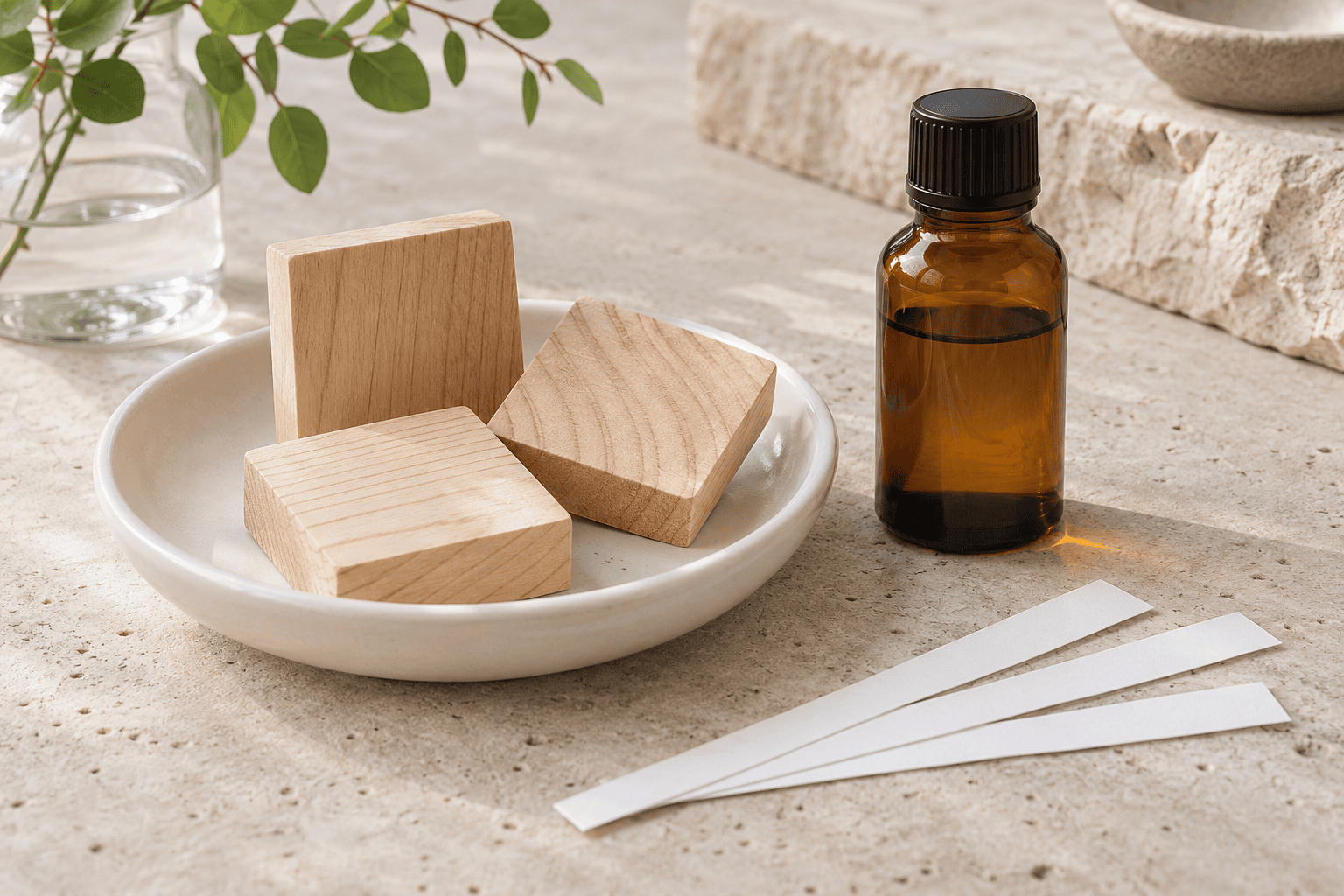
Document the actual block and its finish
Record the supplier’s material description, dimensions, exposed surface and whether the block is coated, treated or unfinished. Keep lot information where available. A carrier sold as natural wood may still differ from another in preparation and finish. Do not infer a consistent absorption rate or environmental advantage from the word natural. If a material claim matters commercially, request the evidence needed to support it independently of scent performance.
Assess the unscented wood before adding fragrance
Compare matched unfragranced blocks under the intended observation conditions. Record the background odor and any visible marks already present. This makes it easier to discuss whether a later woody impression belongs to the carrier, the fragrance or their combined experience. It does not identify chemical components. Use separate coded samples rather than repeatedly applying different fragrances to the same block and then treating the comparison as independent.
Distinguish concentrate from the reviewed finished liquid
Agree the supplied liquid format and application procedure with the relevant technical parties. Do not assume neat concentrate is appropriate for a carrier just because it absorbs some liquid. Record the reviewed amount, application point and preparation time. Use consistent handling and a supporting tray where the product’s instructions require it. Any change in solvent system, concentrate or application method should remain a documented trial variable.
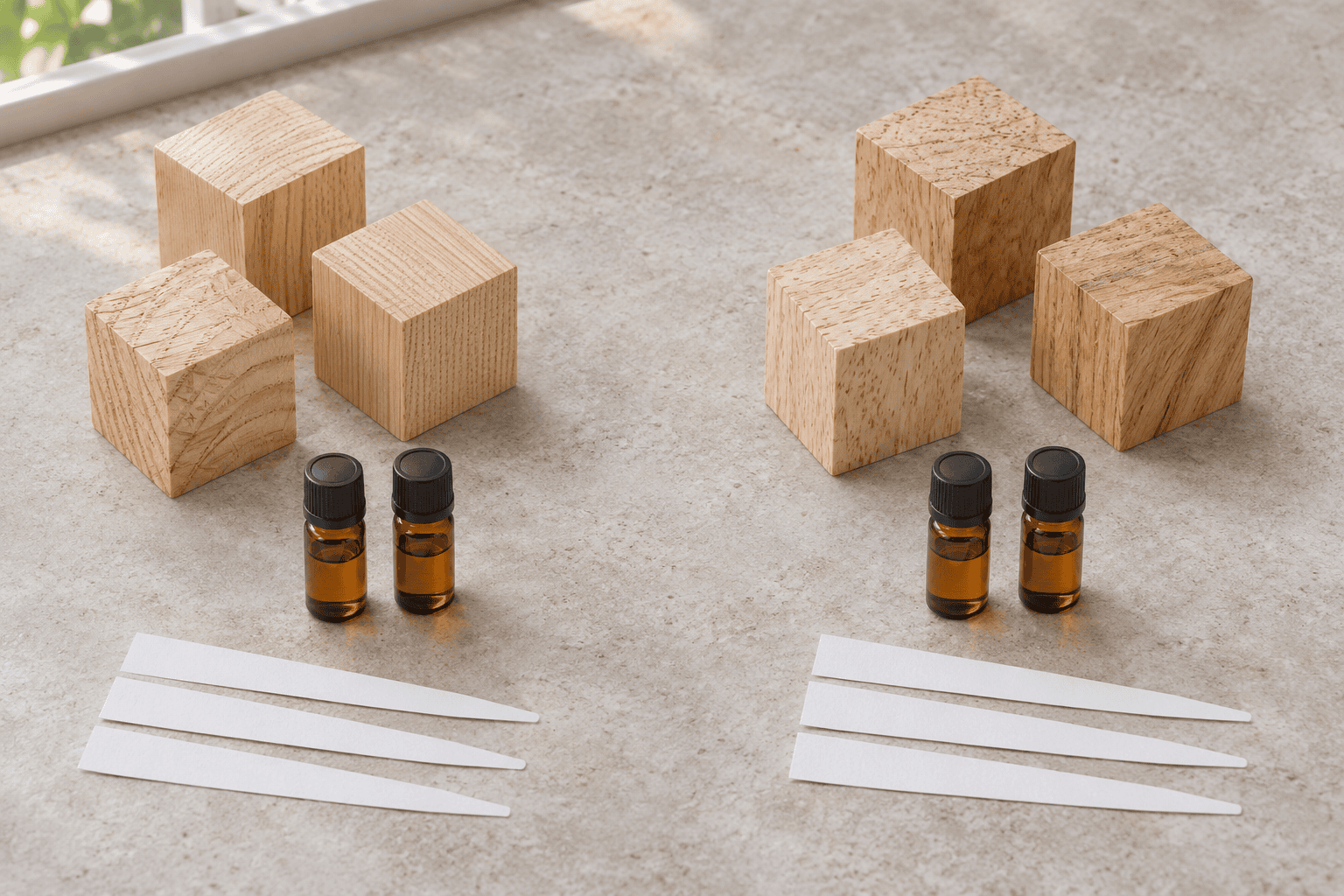
Observe both uptake and transfer risk
Record pooling, wetness, uneven darkening and any transfer to the intended supporting surface under reviewed conditions. An attractive stained block is not evidence that surrounding furniture is protected. Keep physical observations separate from fragrance preference and consult the carrier supplier about unaccepted changes. Do not use an improvised aggressive cleaning method to conceal a mark and then call the original combination compatible or ready for sale.
Define the useful scent experience and refill condition
Specify whether the product is intended for nearby scenting and at what observation positions it will be assessed. Compare scent character and intensity over agreed stages. If refilling is intended, review the actual reuse instructions and test later cycles separately for carry-over and appearance changes. The table is an original planning tool, not measured SHEAIN performance data. It cannot establish a universal lifetime, refill count or room-coverage claim.
| Variable | Evidence | Decision |
|---|---|---|
| Wood | Supplier, finish and unscented control | Identify the actual carrier |
| Application | Reviewed liquid and recorded amount | Keep preparation consistent |
| Surface | Pooling, darkening and transfer checks | Do not approve from appearance alone |
| Experience | Scent stage and intended refill use | Bound the performance claim |
Approve a controlled carrier-fragrance specification
Provide SHEAIN the wood specification, intended liquid format, scent target, market and dated observations to discuss concentrate feasibility. Approve the exact pairing and instructions, with appropriate finished-product safety and material review. A later switch in wood supplier, coating or block size may change the product and should be assessed accordingly. A successful wood-block trial does not authorize the same liquid in electronic diffusers or on other surfaces.
Frequently Asked Questions
Does unfinished wood guarantee compatibility?
No. Review the specific carrier, liquid and use conditions.
Can wood odor be ignored in a fragrance comparison?
No. A matched unscented control helps assess the complete scent experience without guessing its source.
Can I claim months of scent from a first-day result?
No. A service-duration claim needs evidence across the relevant period and conditions.
Related Guides and Application Support
- Reed Diffuser Base Compatibility: Solvents, Wicks and Evaporation Rate
- Fragrance Oil Stability Testing: How to Check Compatibility Before Mass Production
Contact SHEAIN. Share your end-use application, target market and scent brief to discuss fragrance oil concentrate samples.


