

Shampoo fragrance foam compatibility should be checked in the complete surfactant system, not inferred from scent strength or concentrate appearance. Define which foam characteristics matter to the product and compare the fragranced formula with appropriate controls. Keep dilution, water and agitation conditions documented. A taller foam column in one photograph is not enough to establish better shampoo performance or prove that fragrance caused a difference.
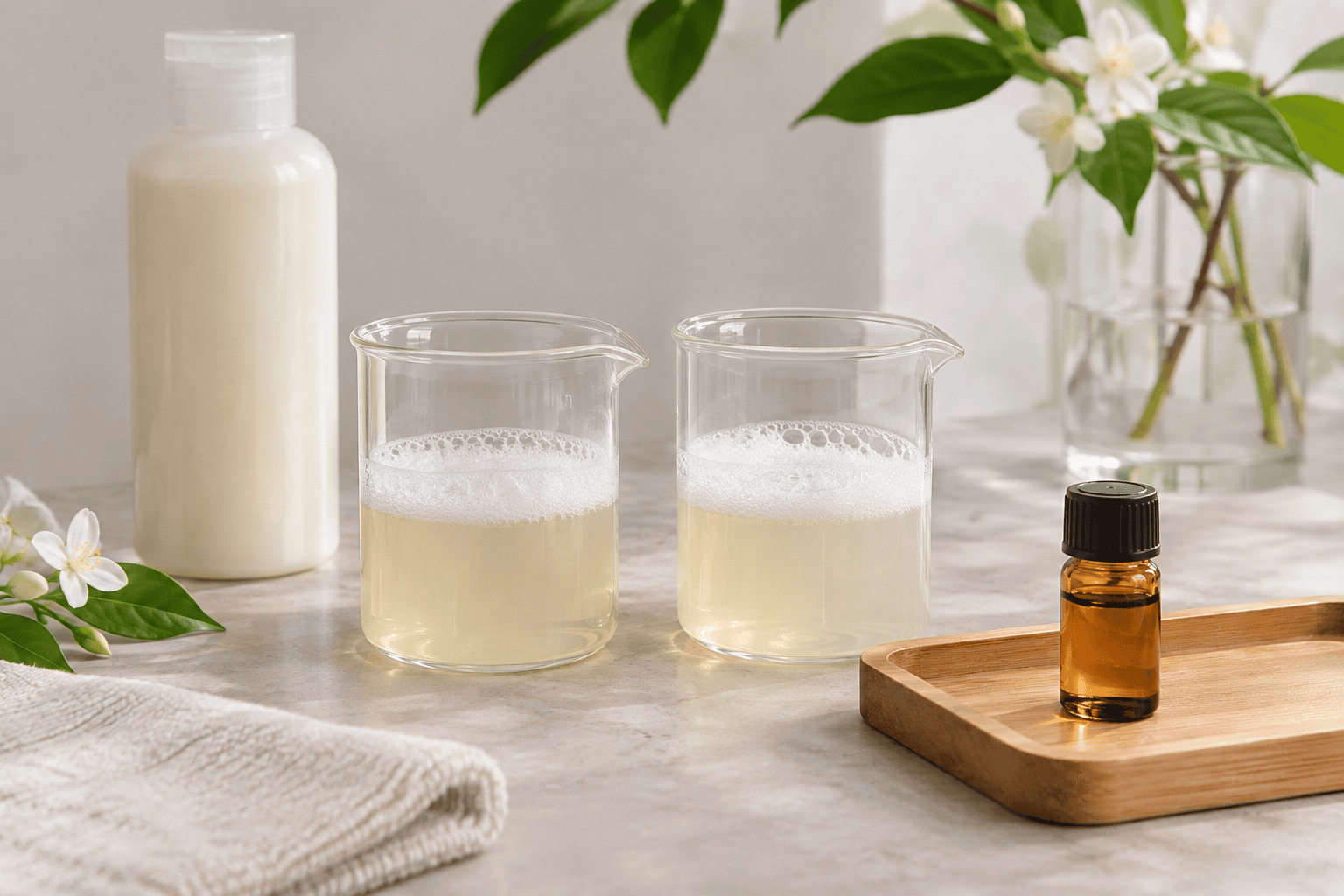
Define the foam attributes before selecting fragrance
Specify the relevant foam amount, texture, persistence or use-stage behavior for your product, with an accepted reference. Lubrizol describes a surfactant example used for foam enhancement in shampoo and shower gels.Source: Lubrizol: a foam-enhancing shampoo surfactant example That source concerns its particular ingredient, not a SHEAIN fragrance result. It illustrates why the whole formulation matters. Do not reduce the project’s foam target to a single unqualified adjective such as luxurious.
Use an unscented-base control where appropriate
Compare the actual base without fragrance, the candidate fragrance and an accepted reference under a suitable reviewed procedure. Keep the remaining formula and preparation consistent. If a fragrance change also introduces a different solubilizer or thickening approach, document the full system change. Otherwise the trial cannot isolate fragrance as the cause. Use separate coded samples and preserve the exact revisions rather than comparing bottles with uncertain preparation histories.
Standardize dilution and agitation for the comparison
Record the shampoo amount, water amount and conditions, temperature, vessel and method selected by qualified technical personnel. Keep agitation and observation timing consistent between candidates. Follow relevant product-use instructions and avoid an aggressive improvised method that does not answer the actual use question. An appealing video with unmatched shaking cannot support a purchasing claim about which concentrate best preserves the intended foam experience.
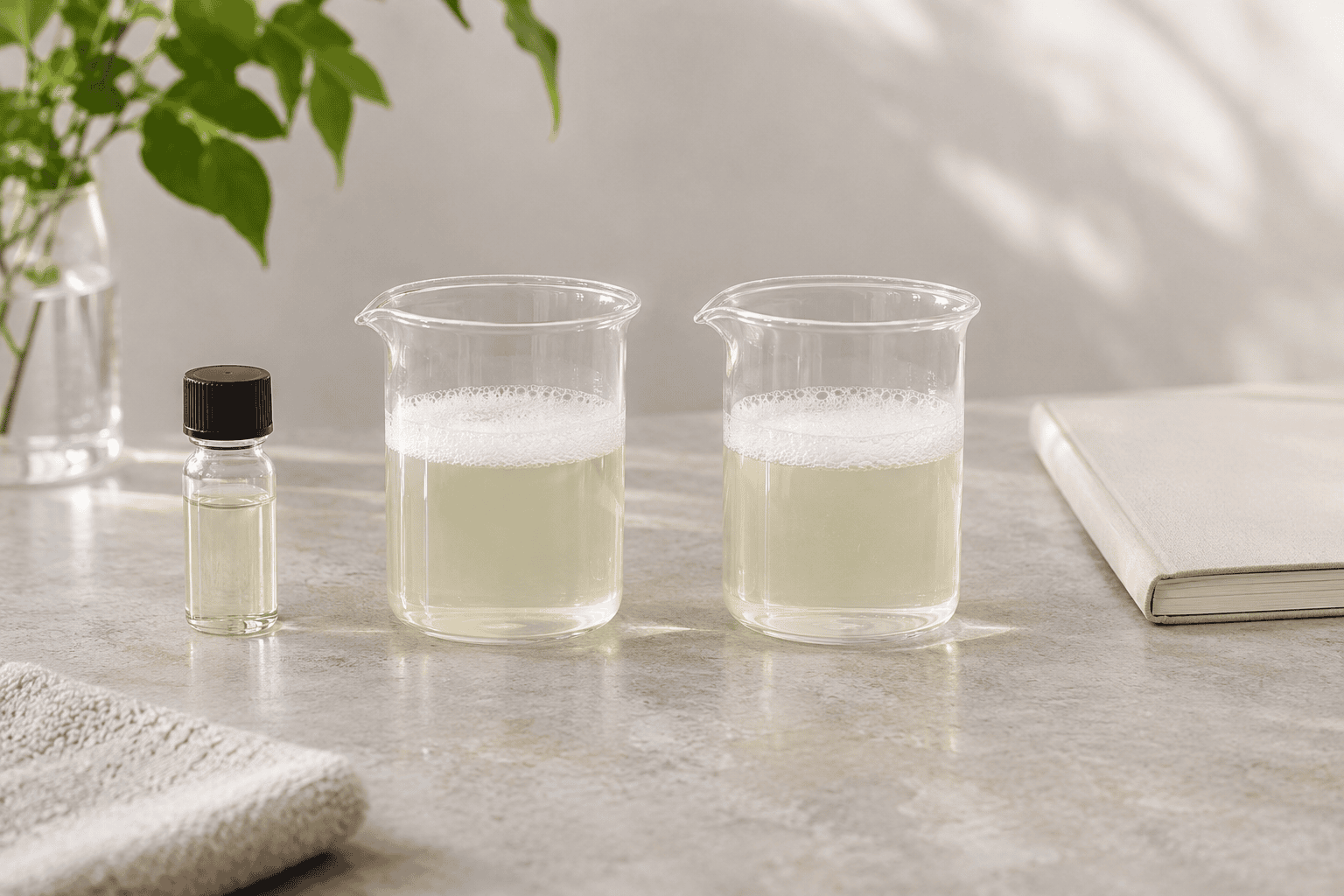
Assess scent and foam on separate lines
A strong washing-stage scent may be desirable even if the foam target is not met, and attractive foam cannot make an off-brief fragrance acceptable. Record both dimensions without merging them into one overall score. Do not infer cleansing performance, mildness or fragrance deposition from foam volume alone. If the candidate changes character during dilution, describe that stage so the supplier can distinguish the scent issue from the physical foam observation.
Check relevant stored samples and complete-product requirements
Where the product qualification requires it, repeat the relevant foam and scent comparisons after appropriate storage. Record clarity, viscosity or separation observations independently rather than assuming the initial result lasts indefinitely. The table is an original comparison framework, not a validated test standard or SHEAIN laboratory data. Finished-product stability, safety and packaging suitability remain separate approval requirements. Use qualified review for the actual shampoo system before commercial release.
| Dimension | Controlled record | Acceptance question |
|---|---|---|
| Base | Matched formula and unscented control | What changed besides fragrance? |
| Method | Dilution, water and agitation | Are candidates comparable? |
| Foam | Amount, texture or agreed attribute | Does the product target remain? |
| Scent | Identity and relevant use stage | Is the fragrance still on brief? |
Request a revision with two clear acceptance targets
Provide SHEAIN the base, market, reviewed trial conditions, accepted scent reference and important foam target. Include the control comparison and any related formula changes. Discuss feasibility rather than asking only for more fragrance or more bubbles. Approve the exact concentrate revision within the assessed formula. A later fragrance, surfactant or solubilizer change may need reassessment even if the marketing scent name remains unchanged.
Frequently Asked Questions
Does more foam mean better cleaning?
Foam appearance alone cannot establish cleansing performance. Assess the complete product appropriately.
Can one shaking photograph prove compatibility?
No. A useful comparison needs matched preparation, method and observation conditions.
Can a foam-enhancing surfactant guarantee every fragrance works?
No. Ingredient examples do not approve all combinations. Qualify the actual shampoo formula.
Related Guides and Application Support
- Shampoo Fragrance Performance: Surfactants, Rinse-Off and Hair Retention
- Fragrance Bottle Headspace vs Blotter: Why the Buying Questions Differ
Contact SHEAIN. Share your end-use application, target market and scent brief to discuss fragrance oil concentrate samples.


