

Fragrance oil light stability testing needs a defined question, exposure and comparison, not a bottle left by a window without records. Decide whether the project concerns the concentrate, the finished product or the protection offered by packaging. These are related but different studies. Assess color, odor and other relevant quality criteria separately, with qualified personnel selecting the conditions and interpreting what the results can actually support.
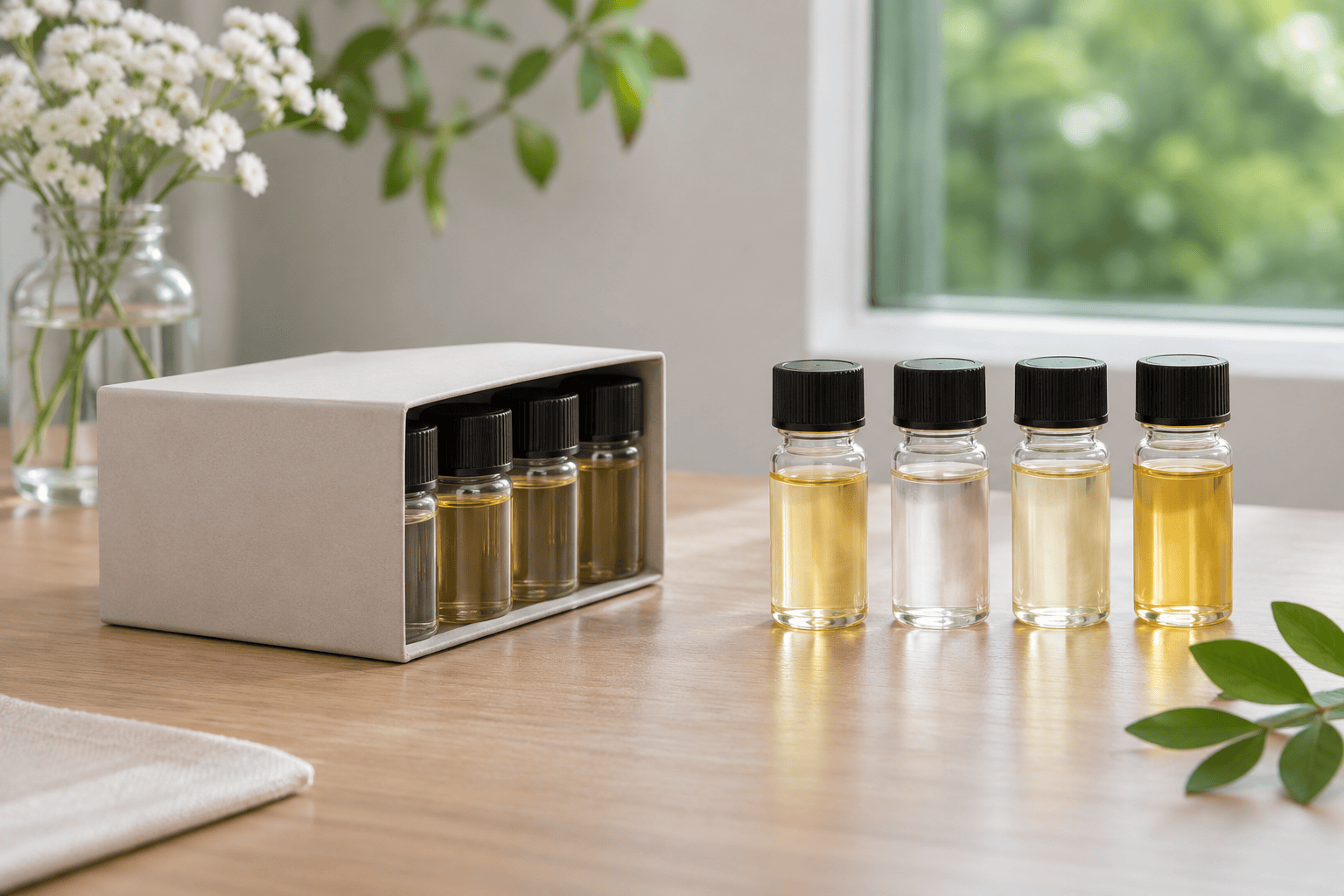
State which material and claim are under review
SGS includes lighting effects on color, odor and appearance within relevant stability assessments.Source: SGS: stability and lighting assessment That service scope does not prescribe a universal light test for every fragrance oil. Identify the exact concentrate or finished formula, code, lot and intended packaging. Define the commercial concern, such as a transparent pack on a display shelf, before choosing an exposure that may have little relationship to the actual product.
Keep a suitable protected comparison
Use matched samples with a documented protected control and comparable preparation. Record container, fill, closure and sample age. If the exposed bottle differs in material or headspace from the control, the comparison may involve more than light. Keep an initial retained reference where the plan requires it. A dark-looking bottle is not a measured guarantee of protection, and a photograph cannot establish the light reaching the product.
Record light conditions and temperature together
Have qualified personnel choose and document the light source, exposure arrangement, duration and relevant measurement conditions. Monitor or control temperature as the plan requires. A sunny location may introduce heating and variable exposure, so it cannot automatically isolate photostability. An informal screen can identify a concern for further investigation, but it should not be described as a standardized or certified test without the appropriate design and evidence.
Measure quality attributes independently
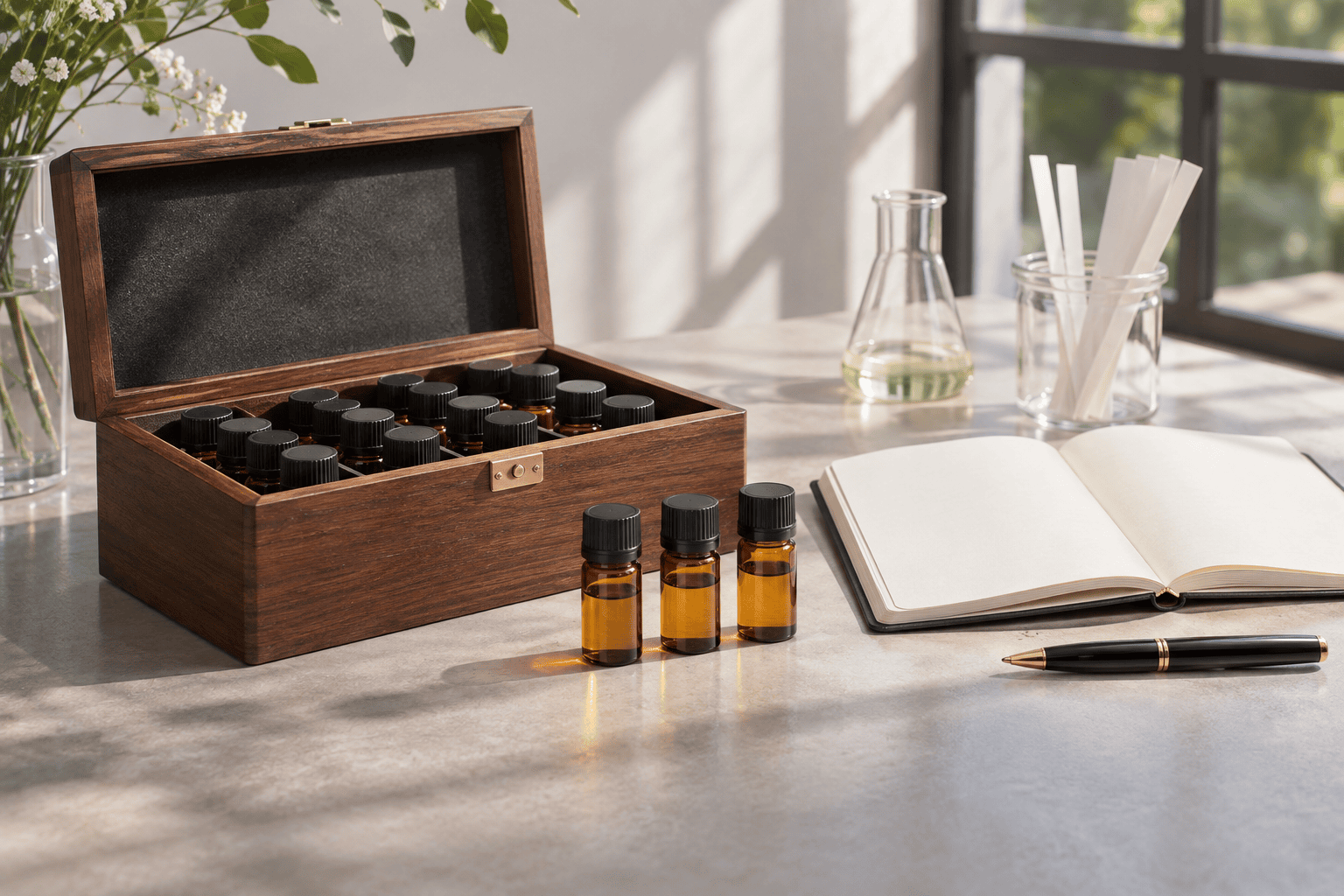
Compare color under a consistent suitable method, odor using an appropriate controlled procedure, and any relevant visible or physical changes. Do not treat an unchanged smell as proof that composition and safety are unchanged. Conversely, a color difference alone does not identify its chemical cause. Preserve coded samples, records and the agreed criteria so the conclusion reflects more than an attractive before-and-after image.
Test the packaging question as a packaging question
If the project needs to compare pack protection, use a design that deliberately evaluates the candidate packs while documenting other variables. Assess the finished product where that is the marketed system; concentrate results do not automatically transfer to a surfactant base or wax. The table is an editorial planning aid, not SHEAIN test data. Avoid converting a short accelerated screen into a shelf-life claim without an appropriate technical basis.
| Element | Record | Limit |
|---|---|---|
| Material | Concentrate or finished formula and lot | Results do not transfer automatically |
| Control | Matched protected sample | Avoid hidden container differences |
| Exposure | Light arrangement, duration and temperature | Window location is not a standard |
| Outcome | Color, odor and relevant quality criteria | One attribute cannot approve everything |
Report a conclusion bounded by the actual exposure
Send SHEAIN the exact material, packaging, market context and observation record for a focused concentrate discussion. State which conditions passed the agreed criteria and where uncertainty remains. Approve the tested combination rather than a universal light-stable fragrance label. Reassess meaningful formulation or packaging changes. If a shelf-life or other commercial claim is needed, arrange the broader evidence required instead of extrapolating from a single window comparison.
Frequently Asked Questions
Is a window test enough to claim light stability?
Not by itself. Document its limits and use an appropriate qualified plan for the claim.
Does amber packaging guarantee protection?
Do not assume it. Evaluate the actual pack and product under relevant conditions.
Can color remain stable while odor changes?
Assess the attributes separately; one observation cannot establish the other’s result.
Related Guides and Application Support
- Fragrance Oil Stability Testing: How to Check Compatibility Before Mass Production
- Fragrance Oil Shelf Life: Storage, Packaging and Temperature Control
Contact SHEAIN. Share your end-use application, target market and scent brief to discuss fragrance oil concentrate samples.


