

Candle scent throw over full burn life is not the impression from the first or second lighting. It is the pattern of scent strength and recognizable character across the candle’s permitted use life. Set early, middle and late evaluation points inside an approved burn protocol. In this guide, ‘full burn life’ stops at the specified end-of-use limit; it never means burning the candle until there is no wax left.
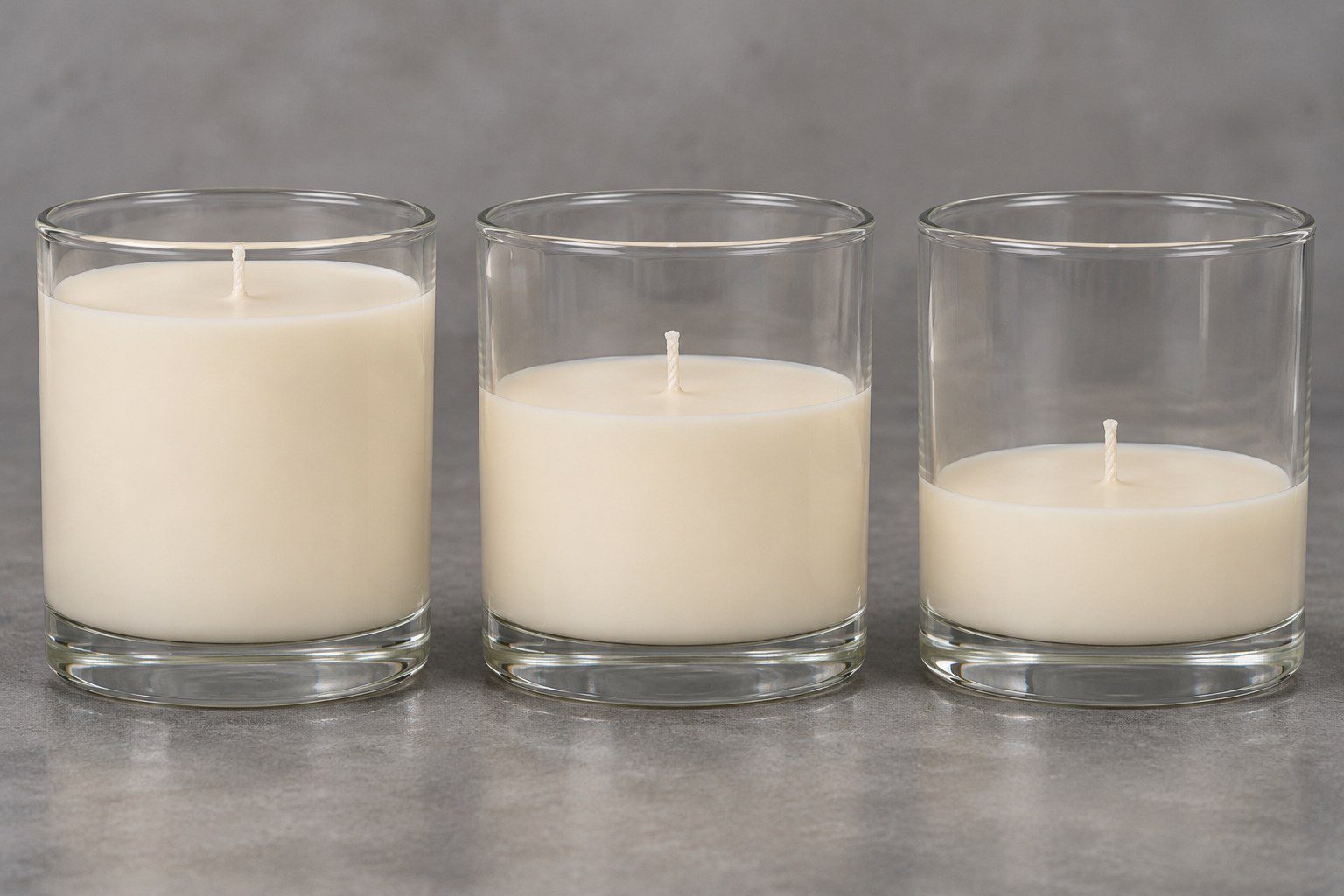
Select stage checkpoints before the first session
Use the product’s approved procedure to identify early, middle and late checkpoints. Record the burn session number and the defined stage of remaining wax, rather than relying on calendar day. Choose the same in-session evaluation point and reviewer location for each stage. If replicate candles reach the checkpoints at different times, record that difference instead of assuming that the same date means the same stage.
| Stage | Scent question | Record alongside it |
|---|---|---|
| Early | Is the target scent recognizable? | Session, location and in-session evaluation time |
| Middle | Is character preserved at acceptable intensity? | Matched construction and observed burn behavior |
| Late | Does it meet the agreed late-use criterion? | Use-limit checkpoint and repeatability across units |
Keep the candle construction and method matched
Use the same wax, fragrance version, wick, vessel, processing and conditioning for comparable units. Record unusual conditions and follow your trained team’s approved fire-safety and stop procedures, including supervision and the product’s use limits. Do not extend a test to get a stronger scent reading or run a unit that fails the appropriate safety check. General candle safety guidance: Source: National Candle Association: Candle Safety Tips.
Track scent strength and identity separately
At each checkpoint, note whether the expected scent is detectable, recognizable, and at the intended strength. A candle can still smell strong while the central note no longer matches the brief. Keep a separate field for unwanted notes. Compare at a consistent distance and time within the approved session: a late reading close to the vessel is not equivalent to an early room-level reading.

Keep burn observations beside the scent record
Qualified product staff should track burn behavior and apply the relevant stop criteria separately from fragrance scoring. Note the session, sample ID and conditions so any change can be investigated. If changes only appear with a particular wick or vessel, do not infer from scent alone that the oil is at fault. Compare the matched retained reference before requesting a change to the fragrance.
Use a late-stage miss to plan the next comparison
If early and middle scores meet the target but the late scent is weaker or different, confirm the result across comparable units. Do not compensate by increasing fragrance loading before a controlled review. Discuss the first failing stage, the retained sample and any burn observations with the product team. Review one variable at a time under the approved method, then requalify the complete candle as applicable.
Approve the complete use profile, not a single strong result
The record should identify exact construction, sample version, stage check points, minimum acceptable scent at each stage and exclusions. A realistic decision might be: ‘The intended wood is identifiable at all agreed checkpoints; late intensity is lower but within range.’ Record sensory and safety decisions separately. Do not infer a burn-hour or performance guarantee from a single evaluation.
Frequently Asked Questions
Does full burn life mean testing until the wax is gone?
No. Stop at the product’s defined end-of-use limit and apply any earlier safety stop criteria.
Can the first two burns qualify a new candle?
They are useful early observations, not evidence for the middle and late stages. Evaluate according to the approved method.
Should I use more oil if scent weakens late?
Do not adjust loading by guesswork. Confirm the stage-specific gap, then evaluate one change with the qualified product team.
Related Guides and Application Support
- Candle Fragrance Load Testing: Cold Throw, Hot Throw and Burn Performance
- Fragrance Oil for Soy Wax Candles: Cure Time and Hot Throw Testing
Contact SHEAIN. Share your end-use application, target market and scent brief to discuss fragrance oil concentrate samples.


