

Burnt smell in scented candles troubleshooting should begin with a known construction and a safe stopping rule, not with a stronger fragrance. Record when the odor appears and compare a scented candle with an otherwise matched unscented control under the product team’s approved procedure. A burnt smell has several possible sources; it does not prove that the fragrance oil is responsible.
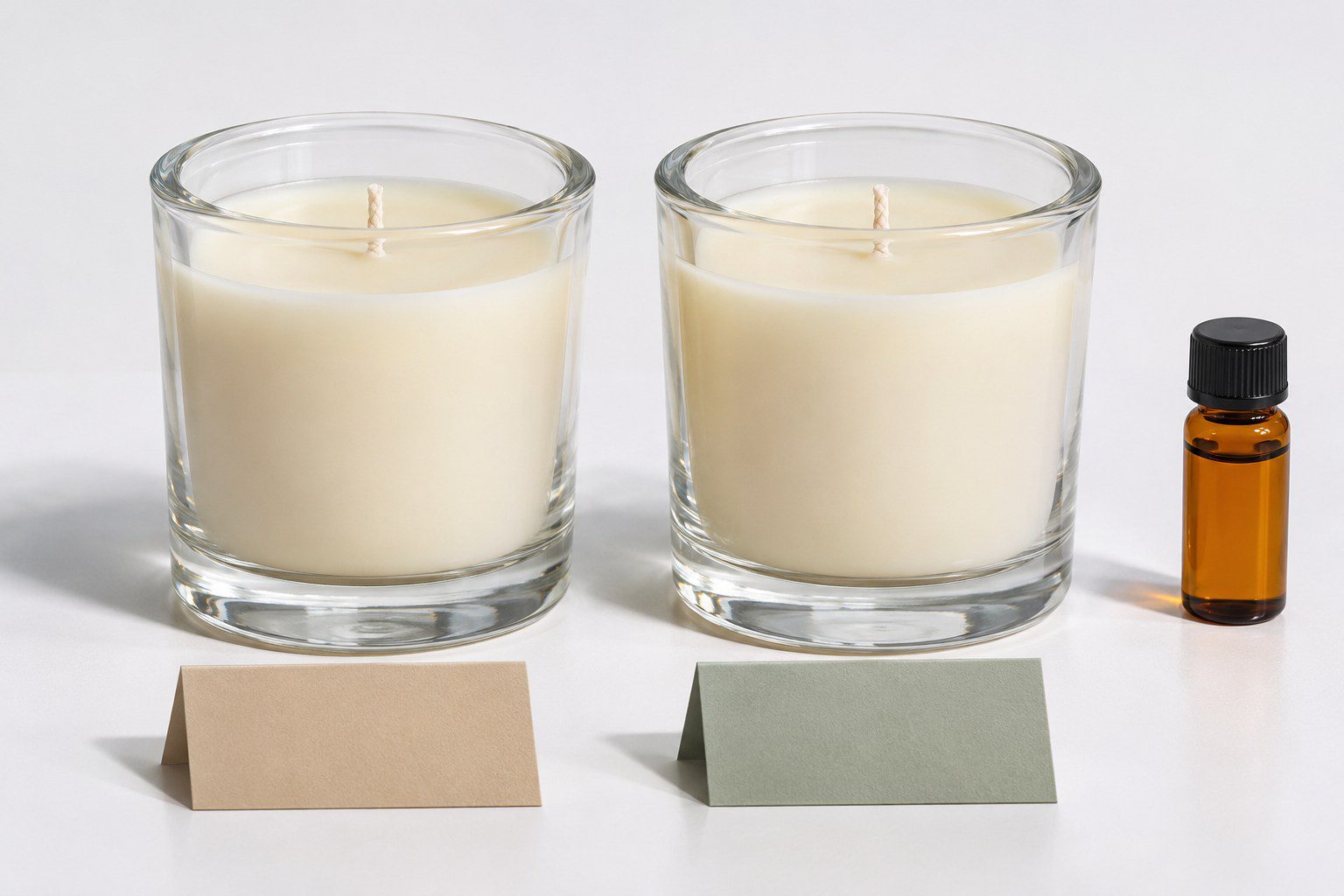
Stop before trying to reproduce a safety issue
If the unit behaves abnormally or hits a stop condition, end the test according to the approved procedure. Qualified staff should decide whether another unit can be tested safely. Do not continue burning to make an odor easier to detect. Follow the product’s safety limits and general candle fire precautions. Source: National Candle Association: Candle Safety Tips
Set up a genuinely matched unscented control
Document wax lot, wick and vessel, handling, conditioning and the intended test sequence. The control removes the fragrance while keeping the rest consistent as far as the approved method permits. Give both samples neutral codes. Do not substitute an unrelated unscented retail candle; a different wick or wax makes the comparison hard to interpret.
Record when the odor starts, not just whether it exists
Separate the unlit odor, the observation during the approved session, and any observation after extinguishing. Record burnt, smoky, scorched or other descriptors with the timing and the sample code. An odor after extinguishing is not the same event as an odor during use. Avoid averaging observations that occurred at different points.

Read the control as a clue, not a verdict
If both samples smell burnt at the same point, investigate shared construction, process and conditions. If only the fragranced unit shows the odor, investigate the fragranced system, including how wick, wax and oil interact. Neither pattern proves a single cause. Record any differences in burn observations separately for the product team. If one reviewer says ‘smoke’ and another says ‘burnt sugar,’ retain both descriptions and the session times; those observations may describe different events rather than an inconsistent result.
| Pattern | What to investigate | Do not conclude |
|---|---|---|
| Both sample and control | Shared wax, wick, process or conditions | That fragrance is the sole cause |
| Fragranced sample only | Fragranced system and material interactions | That oil alone is at fault |
| Only after extinguishing | Timing, handling and normal approved procedure | That the odor was present during use |
Use one controlled follow-up at a time
Bring the original sample, retained controls and notes to the wax, wick and fragrance specialists as appropriate. Ask which single variable can be isolated under an approved method. Changing the wick, oil and wax together may improve the finished candle but does not identify the contributor. Do not approve a change on how it smells alone.
Record the disposition before requesting a revision
Hold affected units if the problem remains unexplained under your quality process. Provide the fragrance supplier with the exact oil version, wax lot, control outcome, first onset and relevant burn observations. A useful request is ‘this off-note appears only in the fragranced test at stage B under the approved conditions,’ not ‘make the scent stronger.’ If an approved retained unit is available, include its result to distinguish a recent batch change from a characteristic of the product design.
Frequently Asked Questions
Should I keep burning to confirm the odor?
No if any safety stop criterion is met. Use the approved stopping procedure and have qualified staff review the result.
Does the unscented control prove a wick problem?
No. It helps separate shared variables from the fragranced system but does not identify a single cause.
What should I send the fragrance supplier?
Send the oil version, base and construction, control result and exact point where the odor first appeared.
Related Guides and Application Support
- Candle Fragrance Load Testing: Cold Throw, Hot Throw and Burn Performance
- Fragrance Oil for Paraffin Candles: Solubility, Scent Throw and Burn Tests
Contact SHEAIN. Share your end-use application, target market and scent brief to discuss fragrance oil concentrate samples.


