

Room spray film on glass troubleshooting starts by asking whether the mark comes from the finished spray, the unscented base, the water source or the substrate. A clear liquid in the bottle does not rule out a visible film after it dries. Use a clean specimen and matched controls under your approved method. The glass is a diagnostic surface, not an instruction to apply room spray directly to household glass.
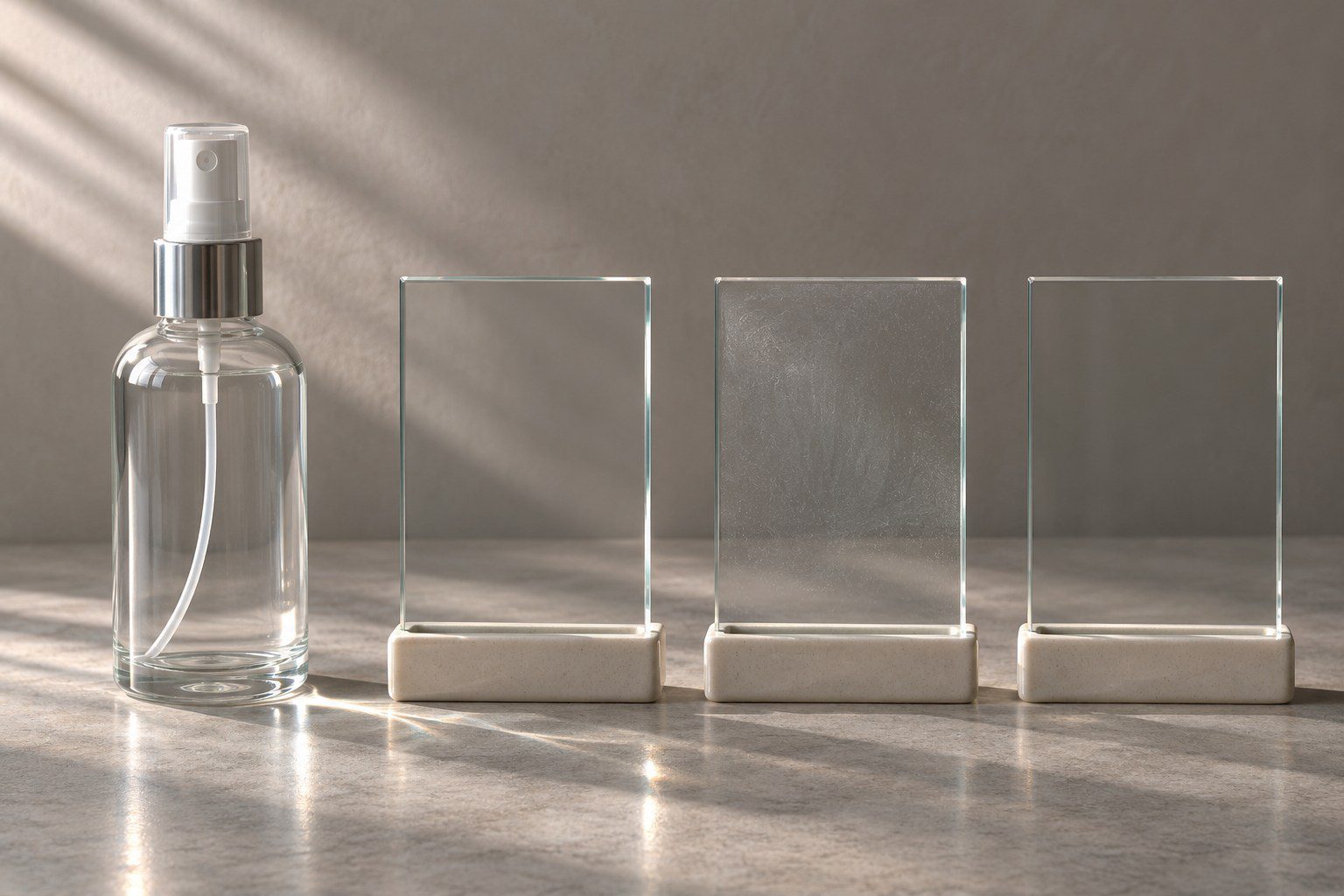
Start with a clean glass blank
Choose comparable glass specimens prepared by the team’s approved method. Record the blank under consistent viewing and lighting before any exposure. Fingerprints, previous cleaning product and substrate variation can resemble a new film. Treat a mark already visible in the blank as a background problem to resolve. Avoid comparing one treated panel with another that began with a different surface condition.
Build a comparison around the finished formulation
Compare the finish of the unscented base and the finished formula under matched approved conditions. Document the formula versions, pack or applicator and observation time. If needed, compare the input water separately as a diagnostic reference. A water-only reference is not a substitute for the base because the solvent and other ingredients are absent.
| Comparison | Record | Interpretation limit |
|---|---|---|
| Untreated glass | Initial appearance under matched light | Does not test the formula |
| Unscented base | Dry appearance at the agreed stage | Does not rule out an interaction with oil |
| Finished spray | Dry appearance and pattern relative to controls | Does not prove one ingredient is responsible |
Distinguish wet appearance from dry film
Write down when the mark first appears. A patch visible while wet is not necessarily a dry deposit. After the prescribed observation stage, record uniform haze, streaks or separate spots, and photograph under the same light before deciding that one sample is worse. Use the same criteria for the reference and candidate; do not select only the angle where the suspected problem is visible.
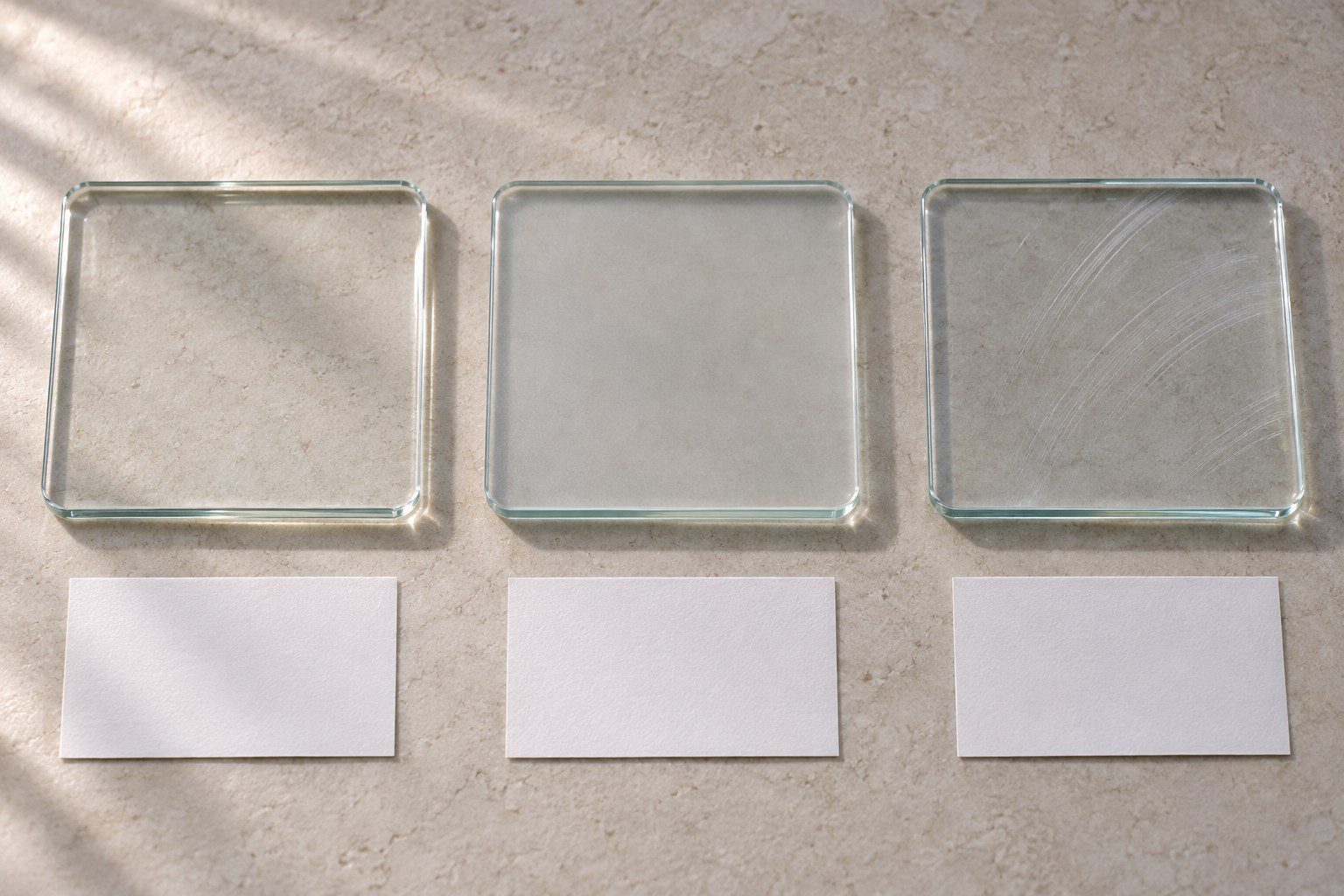
Use the pattern to choose a next check
If the base and finished sample both show marks, investigate the shared system and preparation. If only the finished sample changes appearance, review the complete fragranced system and the pack, not only the oil. If blanks also show a mark, confirm that glass and preparation are consistent. Each pattern narrows the next check without establishing a cause by itself.
Test one documented change if the comparison reproduces
When the pattern repeats, ask the formulation team which variable can be changed alone: the water lot, a production variable, the base or the fragranced version. Hold observation conditions and comparison specimens steady. Do not improvise mixing with cleaners or unapproved solvents. If the reference changes too, revisit preparation and measurement before changing the fragrance.
Give the supplier a usable sample record
Include lot and version, base identity, water reference if relevant, pack, substrate, the exact stage of appearance and matched photographs. Specify whether the cleaned blank and unscented base showed the same pattern. The record helps decide what to test next. It is not a conclusion about safety, residue in all uses or compatibility with every household surface.
Frequently Asked Questions
Does a clear spray guarantee no film?
No. Check dry appearance on the agreed diagnostic surface with matched controls.
Can water alone identify the cause?
No. It can be one comparison, but it does not reproduce the unscented base or the finished spray.
Should I change the oil first?
Only after a repeatable comparison gives a reason. Keep base and finished-product factors separate in the next trial.
Related Guides and Application Support
- Fragrance Oil Stability Testing: How to Check Compatibility Before Mass Production
- Custom Fragrance Development: From Creative Brief to Approved Formula
Contact SHEAIN. Share your end-use application, target market and scent brief to discuss fragrance oil concentrate samples.


