

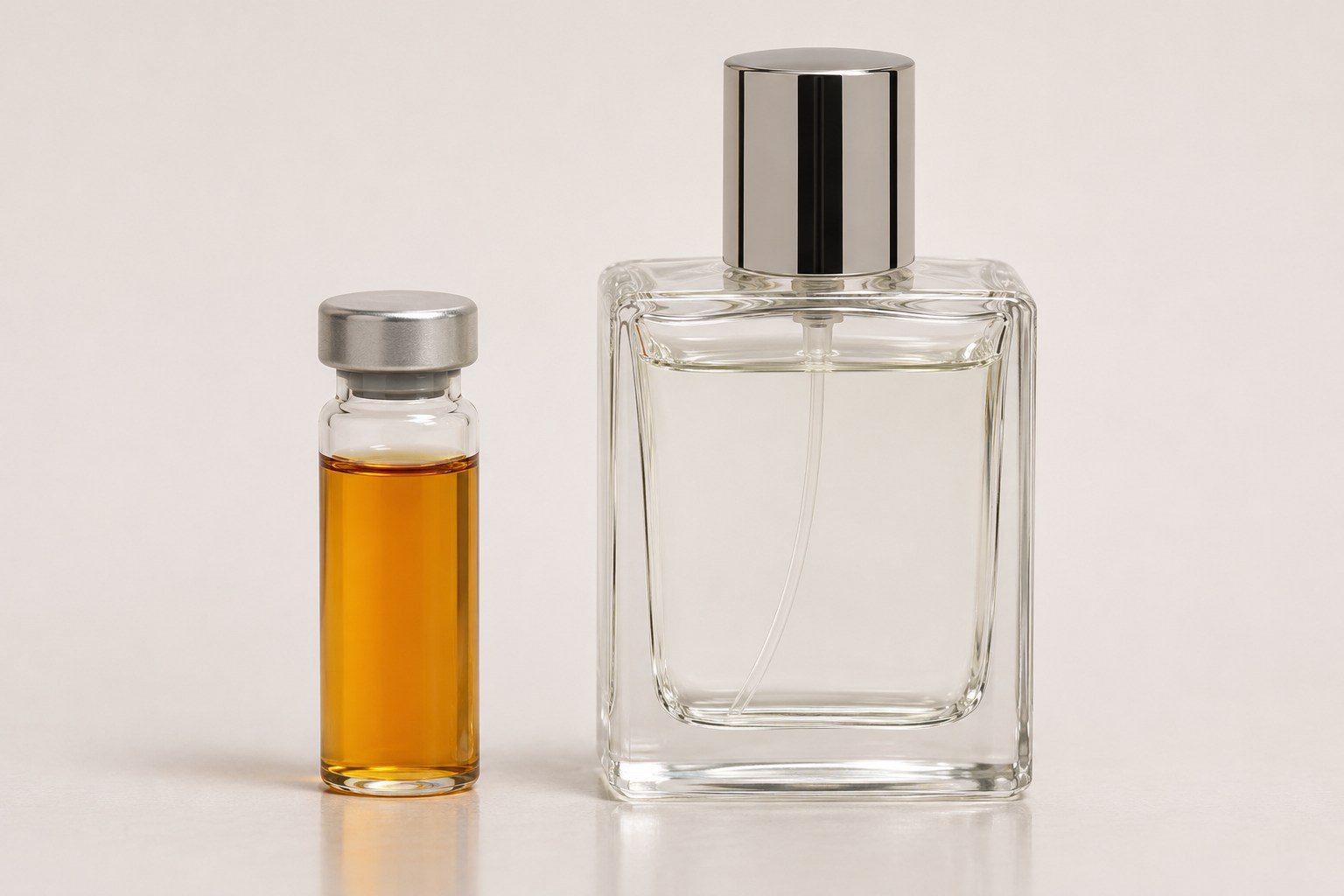
Low color fragrance oil for clear perfume is an appearance requirement for the finished perfume, not a promise that the concentrate will look colorless in its bottle. Describe what the finished product has to look like in its intended packaging and when it must meet that target. Use a matched comparison to separate visible tint from lack of clarity.
Translate ‘clear’ into two observable criteria
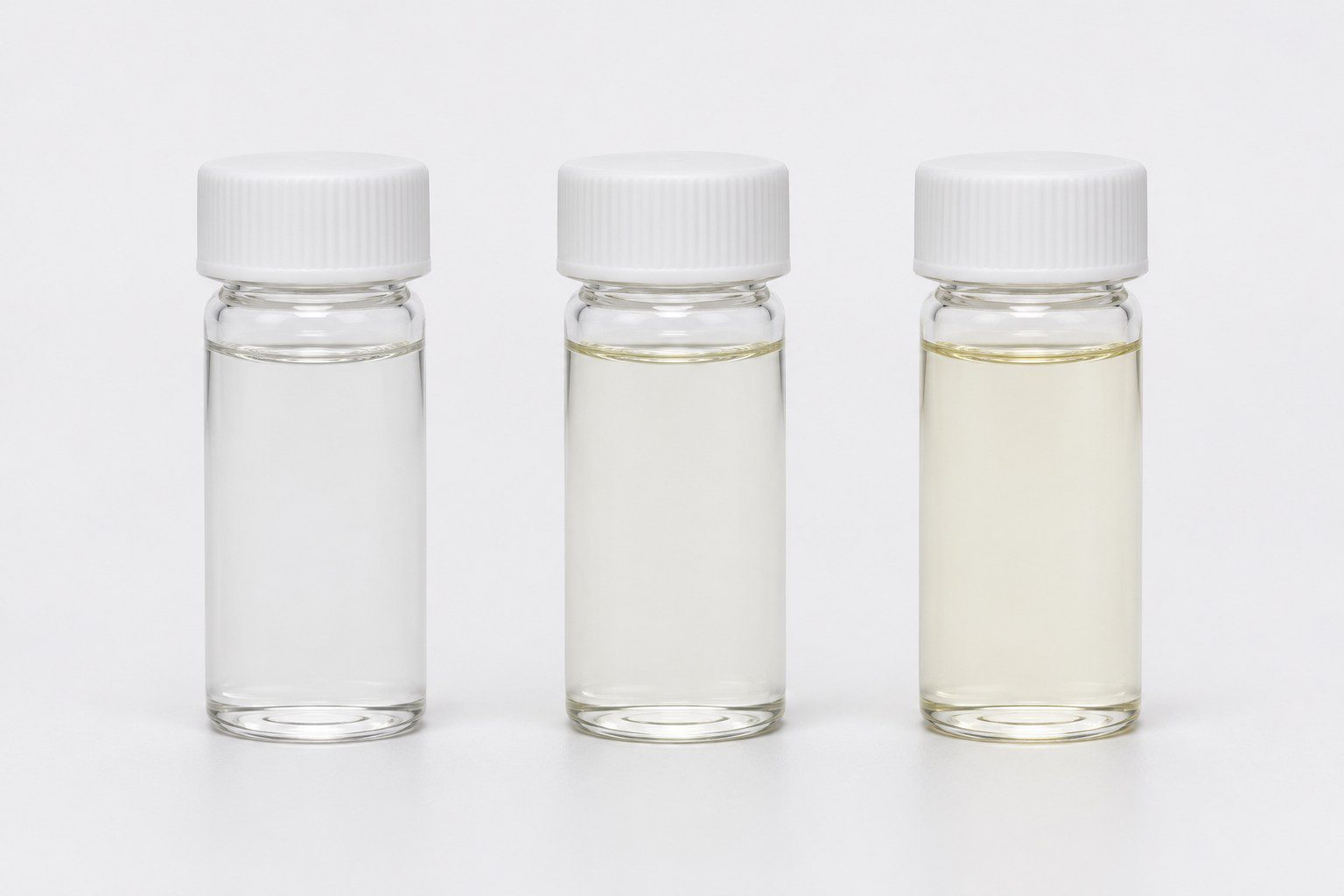
Agree whether the finished product must be visually transparent, whether a tint is acceptable and how each result is judged. A clear pale-yellow liquid may pass a clarity check yet fail the color goal. Use a separate decision for haze and visible particles. Avoid wording such as ‘water-clear’ without a reference or an agreed meaning.
Compare the concentrate and finished product without conflating them
Record the concentrate’s appearance for traceability, but test it in the actual intended base using your team’s approved method. Have a matched finished reference and an unfragranced vehicle if relevant. A dark oil is not automatically rejected at this stage, and a nearly colorless oil does not guarantee a colorless or transparent finished perfume.
Control the way color is seen
Compare at equivalent fill, lighting, viewing geometry and background. Test the finished package if glass color, decoration or optical thickness could affect what the customer sees. Decide whether visual comparison to a reference is adequate or if a validated instrumental method is needed. If you specify an instrumental result, use the same method and sample conditions for both sides.
| Appearance question | Control or reference | Avoid concluding |
|---|---|---|
| Is it clear? | Matched container and lighting | No tint just because no haze |
| Is the tint acceptable? | Agreed color reference at matched fill | Identical appearance in every bottle |
| Does it remain acceptable? | Documented age and storage check | A fresh fill proves shelf life |
Check the points that matter for approval
Agree on the age and storage stages that matter for this project. Compare same-age samples under the product team’s approved stability procedure rather than using a single fresh fill to represent shelf life. Note the first point at which any color or clarity difference appears. Any test result applies only to the documented material and conditions, not to other bases or future revisions by default.
Do not trade away the brief silently
If a lower-color candidate changes the scent direction or intensity, record the two tradeoffs independently. Use separately coded samples and an approved sensory comparison. Select the option that fits the written appearance and fragrance targets, or revise the brief with the owner. A more transparent option may still need other product checks before it can be approved.
Send the supplier a target it can work with
Provide the fragrance version, vehicle, intended pack, image or retained reference, evaluation conditions, stage of any change and the sensory limits you need to retain. For instance, request a candidate whose finished sample matches a chosen reference at the agreed checkpoint while retaining the approved opening. Avoid promising that the oil is colorless in every use.
Frequently Asked Questions
Can a yellow concentrate still work in a clear perfume?
Possibly. Compare the actual approved base against a finished-product reference rather than judging the concentrate alone.
Can I specify just ‘clear’ to the supplier?
It is better to separate transparency and color and attach a reference or agreed limit.
Do I need to recheck the scent for a lower-color candidate?
Yes. If the fragrance version changes, compare its sensory profile as well as appearance before sign-off.
Related Guides and Application Support
- Fragrance Oil Stability Testing: How to Check Compatibility Before Mass Production
- Custom Fragrance Development: From Creative Brief to Approved Formula
Contact SHEAIN. Share your end-use application, target market and scent brief to discuss fragrance oil concentrate samples.


