

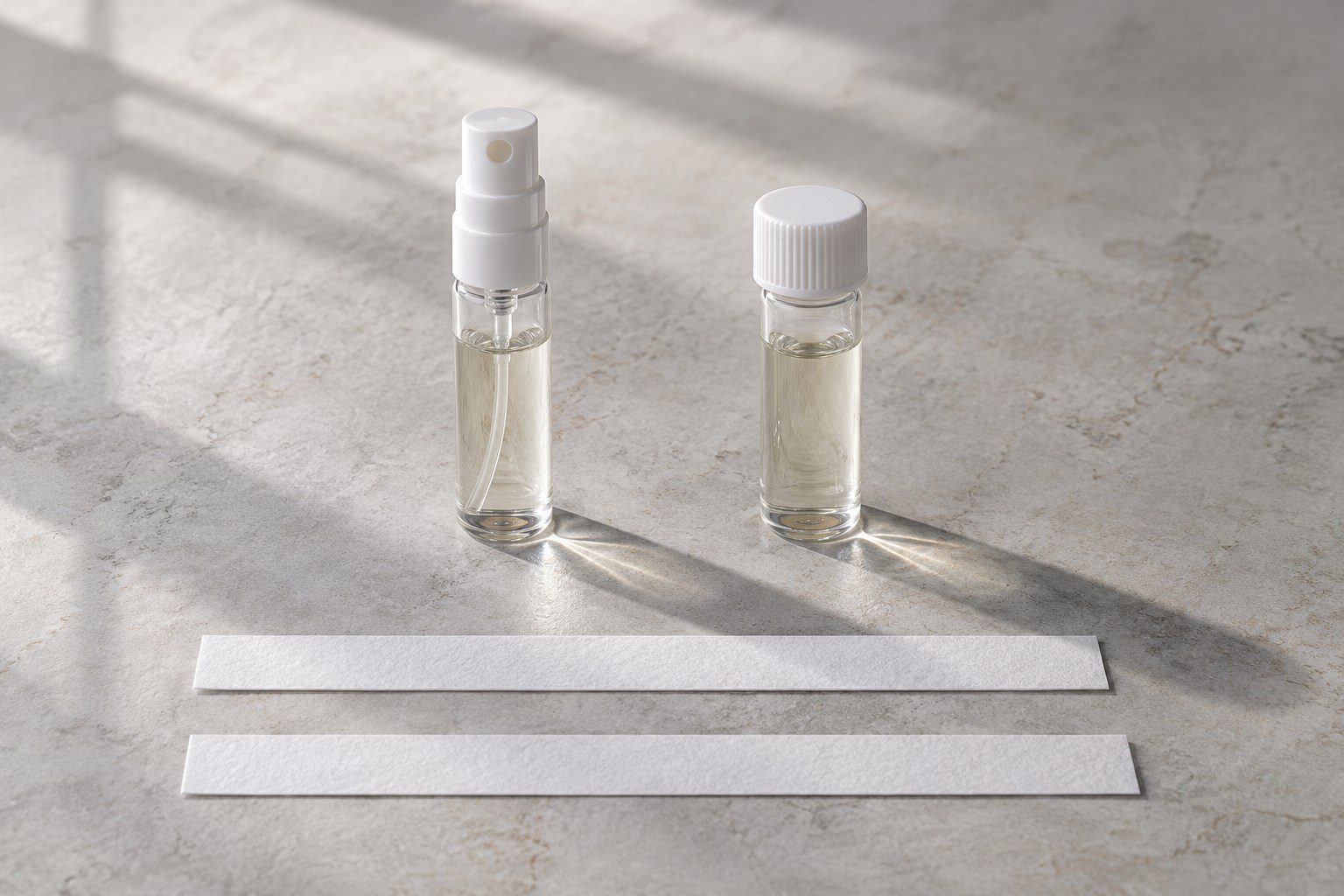
Perfume spray vs dab scent evaluation is not a straight comparison when the delivery method, amount and carrier all change. Choose one approved method for sign-off, normally the one that represents the finished format. You can use the other as a screening method, but first determine what the two methods tell you about the same perfume and where the results cannot be combined.
Decide what each method is supposed to answer
A quick dab on paper can narrow a set of directions. A spray trial in the intended pack can address what an evaluator notices from the intended format. Decide whether you need a screening comparison of concentrates or approval of a finished product. Do not let easy access to a dab vial turn a preliminary result into a format approval.
Use the same finished formula and carrier first
Split the same defined finished perfume across the authorized comparison methods. Start with the same approved carrier where practical, and document grade or identity. Paper, textile and skin are not interchangeable conditions. Do not move to a skin comparison merely to resolve inconsistent results; any application outside the approved procedure is a different assessment requiring its own review.
Document application instead of guessing equivalent doses
Record the sprayer model and the team’s documented application condition, and log the controlled dab method in a separate field. A spray count and a drop count do not automatically deposit the same amount on the carrier. If equivalence is necessary, have the qualified team define and verify a suitable measurement method. Track unusual wetting on the carrier without assuming that appearance quantifies dose.
| Item | Spray record | Dab record |
|---|---|---|
| Carrier | Identity and batch if relevant | Same carrier in the initial comparison |
| Application | Approved sprayer and application record | Controlled transfer method and record |
| Timing | Elapsed time from spray to checks | Same checkpoints from dab application |

Record fragrance at matched elapsed times
Start timing from each sample’s application. Compare at agreed points that capture the opening and later changes without claiming a universal timeline. Record identifiable notes, strength and deviations independently. Present coded samples in a consistent or balanced order. If samples had different rest times before the panel began, label this difference rather than reading it as a change in the formula.
Interpret disagreements as method information
If the spray seems brighter at the first check while the dab smells similar at a later check, that is a difference in conditions and observations, not proof that the formula changed. Confirm the pattern in a repeat comparison. Keep the two records separate. If an equipment change is suspected, compare against a documented reference sprayer under the approved process.
Sign off a named method and reference pack
Record perfume revision, carrier, application, device or applicator, timing, observations and the version cleared for approval. For a spray product, document the relevant finished pack or its qualified representative. Share the matching-method result with the supplier. That prevents an approval made using one format from being silently transferred to another.
Frequently Asked Questions
Can dab results be used for spray sign-off?
Only if the project documents why the methods are suitable for that decision. Otherwise use dab for screening and qualify the finished spray separately.
Does one spray equal one dab?
No general equivalence follows from a count. Record and verify application as needed.
Should I combine the two intensity scores?
Keep them separate unless the method defines a meaningful comparison and acceptance rule.
Related Guides and Application Support
- Fragrance Bottle Headspace vs Blotter: Why the Buying Questions Differ
- Fragrance Triangle Test: Check Detectable Difference Without Confusing Preference
Contact SHEAIN. Share your end-use application, target market and scent brief to discuss fragrance oil concentrate samples.


