

Fragrance oil stability testing is the controlled evaluation of a fragrance in its actual product base, package, and expected storage conditions before mass production. A useful program checks odor, color, clarity, viscosity, pH, separation, packaging interaction, and application performance against an approved control over time.
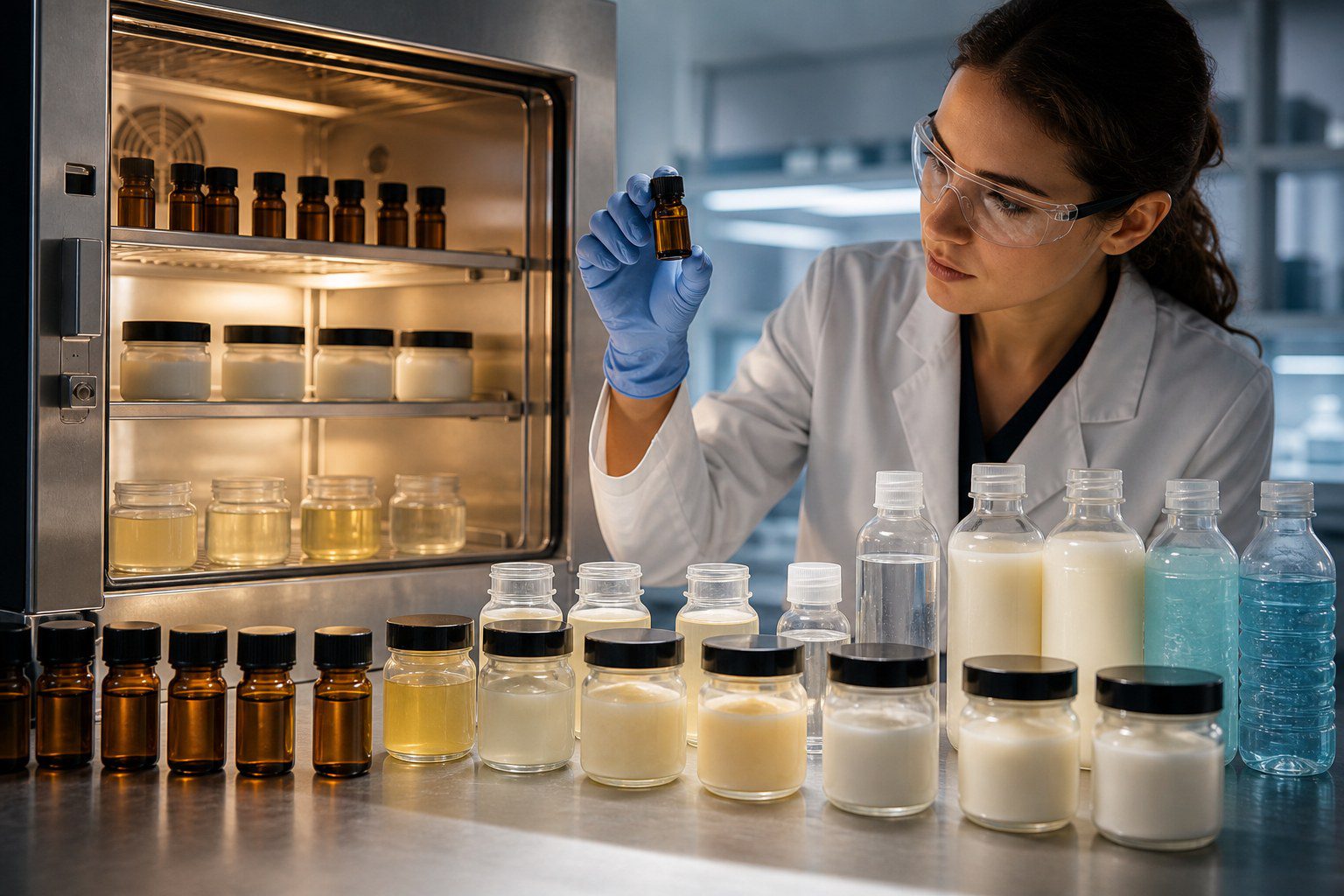
What Is Fragrance Oil Stability Testing?
Stability testing asks whether a fragrance and finished formulation remain acceptable during manufacturing, storage, shipping, sale, and use. Compatibility testing asks whether the fragrance interacts unfavorably with the base, active ingredients, colorants, preservatives, wax, surfactants, or packaging.
A blotter test alone cannot answer these questions. The same fragrance may behave differently in detergent, candle wax, reed-diffuser base, shampoo, lotion, or alcohol perfume. The finished product—not the oil bottle—is the decisive test environment.
Quick Answer: What Should Be Tested?
| Area | Typical observation | Why it matters |
|---|---|---|
| Odor | Character, strength, off-notes | Detects oxidation or base interaction |
| Appearance | Color, clarity, haze, sediment | Protects consumer acceptance and packaging appearance |
| Physical stability | Separation, precipitation, viscosity | Shows whether the system remains uniform |
| Chemical indicators | pH and relevant specifications | Signals formulation change |
| Packaging | Leakage, swelling, staining, odor loss | Checks container compatibility |
| Performance | Burn, diffusion, wash retention, skin feel | Confirms real application results |
Why Fragrances Fail in a Finished Base
Fragrance materials differ in volatility, polarity, solubility, oxidation sensitivity, and reactivity. A surfactant system can suppress diffusion; an alkaline detergent can change an odor profile; heat can accelerate discoloration; and an unsuitable plastic can absorb or be affected by aromatic materials.
Failure does not always mean the fragrance itself is poor. Dosage, mixing order, processing temperature, preservative system, packaging, headspace, or the product base may be the cause. Testing should isolate variables before the formula is changed.
A Practical Test Protocol
- Define acceptance criteria. Record target odor, appearance, pH, viscosity, performance, and allowable variation.
- Prepare a control. Retain unfragranced base, fresh fragrance, and the approved initial sample.
- Make representative batches. Use intended dosage, mixing order, temperature, and processing time.
- Fill final packaging. Test the actual bottle, cap, liner, label, and secondary pack when possible.
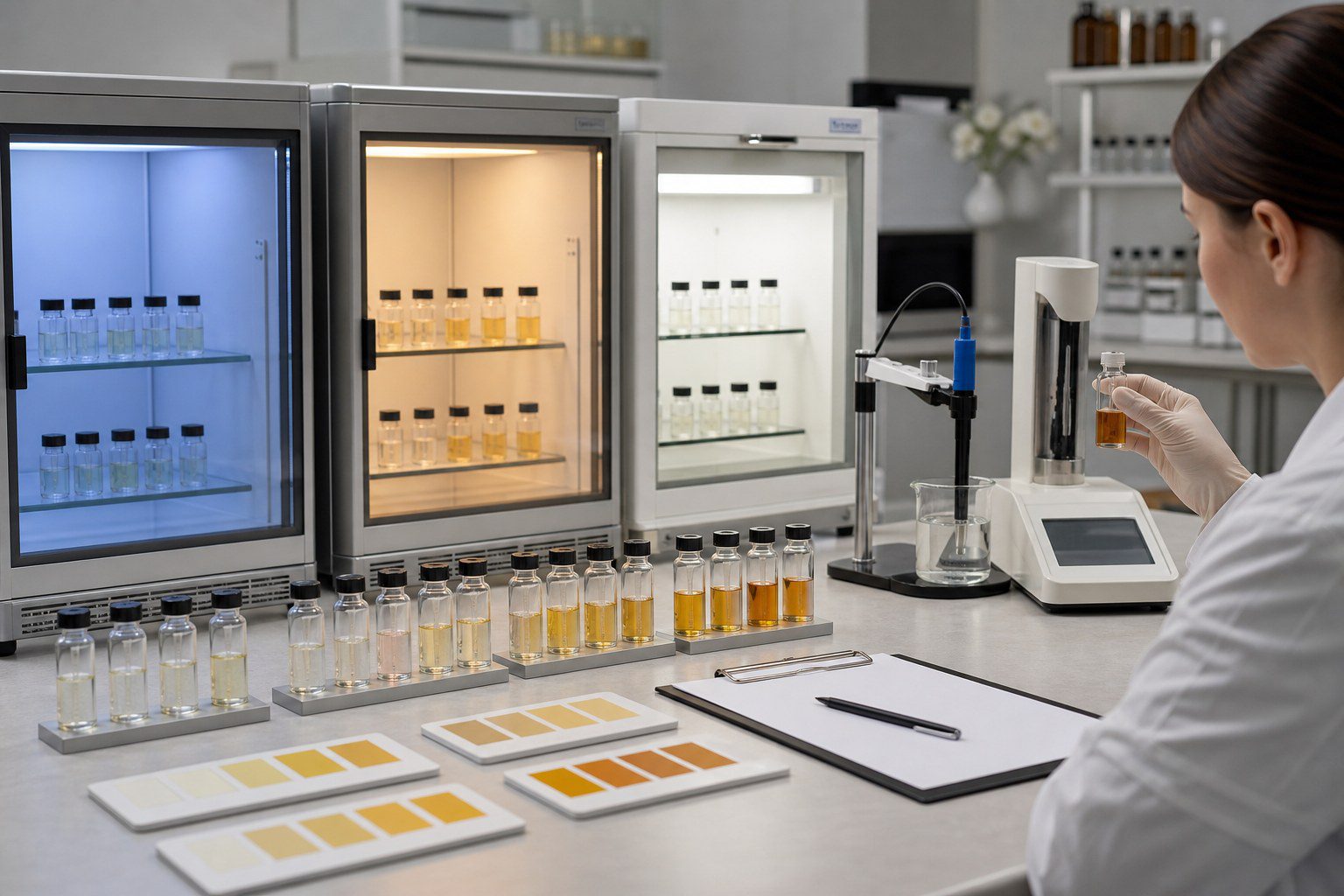
- Use multiple conditions. Include intended storage, elevated temperature, low temperature, light exposure where relevant, and freeze-thaw cycles when appropriate.
- Set checkpoints. Inspect at time zero and planned intervals with consistent methods.
- Compare and document. Photograph samples, use sample codes, and record every observation.
- Confirm with real time. Accelerated tests are screening tools and should be supported by real-time data appropriate to the product.
Application-Specific Tests
Candles
Evaluate solubility in wax, cold throw, hot throw, color, sweating, wick behavior, flame, soot, and container temperature. Follow a controlled burn-test protocol for the finished candle.
Reed Diffusers
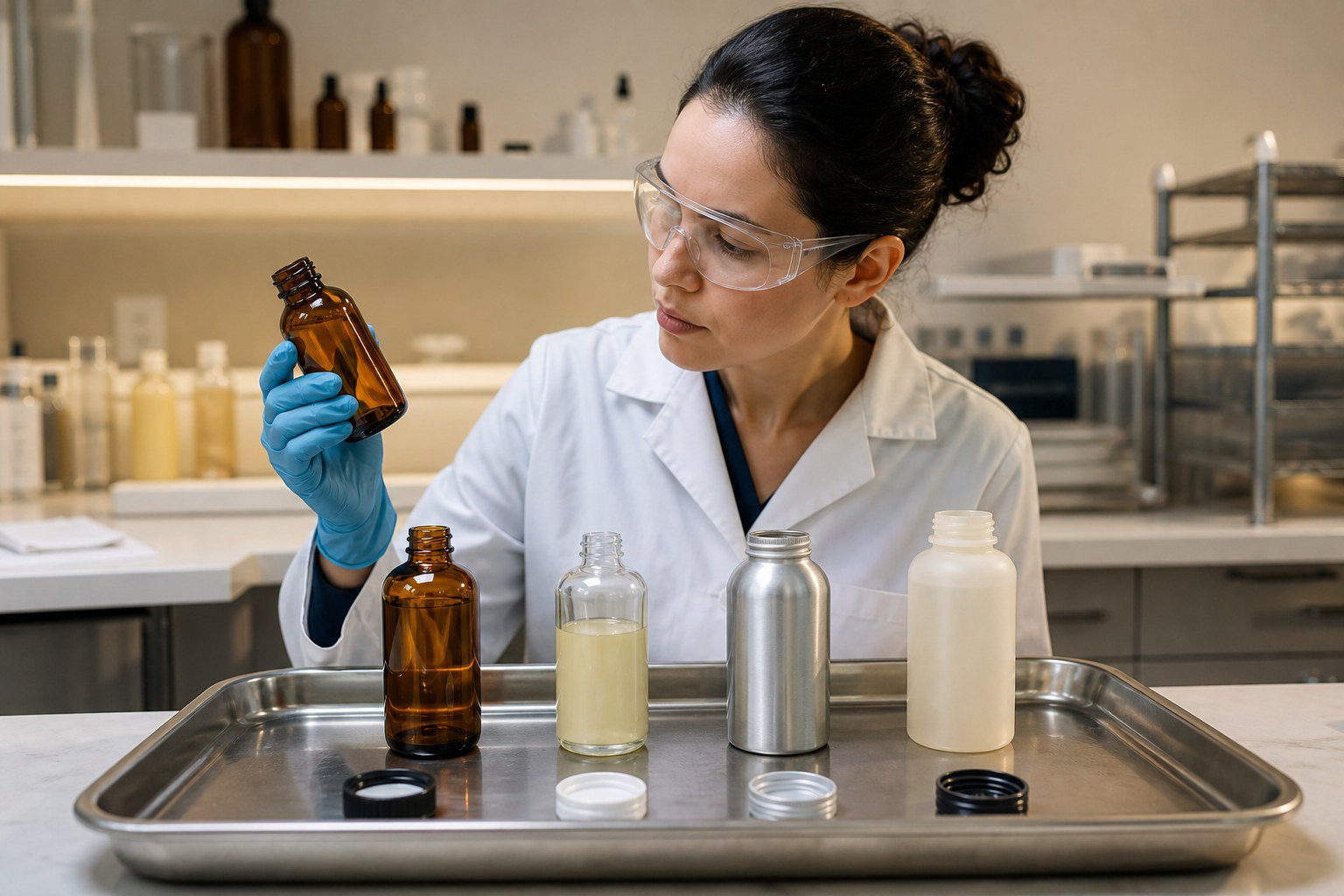
Check clarity, solubility, evaporation, reed uptake, room diffusion, discoloration, and package components. A clear mix at day one can still develop haze later.
Detergent and Fabric Care
Monitor color, viscosity, pH, separation, bottle odor, wet-fabric odor, dry-fabric odor, and retention after storage. Use standardized wash conditions.
Shampoo, Body Wash, and Lotion
Assess emulsion or surfactant stability, viscosity, color, pH, packaging, odor over time, and any finished-product safety or microbiological testing required by the manufacturer.
Alcohol-Based Perfume
Check clarity, color, sediment, odor development, filtration, pump performance, crimp or closure integrity, and compatibility with decoration and labels.
How Long Should Stability Testing Run?
There is no single schedule for every product. Duration and conditions should reflect formulation risk, packaging, distribution climate, intended shelf life, and destination-market requirements. FDA explains that cosmetic shelf life varies with product type, use, and storage, and that manufacturers remain responsible for determining safety and shelf life.
Do not convert a short high-temperature test into a guaranteed shelf life without a scientifically justified correlation. Continue real-time observation after launch when appropriate, maintain retained samples, and investigate complaints or unexpected changes.
How to Read a Failure
- Odor fades only at high heat: review volatile balance, package barrier, and realistic transport exposure.
- Color changes but odor remains: investigate oxidation, light, base chemistry, or ingredient color bodies.
- Viscosity drops after fragrance addition: optimize dosage, solubilization, surfactant balance, or processing order.
- Haze or sediment appears: check solubility, temperature sensitivity, dilution, and raw-material compatibility.
- Package deforms or leaks: screen alternate plastics, liners, closures, and fill conditions.
Records B2B Buyers Should Request
- Formula and batch identification
- Test protocol, conditions, and dates
- Acceptance criteria and results
- Photos or instrumental readings where relevant
- Packaging specification
- Deviation and corrective-action record
- Approved reference sample
Common Testing Mistakes
- Testing fragrance on a blotter but not in the product
- Using a laboratory base that differs from production
- Changing several variables at once
- Skipping the final package
- Judging odor without a control or trained panel
- Treating accelerated aging as an automatic expiration-date formula
- Starting bulk production before written approval
How SHEAIN Supports Stability Work
SHEAIN can recommend fragrances by application, prepare samples, adjust formulas from structured feedback, and provide relevant supplier documentation. Finished-product manufacturers remain responsible for validating their complete formulation, claims, packaging, and market compliance. See our guide to fragrance supplier documents.
Frequently Asked Questions
Is an IFRA Certificate proof of stability?
No. It addresses conformity with applicable IFRA Standards for stated uses; it does not prove compatibility or shelf life in your formula.
Can a supplier test my exact base?
Often yes, if you provide the base and process information. Confirm confidentiality, sample quantity, test scope, and responsibility.
Should fragrance be tested at several dosages?
Yes. A screening range can reveal the best balance of odor, stability, performance, compliance, and cost.
Does a passing hot test guarantee two years of shelf life?
No. Accelerated testing supports risk assessment but requires scientifically justified interpretation and appropriate real-time confirmation.
Who approves the final result?
The finished-product manufacturer or responsible brand should approve the tested formula, package, specifications, and claims before commercialization.
Authoritative References
Discuss Your Test Plan
Contact SHEAIN with the product base, package, dosage, target market, and expected shelf life.


