

Diffuser fragrance residue is a symptom, not a single formulation defect. A white deposit in a water-filled reservoir, an oily film near an outlet and particles in an unopened oil bottle need different investigations. Identify the material and where it appears before changing the fragrance or the cleaning process.
Describe the deposit before removing it
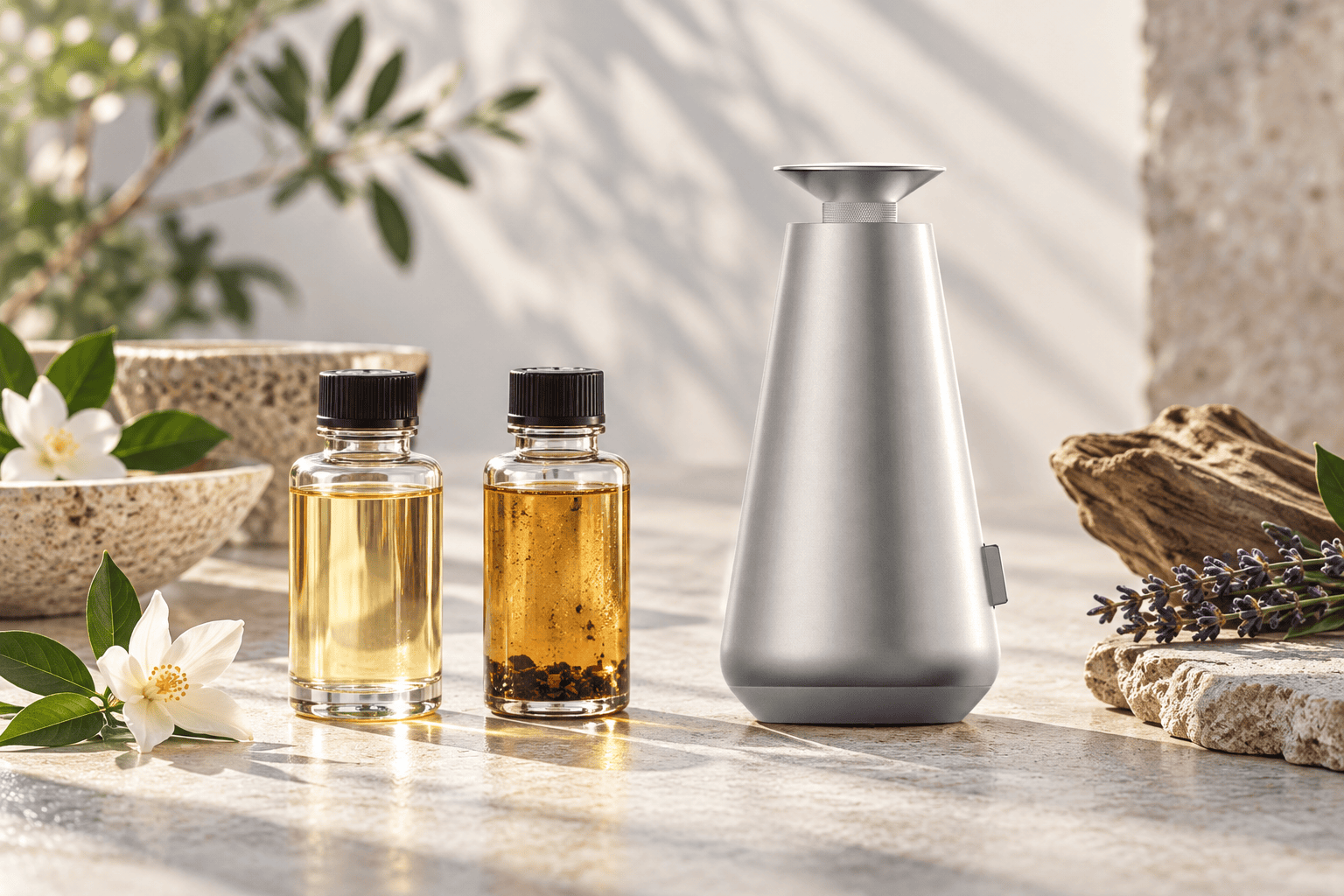
Photograph the location and note whether the material is white, sticky, crystalline, oily or particulate. Record when it first appeared and whether output changed. Keep a sample of the unused liquid for comparison. Appearance provides a starting hypothesis, not a chemical identification; unusual deposits may require supplier laboratory assessment.
Separate liquid problems from equipment problems
Inspect a fresh sample in a clean, compatible glass container. If sediment is already present before the liquid enters the machine, investigate storage, formulation and contamination. If it appears only after operation, compare a second unit and the manufacturer-approved control liquid. This helps distinguish a batch issue from a unit-specific fault or cleaning carryover.
Use the correct control for the technology
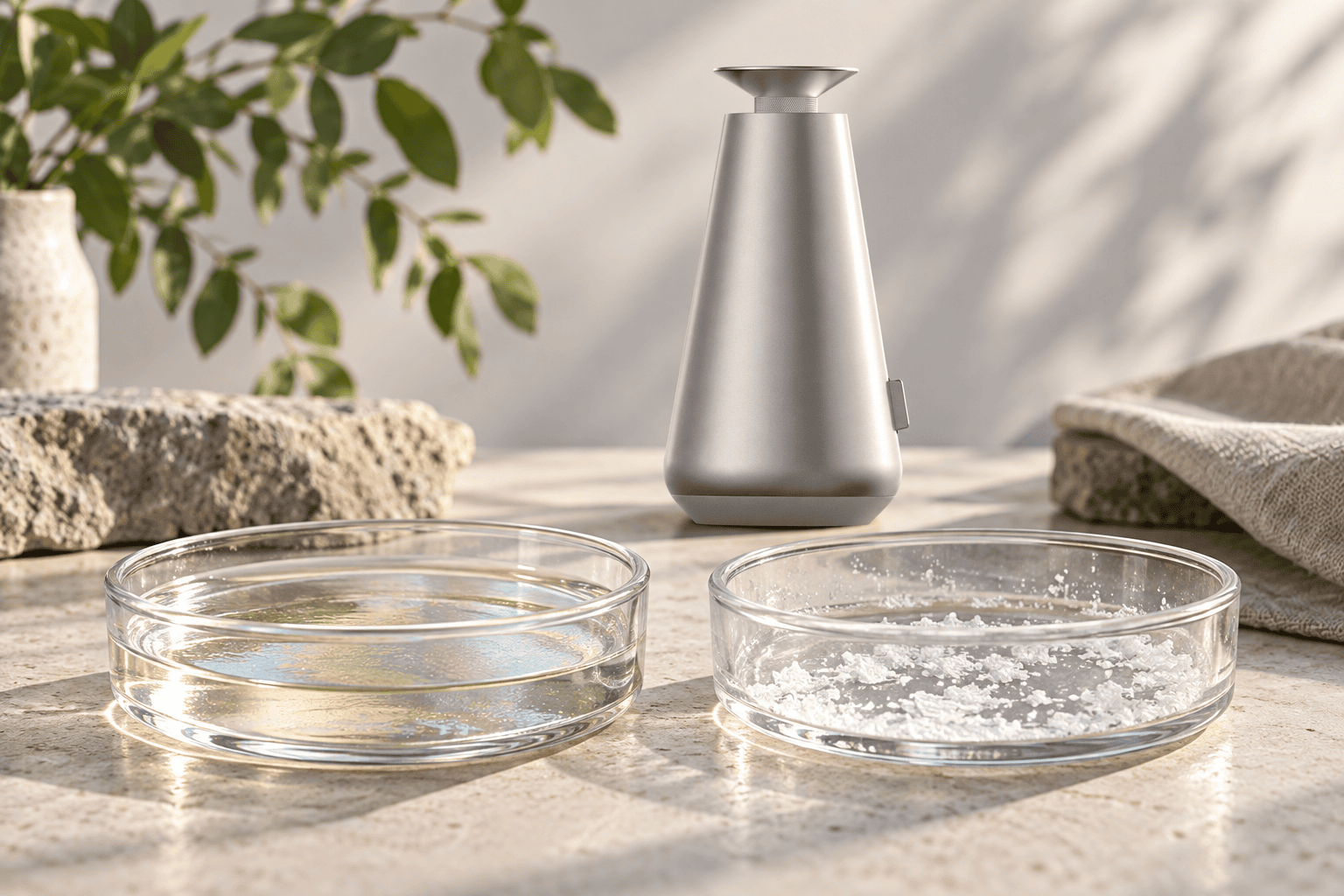
For a water-filled device, compare the same water without fragrance when the operating instructions allow it. Water mineral content can contribute deposits. A waterless device needs the equipment maker’s approved reference liquid instead; do not run an improvised water control through it. Record each control separately so one technology’s result is not applied to another.
Check the full history of the liquid
Record lot number, age, storage temperature, container material and whether another fragrance was mixed into the bottle. Compare retained fresh material with the in-use sample. A temperature-related precipitate may behave differently from dust or packaging fragments. Warming, shaking or filtering may hide the symptom without resolving suitability, so keep an untreated reference.
Clean only by the equipment instructions
Disconnect and service the device as directed by its manufacturer. Do not scrape a delicate atomizing surface or substitute an aggressive solvent. Cleaning recommendations from one brand do not establish compatibility with another. After the approved cleaning cycle, run the reference liquid and then the candidate to determine whether performance has recovered.
Close the investigation with evidence
A useful supplier report includes photographs, formulation identity, operating program, storage history and the before-and-after control results. Agree on the correction and repeat the original test under the same conditions. For recurrent residue, discuss formulation suitability with SHEAIN and equipment maintenance with the device supplier rather than assigning the cause from appearance alone.
Frequently Asked Questions
Does residue mean the fragrance is poor quality?
Not by itself. Water, carriers, storage, equipment and maintenance can all contribute.
Can mineral scale occur in waterless systems?
Water-based scale is less likely without water, but the deposit still needs identification rather than assumption.
Should cloudy oil be filtered?
Not before the cause is understood; filtration may alter the formulation or mask instability.
Can alcohol clean every diffuser?
No. Use the cleaning liquid and method approved for the specific equipment.
What is the most useful first comparison?
Compare unused liquid, a clean unit and the correct manufacturer-approved control.
Further Reading and Application Support
Manufacturer-specific maintenance guidance provides background on this application. Manufacturer-specific recommendations apply to their own materials and equipment; the comparison procedures above are editorial guidance, not reported SHEAIN test results.
Related guide: Fragrance Oil Solubility: Why Cloudiness, Separation and Sediment Occur.
Contact SHEAIN with your formulation, application and fragrance brief to discuss suitable samples.
