

Fragrance selection for open plan spaces should start with scent identity and the activities sharing the space. A fragrance that seems attractive in a sample room may feel different near a café counter, entrance or meeting area. This guide focuses on choosing the scent direction, not designing HVAC systems or calculating equipment coverage.

Map the competing impressions before choosing a fragrance
List the ordinary activities and odors in the space: coffee preparation, meals, cleaning, outdoor air, furnishings or product displays. Record when these are present instead of treating the room as a permanently neutral box. Address hygiene, spills and ventilation concerns directly; fragrance should not be used to hide a maintenance or air-quality problem. The scent brief should work with a suitable environment, not substitute for one.
Define a recognizable signature rather than maximum strength
Choose a few attributes that should remain identifiable, such as an airy tea impression with restrained wood, or a clean floral effect with low sweetness. Avoid a brief that asks only for strong diffusion. A louder scent is not necessarily easier to recognize, and it may be unsuitable for people spending long periods nearby. Decide how understated the fragrance should feel in conversation, work and arrival situations before asking for samples.
Compare near real activities, not only on a desk
After appropriate application approval, evaluate candidates under the actual intended use conditions. Keep normal activities and observation positions documented. Ask whether the fragrance retains its identity near the entry, café and seating area, and whether it creates an unwanted association with food or cleaning products. This is a sensory selection exercise. It should not be presented as a substitute for a qualified review of equipment, exposure, ventilation or site policies.
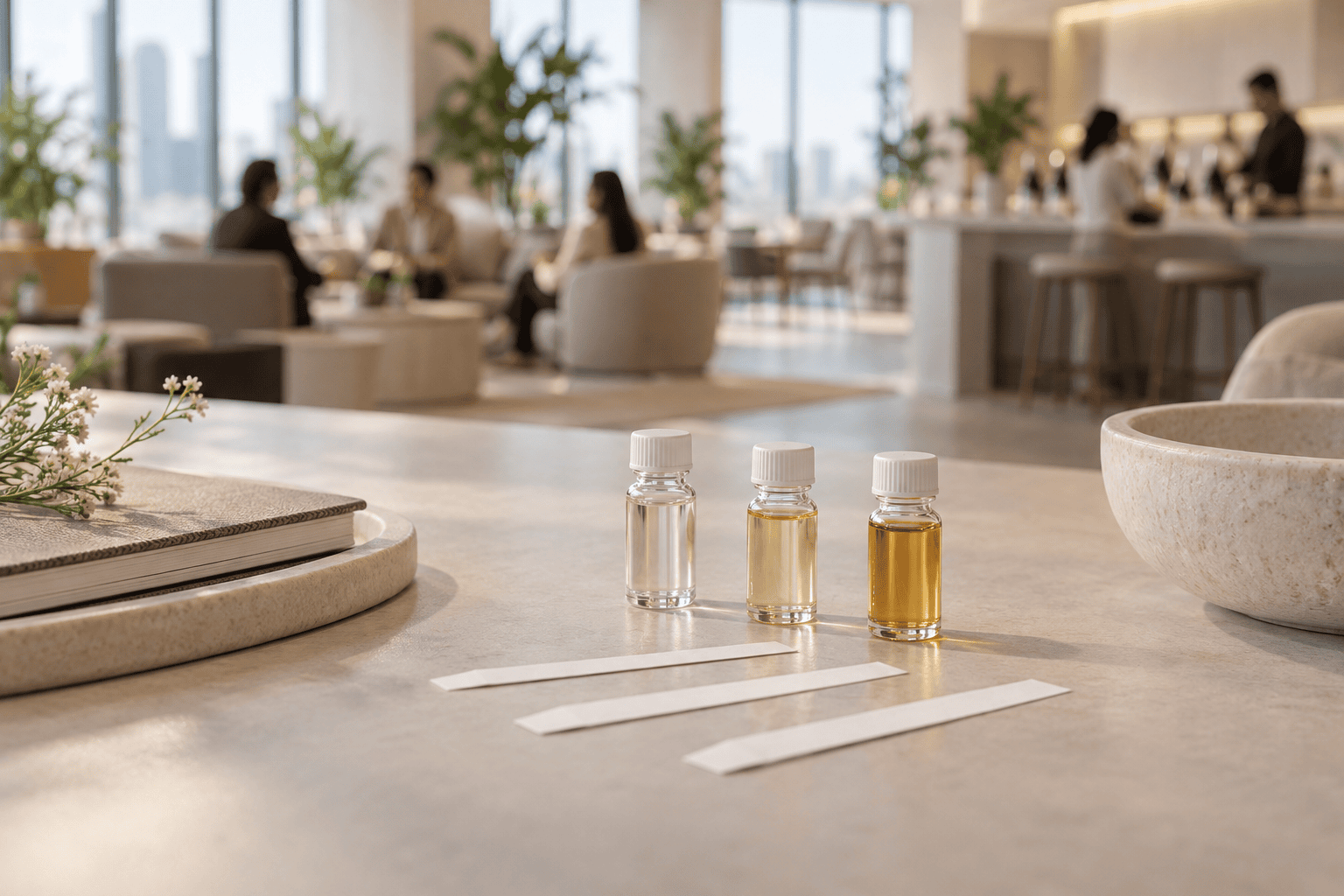
Separate recognition, liking and comfort
An observer may correctly recognize the fragrance but dislike it in a work area. Another may like it briefly but find it too prominent over a longer stay. Record those responses separately. Include relevant regular users and fresh visitors in a suitable evaluation, because their experiences may differ. Avoid turning a short entrance impression into a claim that the scent improves productivity, wellbeing or customer spending without evidence.
| Evaluation dimension | Question |
|---|---|
| Recognition | Can people describe the intended identity? |
| Context fit | Does it clash with food, cleaning or product odors? |
| Preference | Do intended users like the direction here? |
| Comfort | Is the intensity acceptable during the relevant stay? |
| Consistency | Does the impression remain appropriate across normal activity periods? |
Use nearby odor interactions to refine the brief
If the sample becomes dessert-like near coffee, note whether that association is desirable. If its crisp opening reads as cleaning product in the reception area, ask for a change in character rather than simply less fragrance. Do not attempt to solve every interaction by adding another scent to another zone. First identify which part of the candidate clashes with the actual environment, then request a focused revision.
Deliver a concise space-specific request to the supplier
Give SHEAIN the intended application system, activities, scent reference, unwanted associations and target users’ feedback. Explain whether the project needs a subtle background identity or a noticeable arrival impression, without inventing an equipment output specification. Confirm concentrate suitability with the relevant technical providers. Keep scent selection and system design as linked but separate tasks, so a successful creative choice is not mistaken for completed engineering approval.
Frequently Asked Questions
Which fragrance is best for every open-plan office?
There is no universal choice. Define the activities, intended impression and relevant user feedback for the specific space.
Does a large open space always need a stronger concentrate?
Do not make that assumption. Scent choice and delivery-system design are separate decisions.
Can fragrance solve an unwanted building odor?
Investigate the source and maintenance or ventilation issue first. A pleasant scent is not proof that the underlying problem has been resolved.
Related Guides and Application Support
- HVAC Scenting Oil: How to Select Fragrance for Commercial Scent Systems
- Custom Fragrance Development: From Creative Brief to Approved Formula
Contact SHEAIN with your end-use application, target market and scent brief to discuss fragrance oil concentrate samples.


