

Fragrance oil for ultrasonic diffuser applications must be evaluated in a water-filled device that explicitly permits the proposed fragrance. A pleasant bottle odor does not establish equipment compatibility. Start with the manufacturer’s permitted liquid types, then compare dispersion, mist behavior and residue under the same operating conditions.
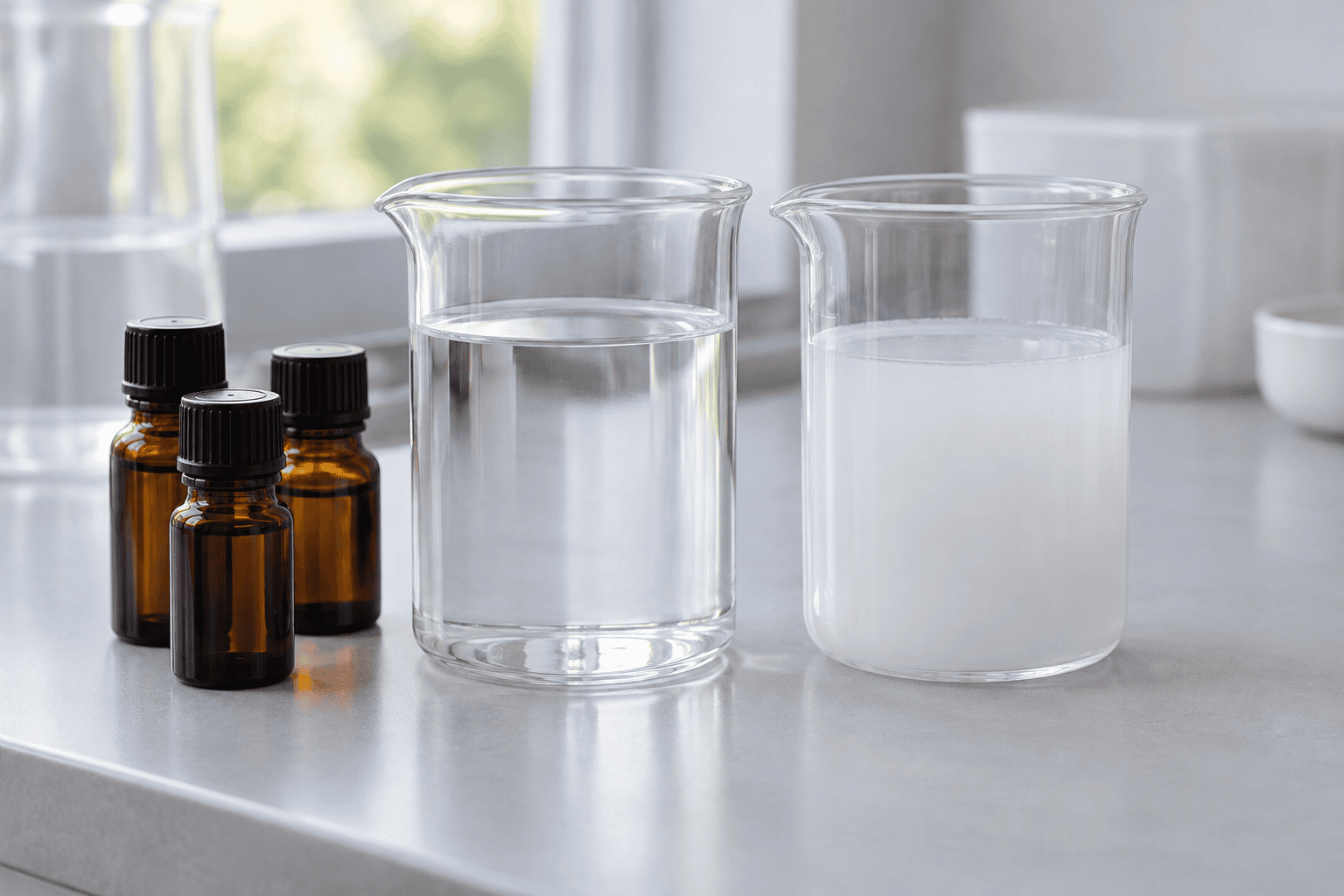
Check the device instructions before choosing the oil
An ultrasonic diffuser uses vibration to generate mist from its reservoir. This differs from a waterless nebulizer that atomizes an oil-based liquid. Do not transfer a formula between these systems just because both products are called diffusers. Some manufacturers restrict their devices to specified oils; if synthetic fragrance or an added solubilizer is not approved, obtain written compatibility guidance before testing.
Define the water and fragrance system
Record the water specification, fill level, fragrance identity, concentration and addition sequence. Oil floating on water is not the same as a stable dispersion, while a temporarily milky mixture is not proof of molecular solubility. Do not assume that adding more surfactant improves a device: foam and nonvolatile material can change its behavior. Select any dispersing system with the fragrance and equipment suppliers.
Compare mist output without confusing it with scent strength
Run the permitted water-only control and approved fragrance candidates at the same fill and setting. Record run time, remaining liquid, intermittent output, splashing and visible wetting around the outlet. Keep room ventilation and evaluation distance consistent. Water loss mainly describes reservoir output; it does not directly measure fragrance delivery. Evaluate odor separately at fixed intervals with fresh air between assessments.
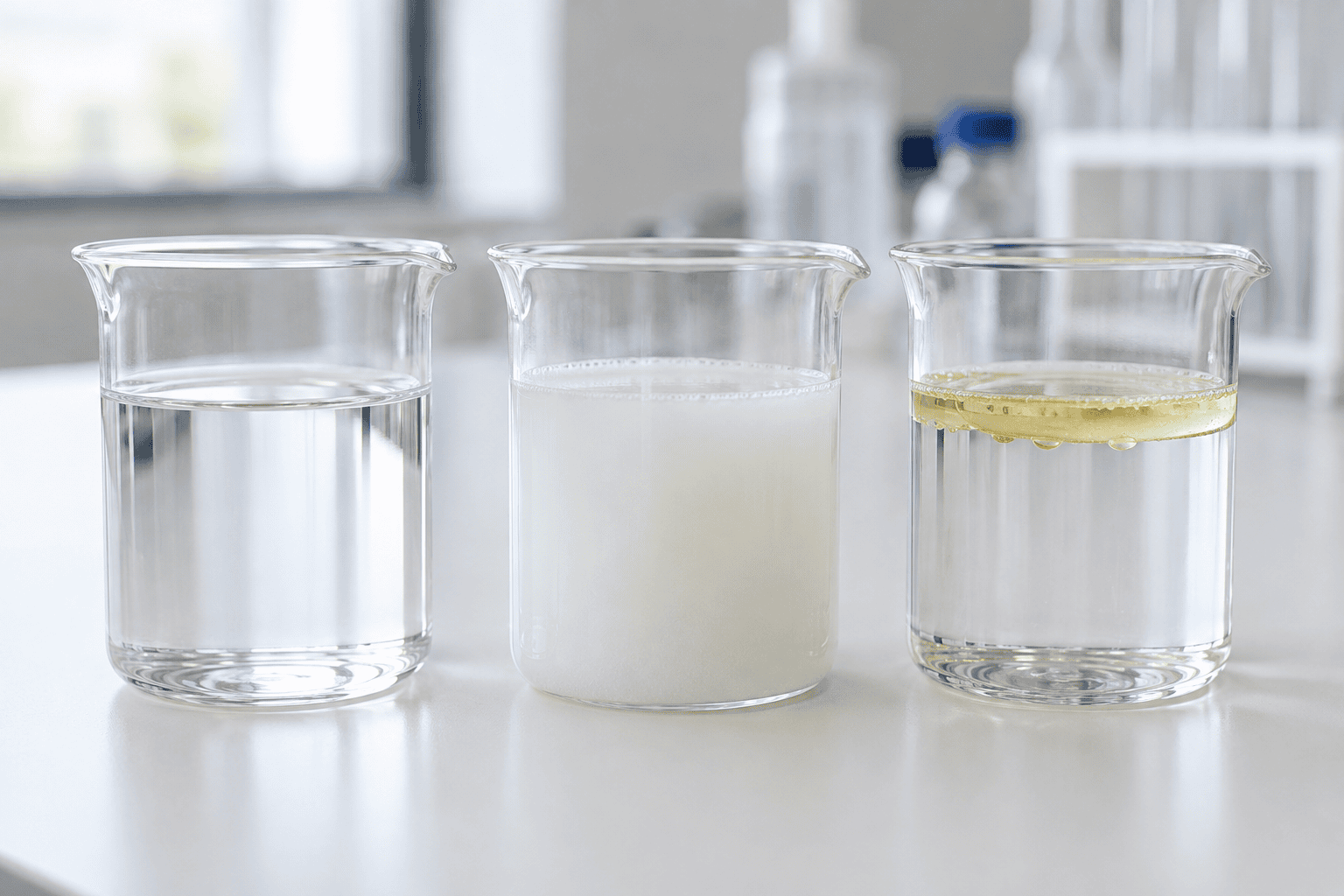
Inspect residue across repeated cycles
After each run, empty and inspect the reservoir using the equipment maker’s procedure. Photograph the same surfaces under the same light before cleaning. Compare water-only deposits with fragrance-associated films. Repeat with fresh liquid after the prescribed cleaning step to see whether output returns to its original condition. A single successful run cannot establish long-term compatibility.
Build a small acceptance sheet
Write the pass criteria before comparing samples: permitted ingredients, stable operation, no unacceptable foaming or leakage, acceptable odor at the target setting, and residue removable by the approved cleaning method. Include multiple units where possible. A candidate that smells stronger but repeatedly interrupts operation should not outrank a technically reliable option.
Send an application brief to the fragrance supplier
Provide the exact device model, permitted liquid instructions, water specification, target scent, proposed use level and intended market. Include photographs of residue and the water-only comparison if there is a problem. Ask SHEAIN about fragrance options for the specified system; availability and compatibility need confirmation for that application, rather than assuming every fragrance concentrate suits ultrasonic use.
Frequently Asked Questions
Can any fragrance oil go into an ultrasonic diffuser?
No. Use only liquids permitted by the device manufacturer and evaluate the specific fragrance system.
Does a clear mixture prove compatibility?
No. Clear appearance does not establish mist performance, material compatibility or acceptable residue.
Is more mist always more fragrance?
No. Visible mist and water loss are not direct measurements of fragrance intensity.
Can a waterless diffuser oil be used in water?
Do not assume it can. The delivery systems and permitted carriers may differ.
What should be sent with a residue complaint?
Provide the device model, formula identity, water used, operating settings, photographs and control results.
Further Reading and Application Support
Device-specific refill compatibility provides background on this application. Manufacturer-specific recommendations apply to their own materials and equipment; the comparison procedures above are editorial guidance, not reported SHEAIN test results.
Related guide: What Is Aroma Diffuser Fragrance Oil? Complete Guide for Brands and Distributors.
Contact SHEAIN with your formulation, application and fragrance brief to discuss suitable samples.
