

Rose fragrance oil scent profiles can range from fresh-petal and green to fruity, powdery or richly perfumey. The word rose alone does not tell a supplier which interpretation your brand wants. Start by choosing the role of the flower in the product, then describe the supporting effects you want to emphasize or exclude.
Why two rose samples can have different identities
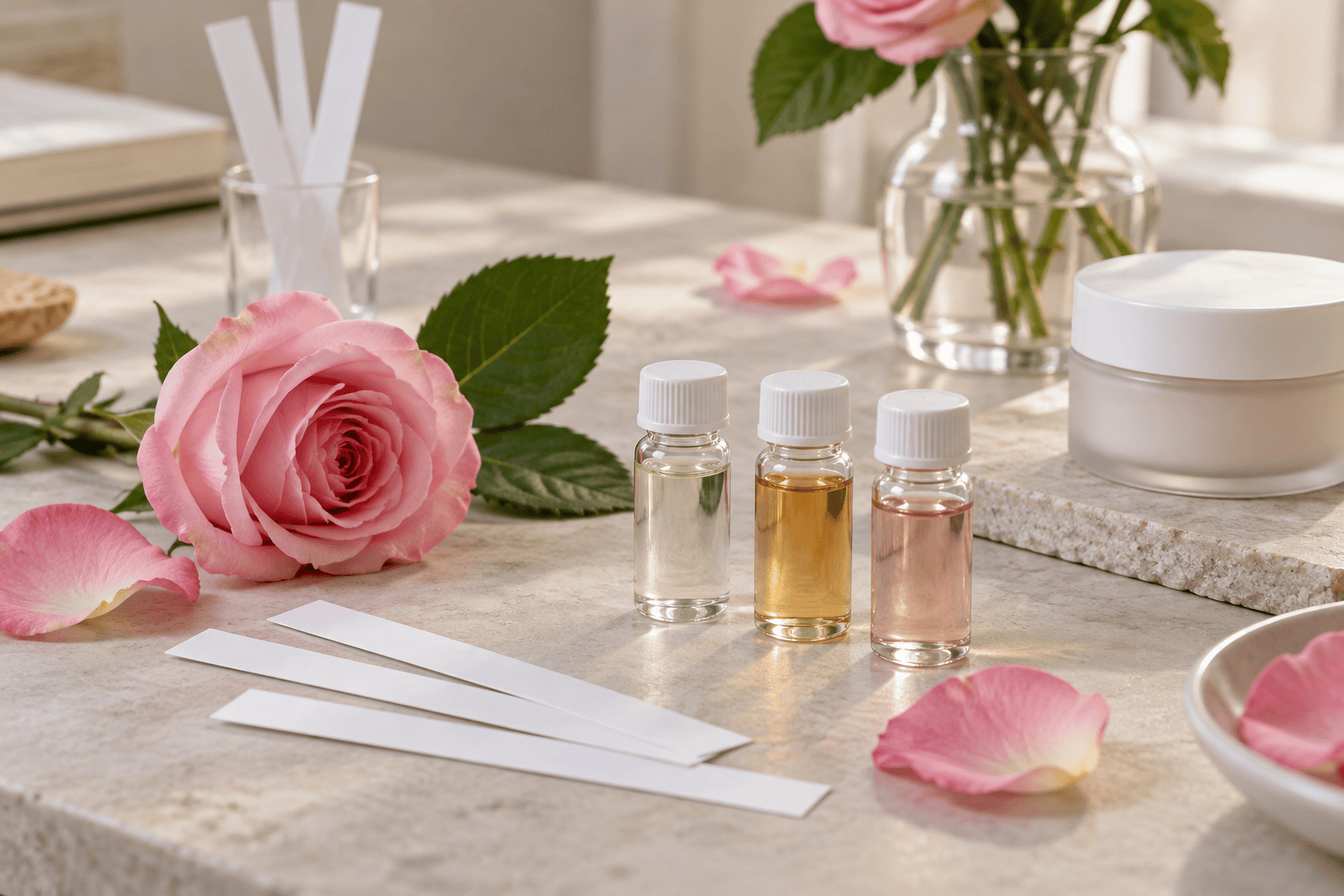
A rose fragrance is a composition, not a fixed recipe. Its surrounding notes can shift the impression even when both samples are recognizable as rose. Givaudan’s descriptions of rose-related materials include fresh-petal, fruity and airy effects, illustrating that the family contains several dimensions. Givaudan: contrasting rose and woody ingredient effects This does not establish which ingredients are in a SHEAIN concentrate, nor does a rose name prove the presence of rose essential oil.
Define fresh-petal, green and powdery in usable language
For a fresh-petal brief, describe the desired lightness and the amount of fruitiness you can accept. For a green brief, clarify whether you mean a crisp leaf impression or a stronger cut-stem effect. For a powdery brief, specify whether the cosmetic association should be subtle or central. These descriptors are a working framework for sample selection, not laboratory measurements. They are most useful when paired with physical references and clear exclusions.
| Direction | Useful wording | Clarification |
|---|---|---|
| Fresh petal | Airy, floral, recognizable rose | How much fruity character is acceptable? |
| Green rose | Leafy or cut-stem contrast | Should the green edge be subtle or prominent? |
| Powdery rose | Soft cosmetic association | Should powder lead or only support? |
Choose the flower’s role before increasing its intensity
A rose-led fine fragrance, a softly floral lotion and a clean rose laundry scent ask different things of the flower. In the first, rose may need to remain the main identity through the dry-down. In the second, it may support the product’s overall character without dominating use. In the third, it may need to remain recognizable beside clean-laundry effects. A request for “more rose” will not resolve a mismatch in role.
Separate unwanted sweetness from unwanted powder
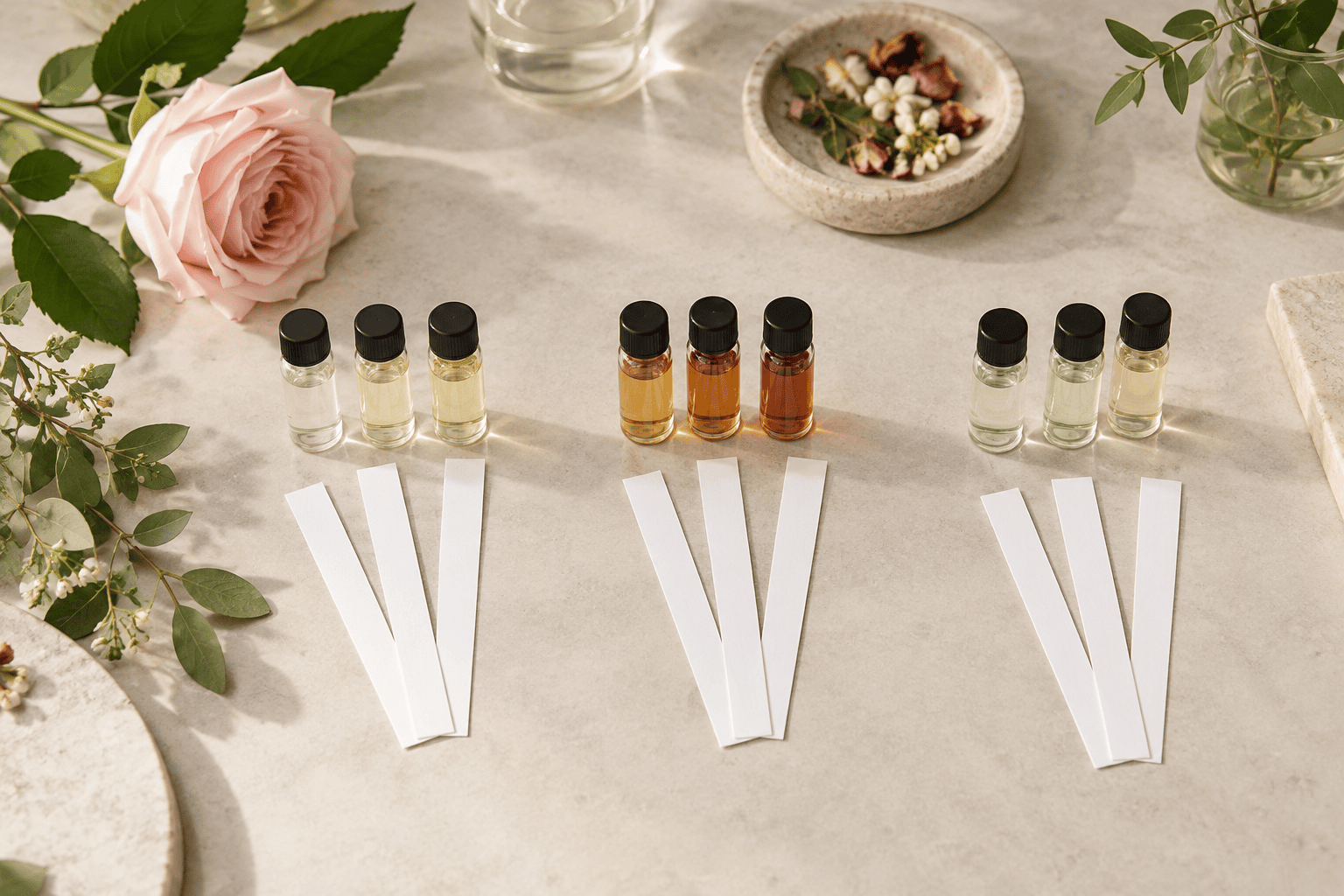
Feedback such as old-fashioned, synthetic or heavy can describe several different problems. Ask the evaluator what they actually notice. Does the sample seem sugary, jam-like, dusty, cosmetic, sharp or overly perfumey? Record the stage at which that impression appears. If a revision reduces powder but the real objection was sweetness, the project may move farther from the target. Attribute-specific feedback is more useful than judgments about the name or imagined ingredient quality.
Check the product rather than only the perfume strip
Compare candidate scents in the same application base and within the applicable supplier guidance. Check the relevant use stage: a lotion after normal application in an appropriate evaluation, a wash product during use, or a candle during its established test procedure. Keep the unscented base available as a reference. Record whether the rose stays recognizable and whether any supporting note becomes dominant. This keeps the decision focused on the finished experience.
Create a short rose sample request
An illustrative brief is: “Fresh-petal rose for a body-wash base, with a restrained green lift, low sugary fruitiness and no strong powder finish.” Attach the base information, reference sample and target market. Ask SHEAIN to propose suitable concentrate options and confirm current availability. Approve by sample code and revision, and keep the reference so later discussions are about the same rose identity rather than a generic floral category.
Frequently Asked Questions
Does rose fragrance oil contain natural rose oil?
Not necessarily. Request ingredient or origin documentation where a specific claim is planned.
Is a powdery rose lower quality?
No. It is a scent direction. Suitability depends on the product brief and the customer’s preferences.
How should I describe an unwanted rose sample?
Identify the unwanted attribute and when it appears, such as excessive sweetness in the opening or a dominant powdery finish.
Related Guides and Application Support
- Custom Fragrance Development: From Creative Brief to Approved Formula
- Fragrance Sensory Evaluation: How to Build a Reliable Sample-Scoring Process
Contact SHEAIN with your end-use application, target market and scent brief to discuss fragrance oil concentrate samples.


