

Oud fragrance oil scent profiles can be woody, resinous, smoky, leathery, sweet or deliberately challenging. There is no single oud brief that fits every product. A B2B buyer should define the desired balance, identify unwanted edges and separate the scent direction from any requirement for natural agarwood-derived material.
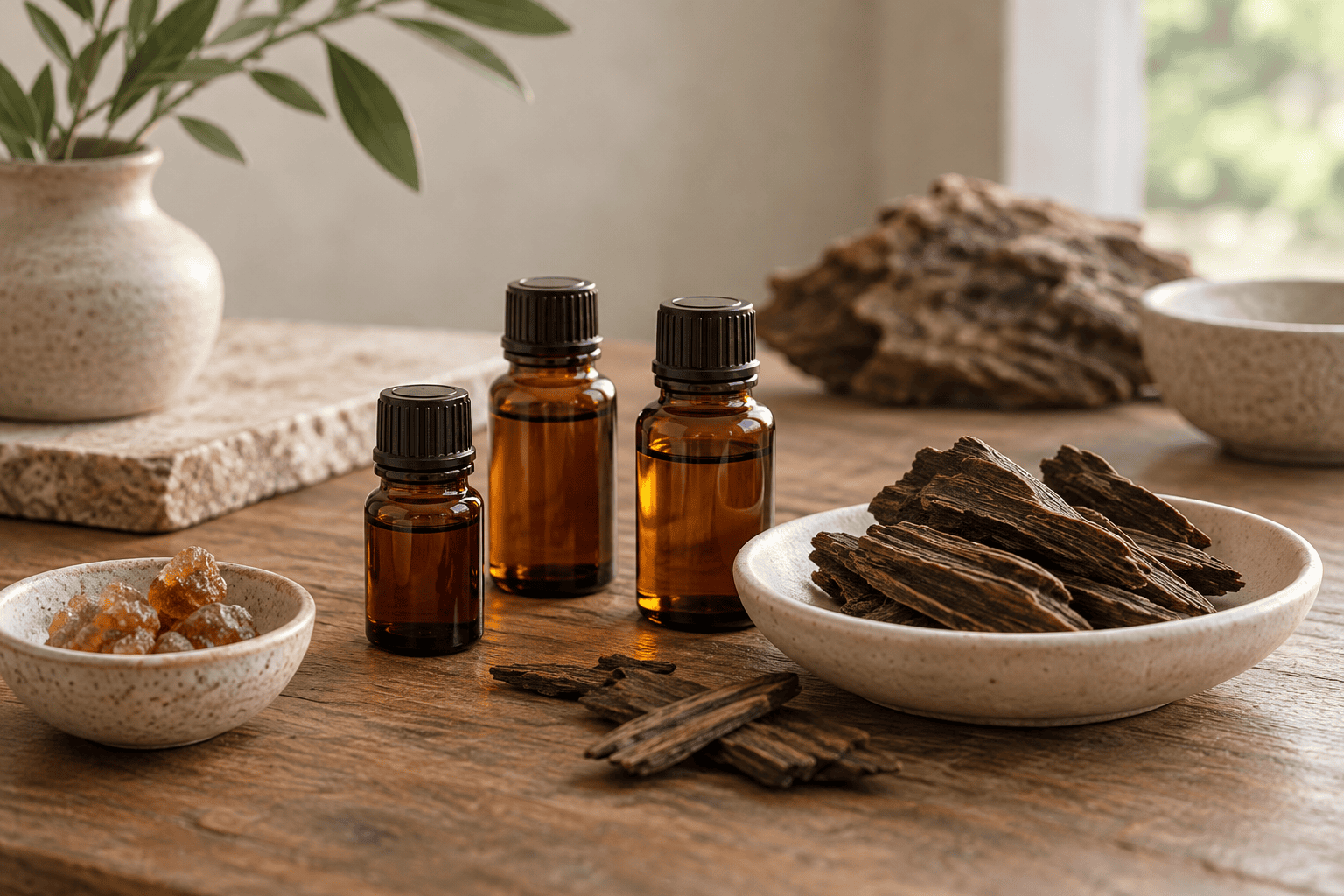
Separate an oud accord from a raw-material claim
An oud-style fragrance concentrate describes a composed impression; it does not automatically mean the product is distilled agarwood oil. Ingredient suppliers also describe materials that contribute agarwood-like facets to a composition. Givaudan: contrasting rose and woody ingredient effects If natural agarwood content, origin or traceability matters, request evidence for the specific supplied material. Do not use a sample’s darkness, price or commercial name as proof of provenance.
Choose the dominant effect before choosing intensity
Ask whether the center of the fragrance should feel like dry wood, warm resin, soft leather or a smoky effect. Then decide what must remain in the background. A request for strong oud might yield a much smokier sample than intended, even if the desired outcome was simply a clearer woody identity. Conversely, a very sweet surrounding accord can make an oud-themed scent feel rounded while moving it away from a dry-wood brief.
| Dimension | Define the target |
|---|---|
| Wood | Dry, rounded, dark or polished impression |
| Resin | Subtle warmth or a dominant balsamic effect |
| Smoke | Absent, restrained or deliberately noticeable |
| Sweetness | Dry finish or a sweeter surrounding accord |
| Origin | Separate documentary requirement, not a sensory judgment |
Describe difficult associations without vague judgments
Some evaluators use words such as medicinal, animalic, burnt or sour for aspects they dislike. Record those observations respectfully and precisely; they are not analytical identifications of ingredients. Include the stage where the association becomes noticeable and whether it is a complete exclusion or only needs reduction. “Retain the dark woody body, reduce the medicinal opening” is more actionable than “make this higher quality.”
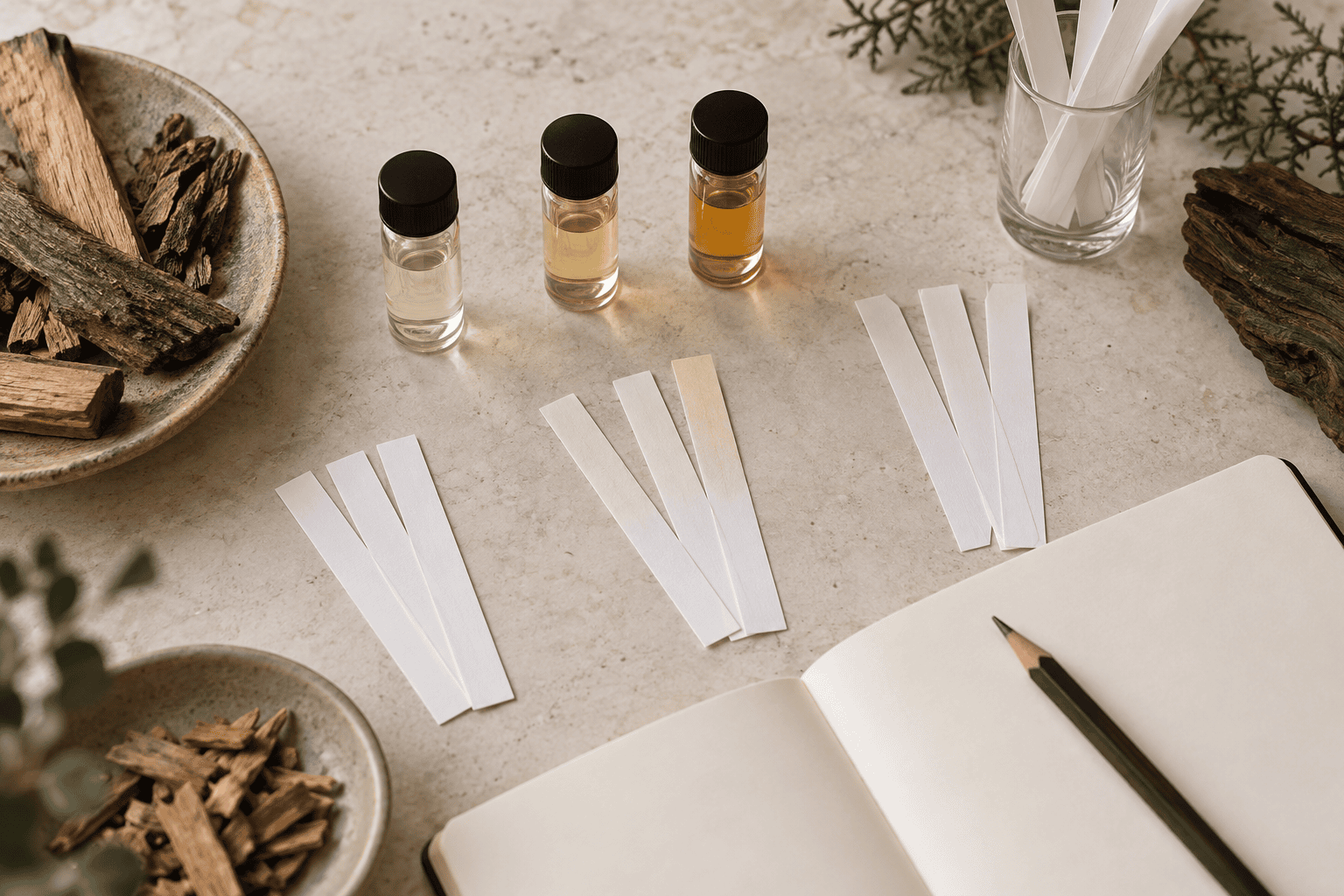
Do not assume a regional preference from the word oud
Oud is used in many fragrance contexts, but a country name does not define one customer preference. Ask the buyer for a reference, price position, application and desired balance. If a market-specific claim is important, validate the actual sample with the intended audience. Avoid treating all buyers in a region as wanting the same sweetness, strength or animalic character. A specific commercial brief is more reliable than a stereotype.
Check the accord in its application
An oud direction chosen for a personal perfume is not automatically suitable for a candle or a reed diffuser. Compare fragrance identity in the actual approved base and keep technical suitability separate from creative approval. Ask whether the main woody effect remains clear, whether the smoky aspect becomes excessive and whether the finish shifts toward unwanted sweetness. Do not compensate for every change by increasing dosage; send the observation back to the fragrance supplier.
Write a compact request that can be quoted and sampled
An illustrative request is: “Dry woody oud-style concentrate for our home-fragrance range, with a restrained resinous body, minimal smoke and no dominant medicinal opening. Natural agarwood content is not a marketing claim for this project.” If natural content is required, replace that last sentence with the actual documented requirement. Provide SHEAIN the base, target market and commercial constraints, then approve a specific revision rather than the word oud itself.
Frequently Asked Questions
Does oud fragrance oil always contain agarwood oil?
No. Confirm the actual product specification and any origin claim with the supplier.
Is a darker liquid a better oud fragrance?
Color does not establish scent quality, origin or suitability for a finished product.
Should I request the same oud formula for every application?
You can request a consistent identity, but each application needs its own technical approval.
Related Guides and Application Support
- Fragrance Oil vs Essential Oil: Which Is Better for Commercial Product Manufacturing?
- Custom Fragrance Development: From Creative Brief to Approved Formula
Contact SHEAIN with your end-use application, target market and scent brief to discuss fragrance oil concentrate samples.


