

Laundry fragrance fabric yellowing is an investigation question, not a diagnosis made from a yellow patch. A color change after laundering does not by itself prove that fragrance caused it. Preserve the affected textile, product and batch information, then compare appropriate controls. The aim is to determine which tested conditions reproduce an unaccepted change without confusing fragrance color, detergent effects, fabric history and later storage.
Define the observed change and its timing
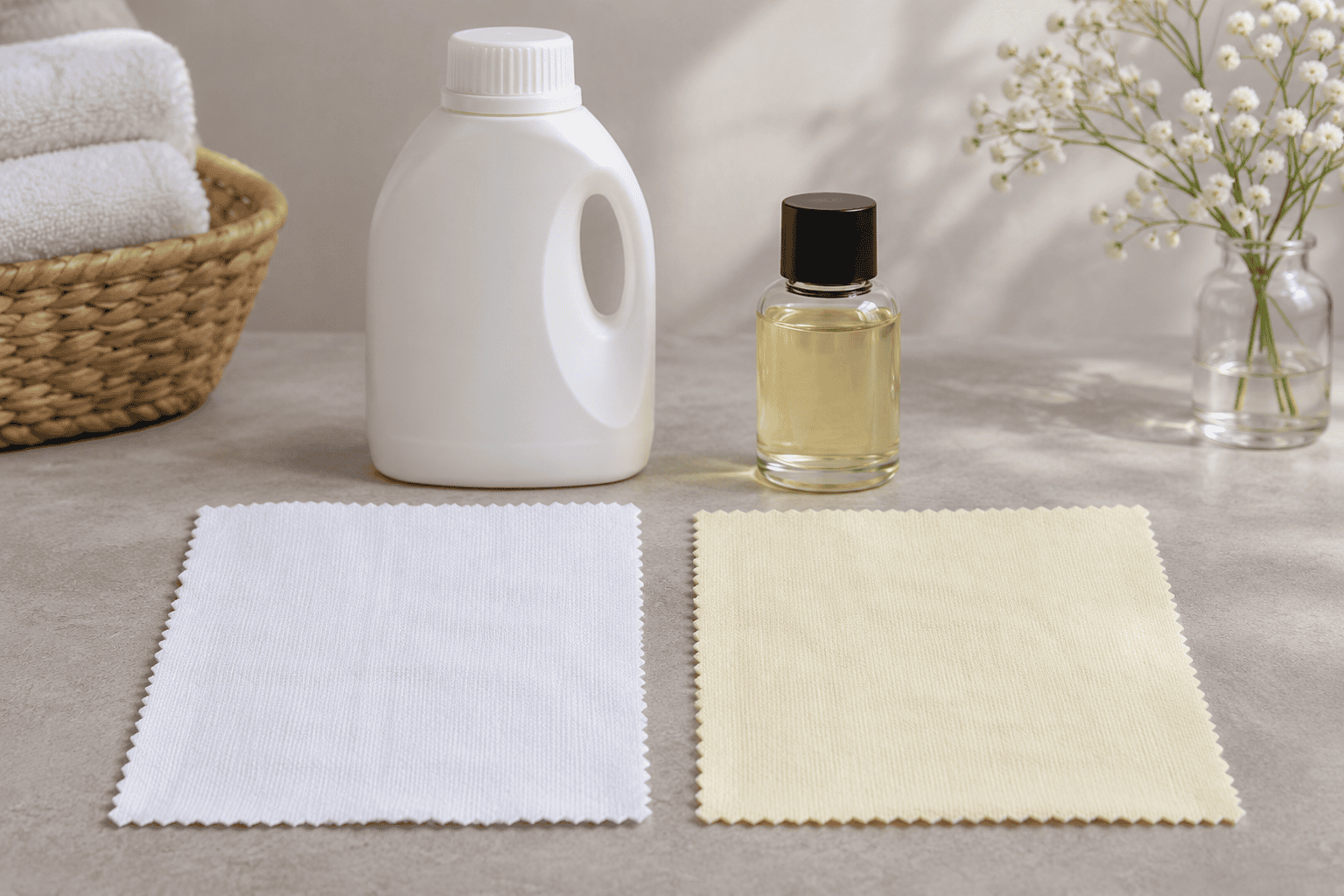
Record the fabric type, original appearance, location of the change and when it became visible. Distinguish uniform yellowing, local spots and changes noticed only after drying or storage. Research on a specified treated-cotton system illustrates that yellowing can involve textile treatment and surrounding conditions.Source: Research: phenolic yellowing in a specified treated cotton system It does not diagnose your product. Keep photographs and retained samples rather than assigning a cause from the fragrance’s name or liquid color.
Build an appropriate unscented-base comparison
Where technically appropriate, compare the same detergent base without fragrance against the fragranced candidate and an accepted reference. Keep other formulation differences explicit. If each candidate uses a different base, the comparison cannot isolate the concentrate. Use suitably matched fresh textiles and a documented preparation procedure. Do not apply neat fragrance to a cloth and treat that result as equivalent to a correctly formulated laundry product at reviewed use conditions.
Record washing and drying as separate variables
Document product amount, water conditions, temperature, textile load, rinsing and drying procedure. Follow the relevant reviewed instructions rather than inventing a harsh shortcut. A change after tumble drying and a change after air drying are different observations; assess the conditions relevant to the intended market. Avoid changing several variables simultaneously and then presenting the result as proof that one fragrance ingredient is responsible.
Include later storage when the complaint appears later
If discoloration is reported after storage, preserve the relevant packaging, environment and elapsed time in the investigation plan. Compare controls through the same stages. Keep textiles separated to reduce cross-contamination, and record the starting history. A clean appearance immediately after washing cannot rule out a later issue. Conversely, a stored yellow sample without a matched baseline does not establish when or why the change began.
Evaluate appearance independently from scent approval
Agree how color will be assessed and what counts as an unacceptable change before reviewing the samples. Use consistent lighting or an appropriate instrumental method selected by qualified personnel, with repeat comparisons where needed. The table is an original investigation aid, not validated stain-removal advice or SHEAIN test data. A preferred fragrance and a fabric-compatibility approval are separate decisions; one cannot substitute for the other.
| Evidence | Purpose | Do not conclude |
|---|---|---|
| Matched textile | Known starting appearance | Every yellow mark is fragrance |
| Unscented base | Separate base and fragrance variables | Different bases isolate the oil |
| Use stages | Wash, rinse, dry and storage history | First-day appearance proves lifetime |
| Assessment | Agreed repeatable color comparison | Scent preference proves compatibility |
Close the finding with a bounded conclusion
Send SHEAIN the concentrate code and lot, detergent base, textile details and complete observation record for a focused technical discussion. Involve the textile, base or testing supplier as appropriate. Approve a specific combination only against the agreed criteria and acknowledge unresolved causes. Do not promise that every pale-colored or vanillin-free fragrance is universally non-yellowing. A composition exclusion or clear bottle appearance cannot replace the actual finished-product evidence.
Frequently Asked Questions
Does yellow fragrance liquid necessarily yellow fabric?
No automatic conclusion follows. Assess the finished laundry system under the relevant conditions.
Does a vanillin-free claim guarantee no yellowing?
No. An ingredient exclusion cannot replace a controlled fabric-appearance assessment.
Should I test concentrate directly on garments?
That does not represent a formulated laundry product. Use an appropriate reviewed investigation and preserve affected samples.
Related Guides and Application Support
- Fragrance Oil for Liquid Laundry Detergent: Stability and Wash Tests
- Hard Water Fragrance Testing for Laundry and Cleaning Products
Contact SHEAIN. Share your end-use application, target market and scent brief to discuss fragrance oil concentrate samples.


