

A kumquat fragrance oil scent brief should explain how the peel and pulp work together. A fresh direction can smell like a small citrus cut with the skin still on: peel character first, with a sharper juicy impression close behind. A candied direction softens that contrast, but it still needs a citrus edge if buyers want to distinguish it from generic orange sweets. Evaluate that edge in the base where your customer will notice it.
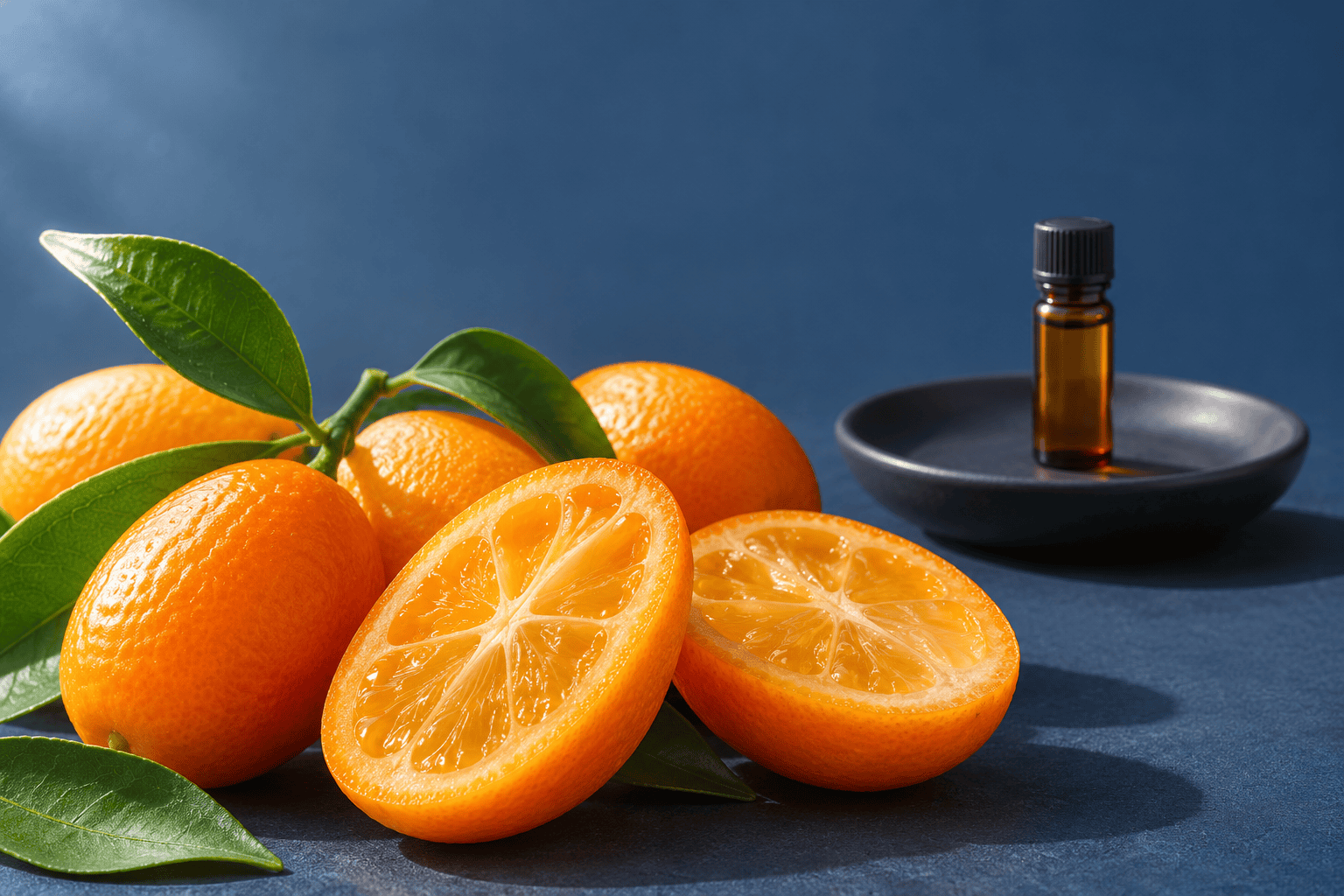
Make peel and pulp separate evaluation criteria
A single score for citrus brightness cannot tell you whether the sample has the character you requested. Give reviewers separate fields for the peel impression, the juicy impression and the finish. Use plain words such as aromatic peel, tart pulp or cooked sweetness. Ask for the intended relationship: for example, a distinct peel opening, tart pulp underneath and little lingering candy sweetness.
Use a comparison scent to test identity
Compare the kumquat direction with a familiar mandarin or orange reference selected by your team, using matched blotters and a shared procedure. Do not present the fruit labels at first. See whether reviewers independently note a different peel-to-pulp balance. If all samples are simply called sweet orange, changing intensity may make the difference louder without making it clearer. Ask the supplier to revise the balance instead.
Decide whether candy is a fault or the target
For a fresh concept, a confectionery finish can obscure the fresh-fruit effect. For a candied concept, set an upper boundary for sweetness and name what must survive it. A useful brief is ‘candied peel with citrus zest still clear after the opening,’ not just ‘more sugar.’ Do not confuse an imagined taste or ingredient with what the reviewers actually smell on the strip.
| Review point | Fresh whole-fruit direction | Candied peel direction |
|---|---|---|
| Opening | Aromatic peel before or beside juicy pulp | Rounded fruit with a recognizable zest edge |
| Later reading | Tart fruit remains distinct from sweetness | Sweetness supports rather than hides the peel |
| Reason to revise | Generic orange or cleaner-like sharpness | Sugary finish with no identifiable citrus |
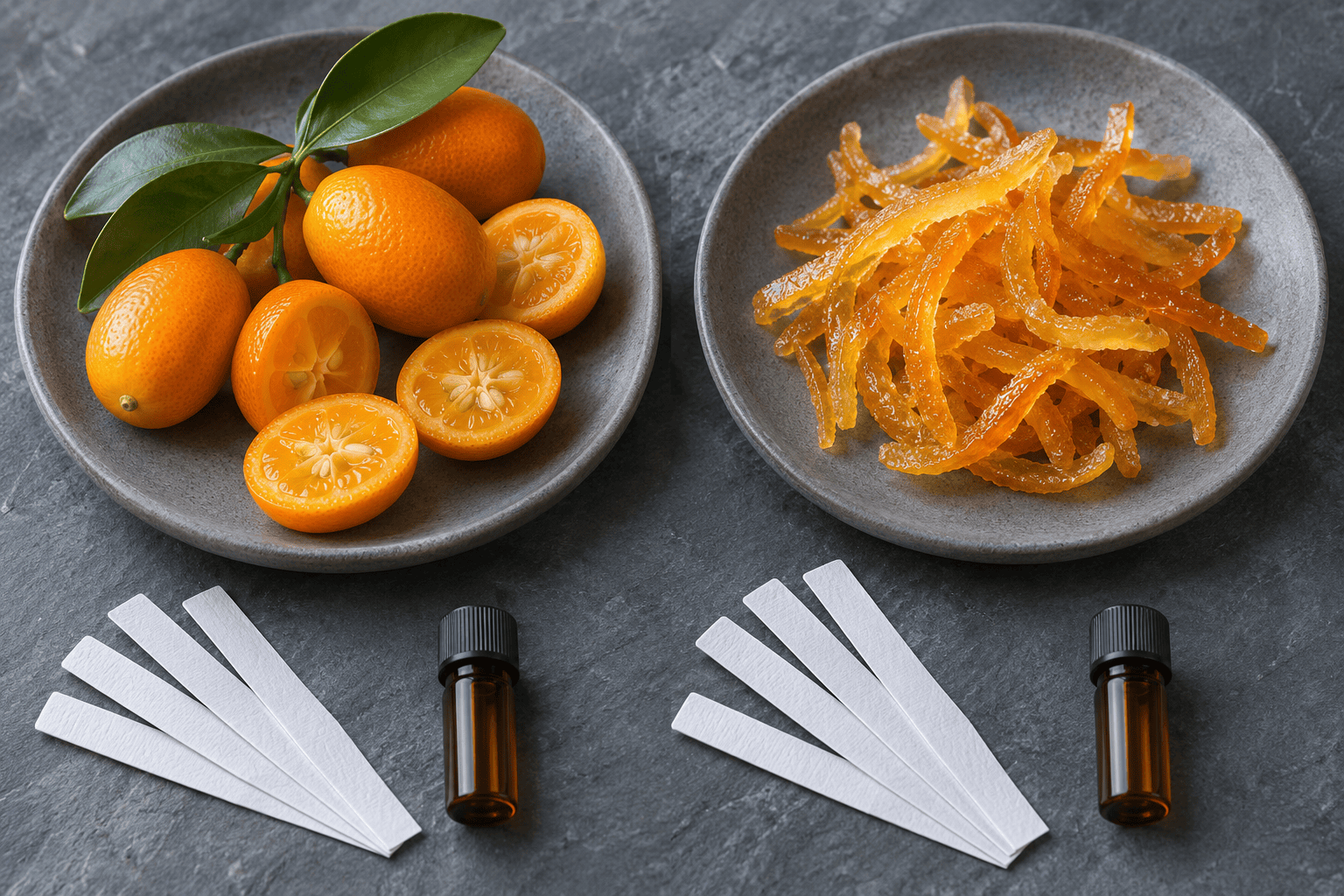
Check when the citrus character disappears
Ask for notes at the opening and at an agreed later review. One sample might be distinct at first but turn into generic sweetness. Another might open brightly, then settle into a clean peel note that better fits the application. Record the first point at which reviewers can no longer distinguish the sample from the comparison. Use that observation to define the revision, rather than relying on an overall ranking.
Move the finalists into the product base
Retain the sample codes, use a consistent base lot and compare with an unscented reference under your established procedure. Judge in the product format and at the point of use that matters to your customer. Record the peel, pulp and finish again; do not copy the blotter results into the finished-product record. A good olfactory result is not evidence of suitability or approval for an untested application.
Send back a brief that preserves what worked
Tell the supplier the sample version and which part to keep before explaining what to change. For example: ‘K3 has the right peel opening. Keep that; the mid-stage pulp needs more contrast, and the finish must stay less candy-like.’ Include your intended use and market, then approve a sample against those criteria. The scent name expresses the inspiration; it is not an ingredient or food-use declaration.
Frequently Asked Questions
Is a kumquat scent always sweeter than orange?
No. A compounded fragrance’s character depends on the brief. Compare the perceived peel, pulp and finish instead of assuming a ranking by fruit name.
How do I stop the candied profile smelling like any orange candy?
Agree where zest or peel must stay recognizable and use a familiar orange reference during the comparison.
What information belongs in the sample approval?
The sample code and version, application, check stage, acceptable peel-to-pulp balance and the unwanted note you want excluded.
Related Guides and Application Support
- Lime Fragrance Oil Scent Profile: Fresh Juice, Zest or Candy?
- Mandarin vs Orange Fragrance Oil: Choose a Distinct Citrus Identity
Contact SHEAIN. Share your end-use application, target market and scent brief to discuss fragrance oil concentrate samples.


