

A violet leaf vs violet flower fragrance comparison starts by removing one ambiguity from the brief: which part of the violet is the scent reference? A leaf-led direction can emphasize crisp green foliage. A flower-led direction can emphasize a soft petal impression, with powder if the concept calls for it. The two can be combined, but explain which should be recognized first and which should support it.
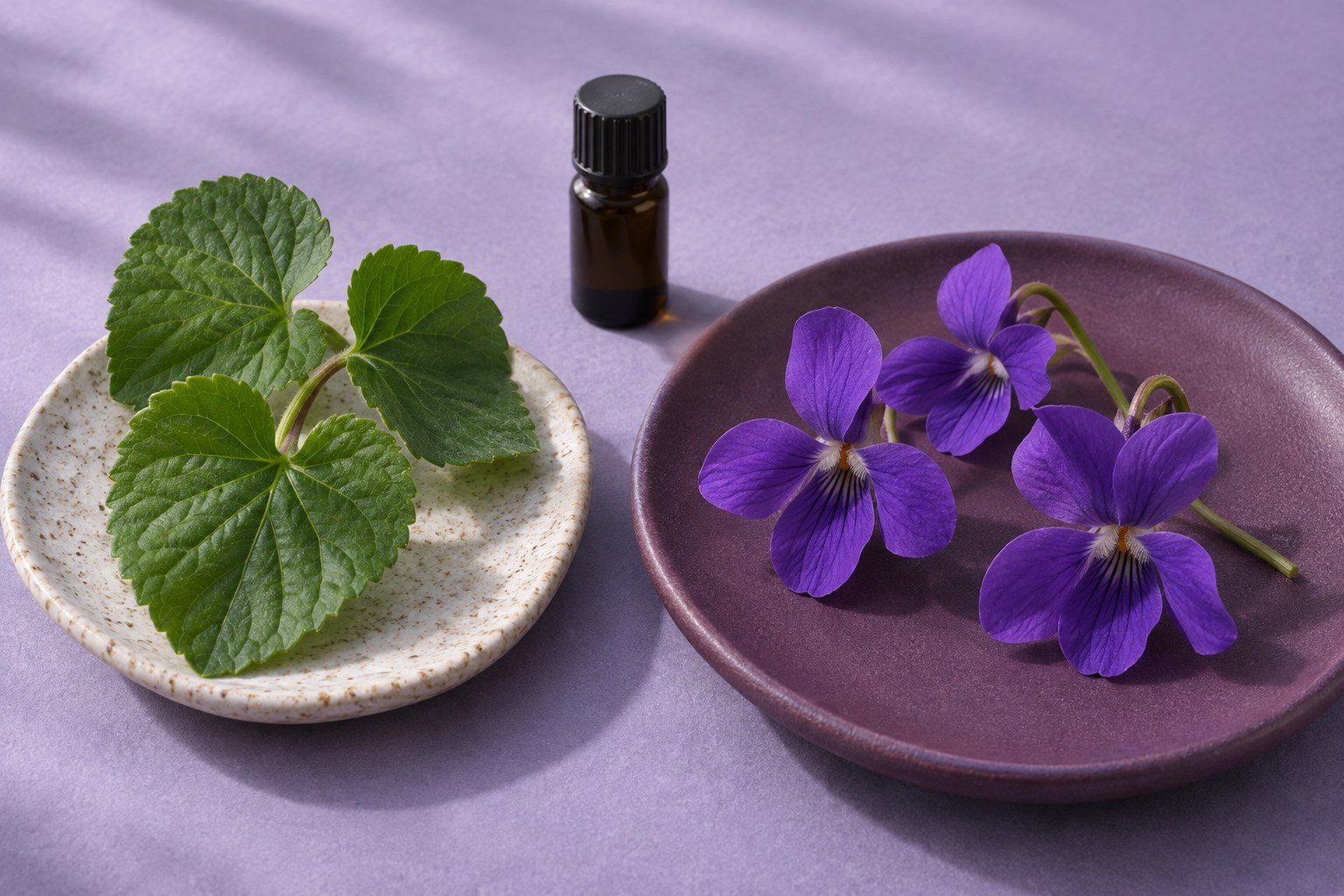
Specify what ‘leaf’ should and should not mean
A green brief is still too broad if the supplier cannot tell whether you want a cut-leaf edge, a moist green impression, or an herbal note. Give one green cue and one exclusion. For a leaf-led sample, you might ask for a bright, leafy opening and specify that it should not become strongly herbal. The leaf reference describes the character you want, not an ingredient requirement.
Define the floral direction separately from powder
A petal impression and a powdery impression are two distinct things to record. A powdery violet can fit one product; in another it may obscure the flower or read as cosmetic powder alone. If you want a soft flower with little powder, say so explicitly. If powder is welcome, decide whether it should support the first impression or become the main effect later.
Compare two directions and one intentional bridge
Set up a leaf-led sample and a petal-led sample, with a third only if a hybrid is useful. Code the blotters and collect independent impressions. Ask which of green leaf, flower or powder appears first, and whether each proposed support note can actually be recognized. For the hybrid, define the desired order. ‘Green first, then soft flower’ gives a supplier a clear direction; ‘a little of both’ does not.
| Direction | Desired impression | Revision cue |
|---|---|---|
| Leaf-led | A clear green foliage impression | Herbal sharpness hides the leaf character |
| Flower-led | Soft petals with controlled powder | Powder replaces the flower |
| Intentional hybrid | Distinct leaf and flower in the agreed sequence | Neither note is distinguishable at the relevant stage |
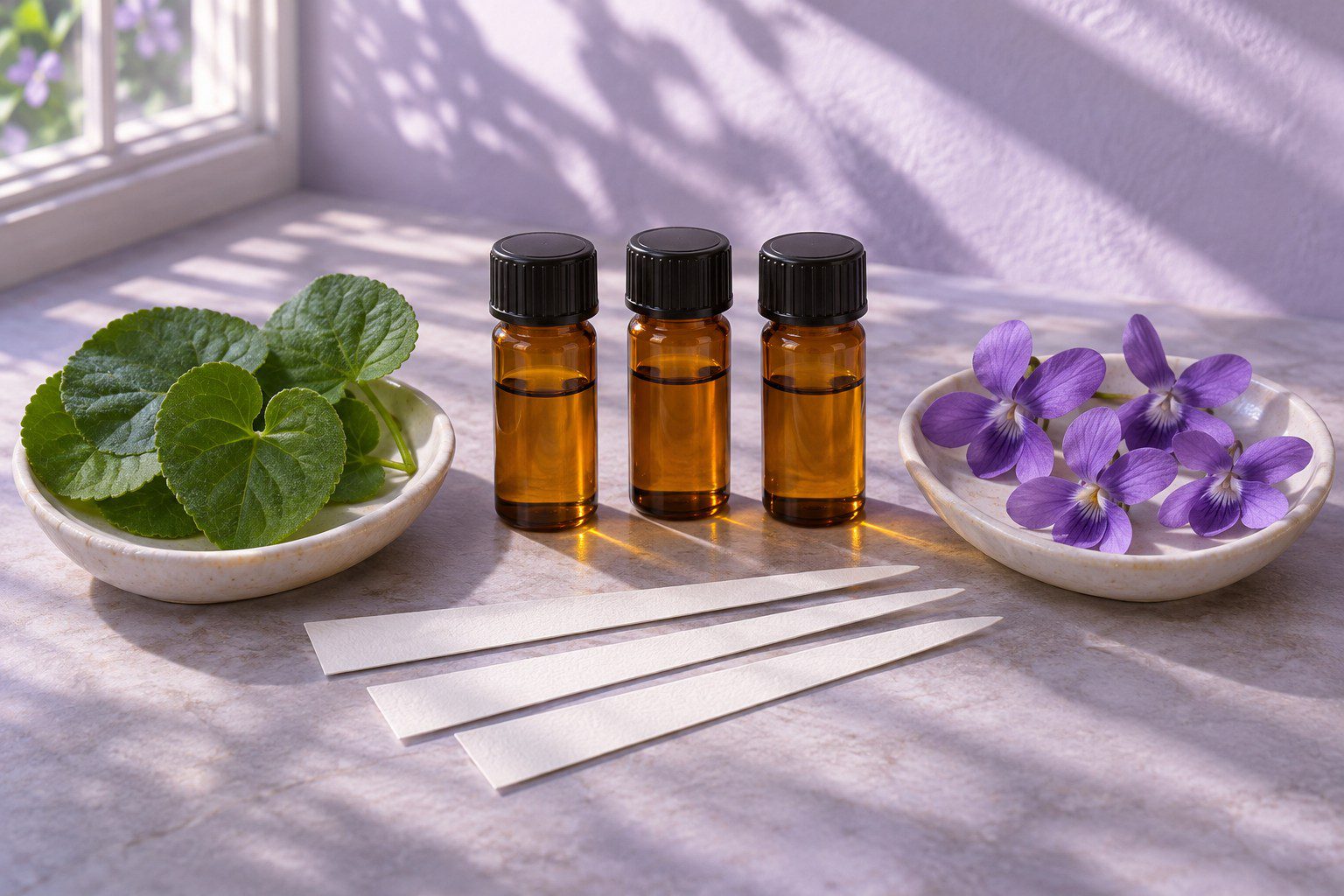
Capture the transition instead of an average
At agreed check points, record the leading note and the first point at which it changes. A sample can smell sharp and green at first, then settle to soft powder. Whether that transition fits depends on which stage the user experiences. If one reviewer says green and another says powder, check whether they evaluated at the same point before treating the two notes as disagreement.
Separate the product base from the fragrance impression
Compare candidates in the intended product against an unscented blank from the same base lot. Use the product team’s approved procedure and record the evaluation stage. If the blank already smells soapy or powdery, note that before interpreting the candidate. A matched evaluation reveals how the balance changes in that base; it cannot establish suitability for a different application.
Give approval to a version, not to the word ‘violet’
Document sample code, revision, target base and the point when the desired note must be recognized. For example: ‘V3: leaf stays distinct at the start; petals are soft later; powder never dominates.’ If the buyer asks for a material-specific composition, obtain the relevant documentation separately. A reference to violet leaf or violet flower does not establish what the concentrate contains.
Frequently Asked Questions
Is ‘violet’ enough detail for a sample request?
Usually not. Specify leaf, flower or a deliberate transition, then name which note must lead.
Does floral violet always have to be powdery?
No. Specify how much powder is expected and how clearly you need to recognize the petal note.
Can scent notes reveal whether the concentrate contains violet extract?
No. Note language describes perception. Ask for the applicable composition documentation if that distinction matters to your project.
Related Guides and Application Support
- Peony vs Magnolia Fragrance: Airy Petals or Rounded Floral Body?
- Mimosa Fragrance Oil Scent Profile: Balance Powder, Greenery and Flowers
Contact SHEAIN. Share your end-use application, target market and scent brief to discuss fragrance oil concentrate samples.


