

A teakwood vs mahogany fragrance comparison goes better when the team starts with the wood impression it needs, not a presumed definition of the two labels. One brief might use teakwood for dry, clean timber and mahogany for a rounded polished effect. Another supplier may use those labels differently. Agree on the contrast in plain language before comparing samples or sharing a product name.
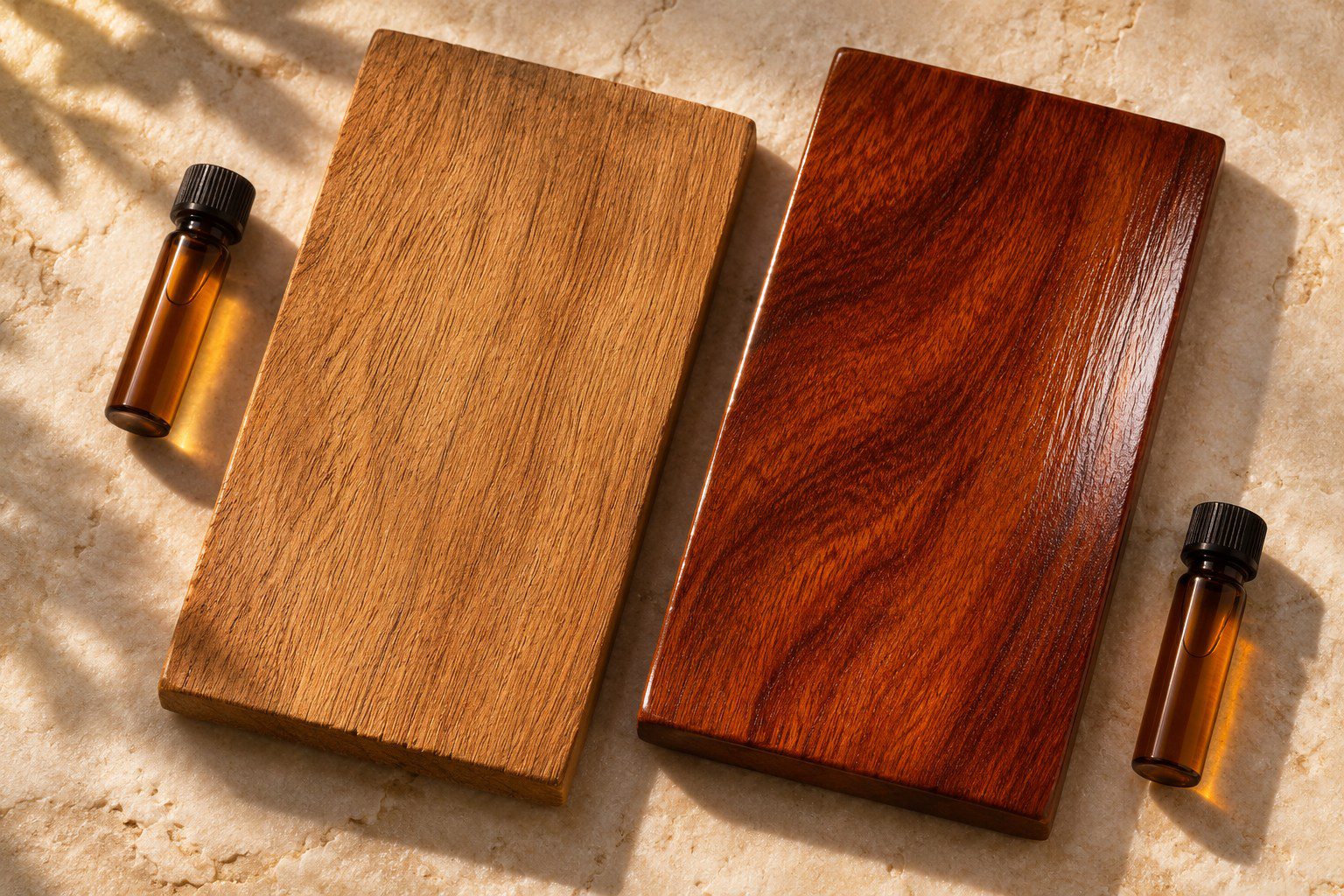
Replace wood labels with observable impressions
Ask each reviewer to describe dryness, polish and warmth separately. Dry may mean unfinished timber or a clean, less sweet impression. Polished may mean smooth and rounded rather than a literal varnish odor. Warm may refer to the supporting notes rather than the wood itself. Keep example words with the sample record so the supplier understands why two people used the same label differently.
Check for the association you do not want
If the intended effect is dry wood, decide whether sawdust, smoke or pencil-like sharpness is too prominent. If the goal is polished wood, specify whether a sweet amber background is acceptable or whether it would push the product into a darker, sweeter direction. A named exclusion is more useful than a request for a premium wood smell.
| Attribute | Possible dry-timber brief | Possible polished-wood brief |
|---|---|---|
| Surface impression | Unfinished, clean wood grain | Smooth, rounded wood |
| Warmth | Restrained and separate from dryness | Present, but does not hide the wood |
| Exclusion example | Smoke or sharp pencil-like edge | Varnish or overly sweet amber effect |
Use a blind forced distinction, then ask for descriptions
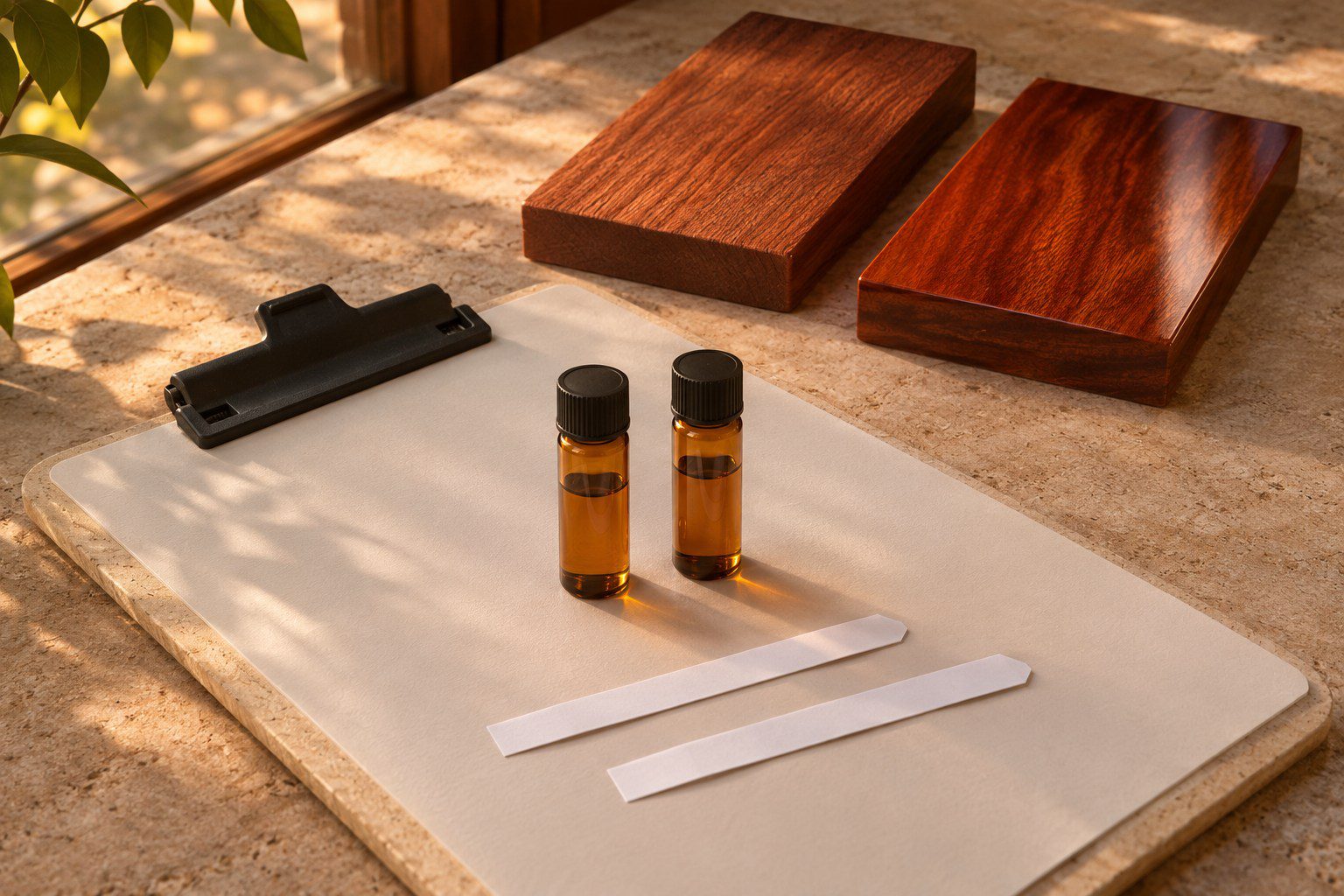
Evaluate samples under codes with the same type of blotter. Ask which feels drier and which feels more polished before telling reviewers which name went with which bottle. Record the words they use for the difference. If the labels appear easy to distinguish only after they are revealed, the contrast may not survive in the actual product. Request a revision to one attribute before repeating the comparison.
Decide which companion notes belong in the brief
Companion notes can help or blur the wood. A small green edge might sharpen the dry impression; sweetness might make a polished impression feel rounder. If the supplier sends back an amber-forward blend, ask what happened to the wood, not simply how to make it less sweet. Propose one leading descriptor and one supporting descriptor, with an agreed stage to check both.
Revisit the distinction in the product’s own base
Use a matched unscented reference and your approved preparation and review procedure. Check the same cues at the intended product’s relevant use stage. A scented candle team may judge before use and during a validated burn test; a room scent team may choose a different point. Do not compare one in a bottle and one in a finished product, or use an approval in one base to qualify another.
Approve what people agreed they smelled
Keep the reference, sample code, revision, base and acceptable cue in the approval. For instance: ‘M2: smooth polished wood after the opening, warmth in the background, no varnish-like edge.’ If two wood labels still describe the same experience in the finished product, consider using one fragrance instead of creating indistinguishable variations. A wood name does not prove the presence of a wood-derived ingredient.
Frequently Asked Questions
Is teakwood always drier than mahogany?
No. These are names for a fragrance direction. Verify the difference on samples rather than assuming a standard scent profile.
What if both names smell almost the same?
Compare coded samples in the same format and ask for a change in one attribute, such as dryness, to test the separation.
Can the wood name establish which natural materials are in the oil?
No. The name describes inspiration. Ask the supplier for documentation when composition is part of the specification.
Related Guides and Application Support
- Pine vs Fir Fragrance Oil: Compare Needles, Resin and Wood
- Fragrance Product Line Differentiation: Make Three New Scents Recognizably Different
Contact SHEAIN. Share your end-use application, target market and scent brief to discuss fragrance oil concentrate samples.


