

Black tea fragrance oil should be selected around the kind of tea impression you want, not merely the word tea. One sample may feel dry and leafy, another smoky and woody, and a third soft and fruit-sweetened. For a fragrance-oil buyer, the key question is which facet should lead and which should remain in the background. This guide focuses on black-tea directions rather than comparing white and green tea.
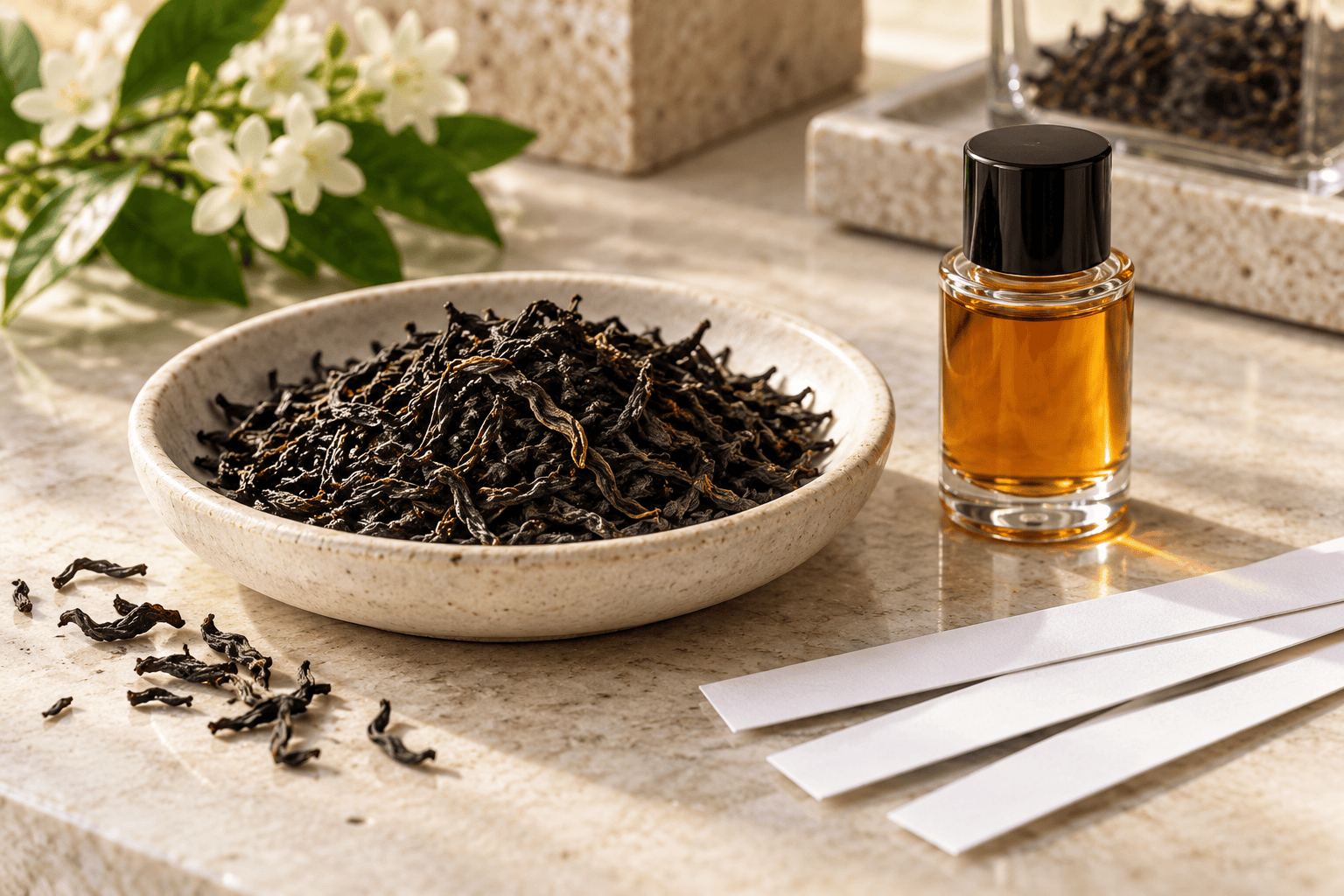
Choose a reference that makes the tea direction clear
A dry tea-leaf reference communicates something different from a sweet iced-tea image. Specify whether your concept calls for the impression of dry leaves, a dark infusion, a smoky tea or a fruit-accented blend. Describe smell only; fragrance concentrate is not a beverage or food flavor. Keep the reference usable by naming its most important traits rather than expecting the supplier to reproduce a personal memory. If the reference is a commercial fragrance, identify the sensory features you want without claiming ownership of its formula.
Use dry-leaf character as one possible anchor
A leafy, slightly austere interpretation can help a black-tea concept remain recognizable without excessive sugar. dsm-firmenich describes Tea Black SFE with dry-leaf, smoke and woody associations. dsm-firmenich: Tea Black SFE That ingredient example does not define every black-tea fragrance or imply SHEAIN uses the same material. Ask assessors whether the sample suggests tea itself or merely a general dry wood. Record the distinction before adding decorative fruit or floral language that may hide the missing central character.
Set a deliberate limit on smoke
Smoke can be an intended accent, an unwanted distraction or something assessors describe differently. Separate a subtle toasted-leaf effect from a dominant burning-wood association. Do not automatically call the smoky candidate more authentic or more premium. In a small sample panel, include one lighter-smoke and one more pronounced interpretation while keeping the intended tea identity clear. Ask where the smoke becomes noticeable and whether it continues to dominate after the opening. These are sensory observations, not tests for actual smoke or combustion.
Decide whether fruit is an accent or the headline
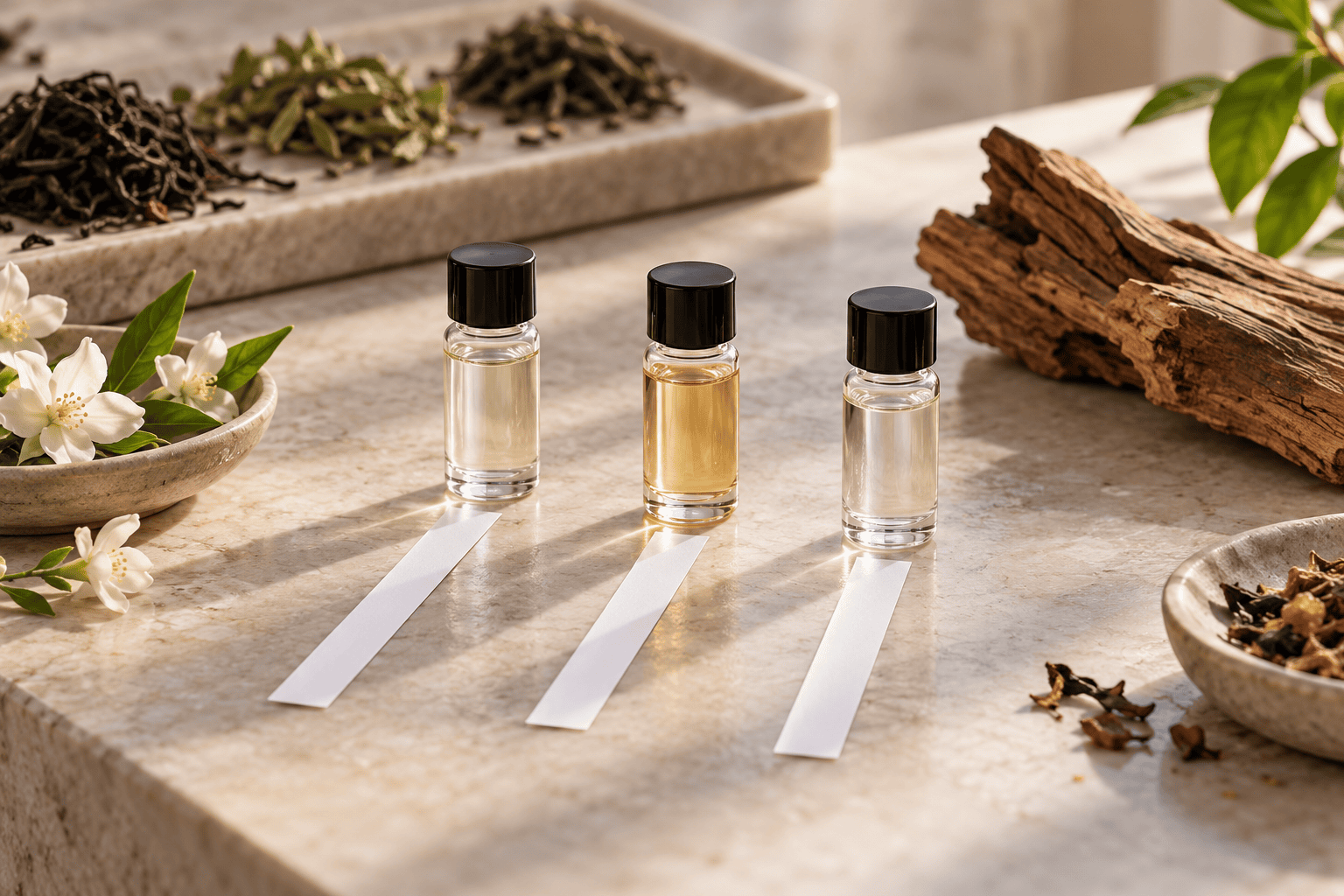
A fruit-sweetened tea concept can be valid, but it may overlap with an existing fruity product if tea becomes only a label. Compare the tea-to-fruit balance rather than simply rating pleasantness. Ask whether a person given no product name would still describe the sample as tea-inspired. If the answer is consistently no, request a stronger tea signature or reconsider the concept. Avoid using extra fragrance loading as the default response; increasing the entire blend may also amplify the fruit sweetness you wanted to restrain.
Compare the directions at the relevant product stage
Use your actual base and an appropriate, technically reviewed fragrance level. Control preparation, sample age and observation conditions so differences can be attributed more confidently to the candidate rather than the setup. For a rinse-off product, bottle odor alone is not enough; for air care, a blotter alone is not the finished delivery system. The table below is a suggested brief structure, not a validated testing protocol. Keep separate records for tea recognition, smoke dominance, sweetness and overall fit.
| Facet | Question to ask | Possible feedback |
|---|---|---|
| Dry leaves | Does it still read as tea? | Restore leaf identity without more smoke |
| Smoke | Accent or dominant burning association? | Reduce smoky dominance |
| Fruit | Supporting note or main impression? | Keep fruit behind the tea |
| Product use | Is the intended balance retained? | Revise for the relevant application stage |
Send a concise decision brief for the next round
An actionable request might be: preserve dry black-tea identity, lower burning-wood associations and keep fruit sweetness secondary. Attach the preferred sample code and explain which product stage needs improvement. Ask SHEAIN to confirm feasibility, suitable documentation and application limitations for the proposed concentrate. Do not describe a tea-named fragrance as a natural tea extract unless that specific claim is documented. Final approval should identify the accepted version and application, not just the broad scent family.
Frequently Asked Questions
Is black tea fragrance oil a tea extract?
Not necessarily. It can be a composed fragrance that evokes tea. Verify ingredient-origin claims separately from the scent description.
Does a black-tea fragrance have to be smoky?
No. Smoke is one possible facet, not a compulsory feature. Describe your preferred level and compare actual samples.
Can I use it to scent a drink?
No. A fragrance concentrate is not a food flavor. Only materials specifically supplied and assessed for the intended food use belong in a beverage.
Related Guides and Application Support
- White Tea vs Green Tea Fragrance Oil: Choosing a Tea Accord
- Fragrance Sensory Evaluation: How to Build a Reliable Sample-Scoring Process
Contact SHEAIN with your end-use application, target market and scent brief to discuss fragrance oil concentrate samples.


