

A fig fragrance oil scent profile may emphasize juicy fruit, green leaves, milky softness or the surrounding wood. Those directions can produce very different products even when every sample is labeled fig. Start by deciding whether your concept represents the fruit or the whole tree. Then specify how much green contrast and creamy texture you want around that central idea.
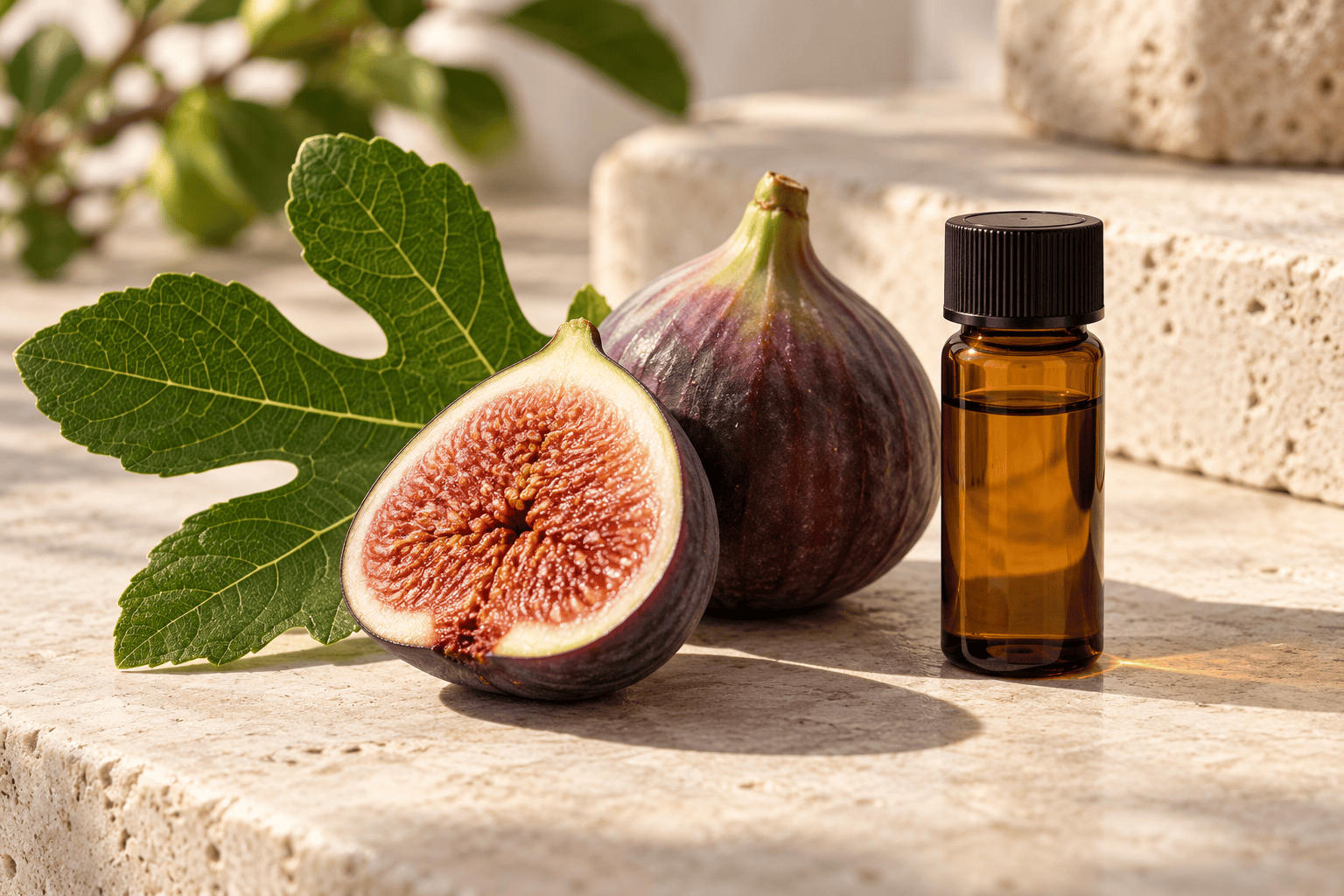
Choose fruit-led or tree-led before comparing samples
A fruit-led brief can prioritize ripeness and softness, while a tree-led concept may give more space to leaves and wood. Neither is automatically the correct interpretation. Diptyque’s Philosykos is one commercial example combining fig leaf, milky fruit and wood imagery. Diptyque: one fig fragrance interpretation It is an example of descriptive range, not a formula to copy or evidence of a SHEAIN equivalent. Use references to communicate the balance you prefer, and make clear whether fruit recognition or leafy atmosphere is the main purchasing objective.
Describe green character without confusing it with weakness
A green fig direction can feel sharp, leafy, fresh or sap-like to different assessors. Ask them to specify which of those words fits and whether the effect supports the intended concept. A less sweet sample is not necessarily weaker, and a very green opening can be quite noticeable. Record intensity separately from greenness. If the sample feels too raw, request a softer transition rather than immediately adding a sweet fruit association that changes the original positioning.
Decide what milky means for your brief
Milky is a sensory description here, not proof of dairy, coconut or any particular ingredient. It may communicate a rounded texture that connects green and fruity facets. Some teams welcome that softness; others perceive it as cosmetic or too creamy. Compare candidates with different levels of that effect and record whether fig identity becomes clearer or less clear. A sample can be smooth without being the right fig direction, so keep texture, identity and preference as separate fields in the evaluation record.
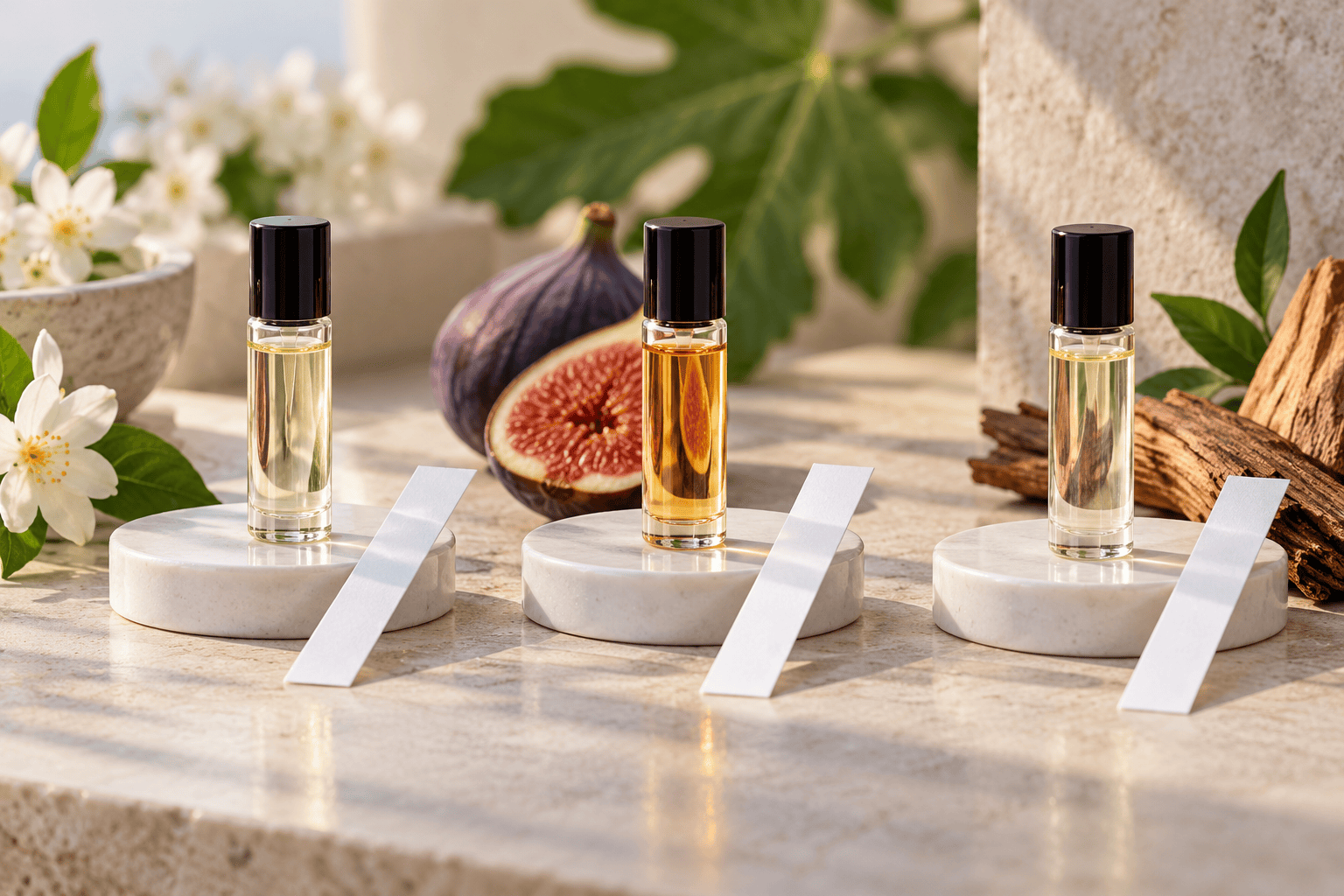
Keep ripe fruit from becoming generic sweetness
A ripe fig concept needs more than a broad sweet background. Ask whether the candidate still has a recognizable fig-like character after the first impression, or whether it becomes indistinguishable from your other fruity products. Do not use a photograph of cut fruit as proof of natural content or realism. If the fragrance drifts toward a jam-like association that is not wanted, identify that in feedback. The solution may involve changing the balance of facets rather than simply reducing the amount of fragrance in the product.
Test the chosen balance in its intended base
Prepare shortlisted candidates in the actual formulation at technically reviewed levels and compare the same stage of use. A leafy opening on a blotter may not be the feature customers notice in a finished cream or air-care format. Use an unfragranced control where useful, maintain consistent preparation and record sample age. The comparison table is a practical briefing aid, not a performance standard. Application compatibility and safety need separate approval even when the sensory panel strongly prefers one version.
| Dimension | Possible target | Risk to check |
|---|---|---|
| Fruit | Ripe but recognizable | Generic jam sweetness |
| Leaf | Fresh green contrast | Raw or overly sharp opening |
| Texture | Soft milky connection | Unwanted cosmetic heaviness |
| Wood | Quiet background structure | Fig identity disappearing |
Turn the sensory result into a controlled sample request
Tell SHEAIN which facet should lead, which should support it and which must be restrained. For example: a green-leaf fig with soft fruit, low jam-like sweetness and only a light creamy background. This is an illustrative direction, not a stock declaration. Include the product base, market, loading under consideration and reference sample code. Confirm the resulting concentrate’s documentation before production, and retain the accepted version so future batches are judged against an actual reference rather than memory.
Frequently Asked Questions
Does fig fragrance oil contain fig extract?
The name does not establish ingredient content. Request documentation if a natural-source statement is important to your product.
Why do two fig fragrances smell so different?
They may emphasize different parts of the concept: fruit, leaf, milky texture or wood. Compare the intended balance, not the name alone.
Is a milky fig fragrance necessarily sweet?
No. Creamy texture and perceived sweetness can be separate dimensions. Ask for samples that let your team compare both independently.
Related Guides and Application Support
- Custom Fragrance Development: From Creative Brief to Approved Formula
- Fragrance Sensory Evaluation: How to Build a Reliable Sample-Scoring Process
Contact SHEAIN with your end-use application, target market and scent brief to discuss fragrance oil concentrate samples.


