

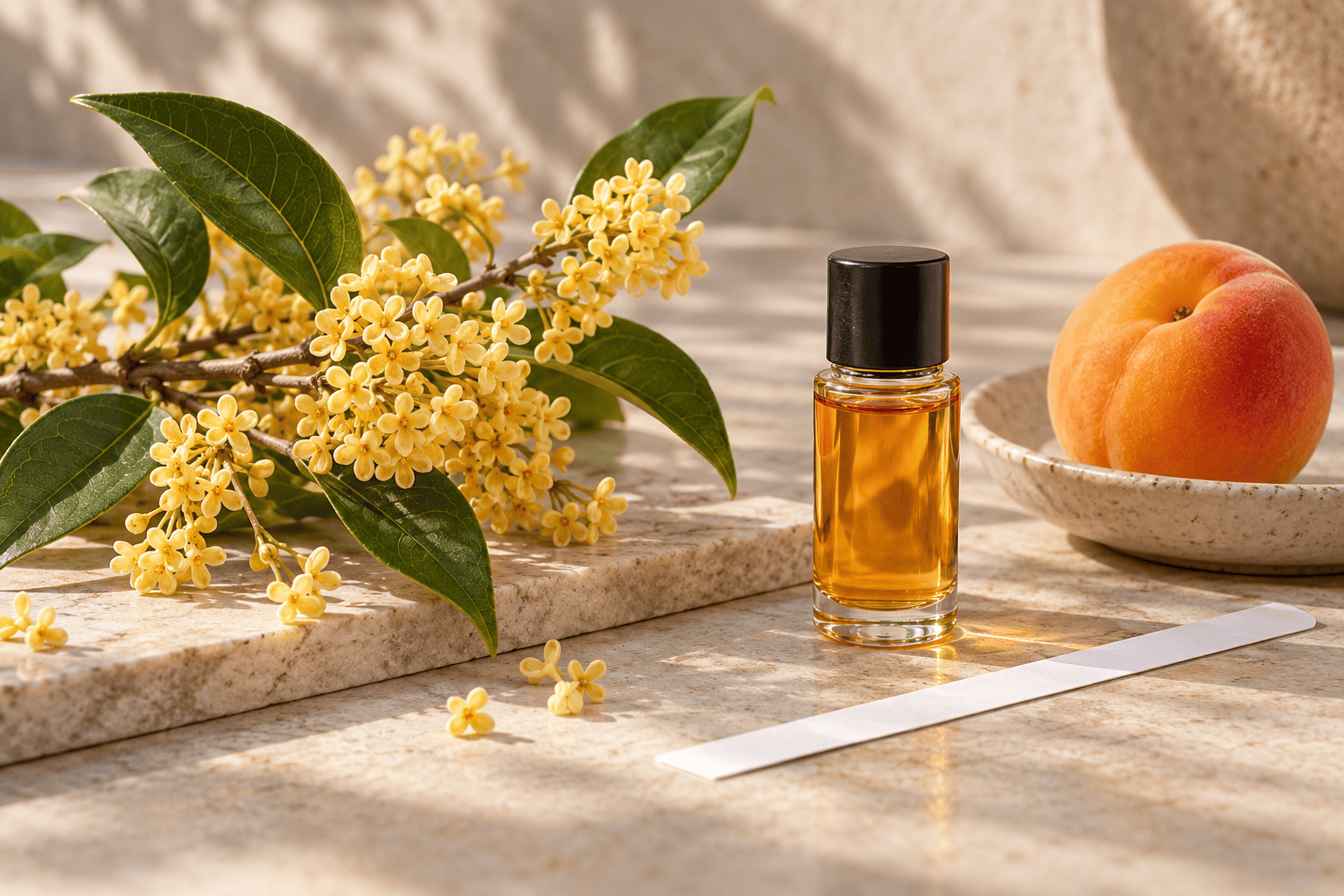
An osmanthus fragrance oil scent profile often sits between floral and fruity ideas, with tea-like or softly leathery accents possible in some interpretations. The purchasing task is to decide which impression should lead. A fruit-heavy sample and a delicate floral sample can both use the osmanthus name while serving quite different concepts. Define the balance before asking for a stronger or more natural-smelling version.
Build the brief around a recognizable floral-fruity identity
Start by asking what your team expects from osmanthus: a small-flower impression, an apricot-like softness or a tea-associated atmosphere. dsm-firmenich describes its osmanthus absolute with apricot, floral and leathery facets. dsm-firmenich: Osmanthus ABS This ingredient reference explains a vocabulary choice, not the composition of a SHEAIN fragrance. An osmanthus-named concentrate may be a composed blend, and the name alone does not establish natural absolute content. Keep ingredient requirements in a separate documented part of the project.
Keep the fruit facet distinct from generic sweetness
Apricot-like softness can support osmanthus recognition, but an overly sugary sample may read as general fruit candy. Ask assessors to record fruit identity and sweetness separately. If the preferred candidate feels too sweet, specify whether to reduce syrup, ripe-fruit density or dessert associations while preserving the floral center. A lower overall loading may reduce both wanted and unwanted effects. Request a profile revision when the balance is wrong, and a loading review only when the technical team considers it appropriate.
Use tea as a supporting context when that fits the concept
A tea accent is a creative direction, not a mandatory feature of every osmanthus fragrance. Decide whether it should contribute a dry background, a leafy contrast or a recognizable tea theme. Avoid approving a sample solely because the words osmanthus tea appear in its description. Compare it without the name visible and record what the team actually perceives. If the tea character dominates, you may be selecting a tea-led fragrance rather than the osmanthus-led product originally intended.
Decide how much depth belongs in the dry-down
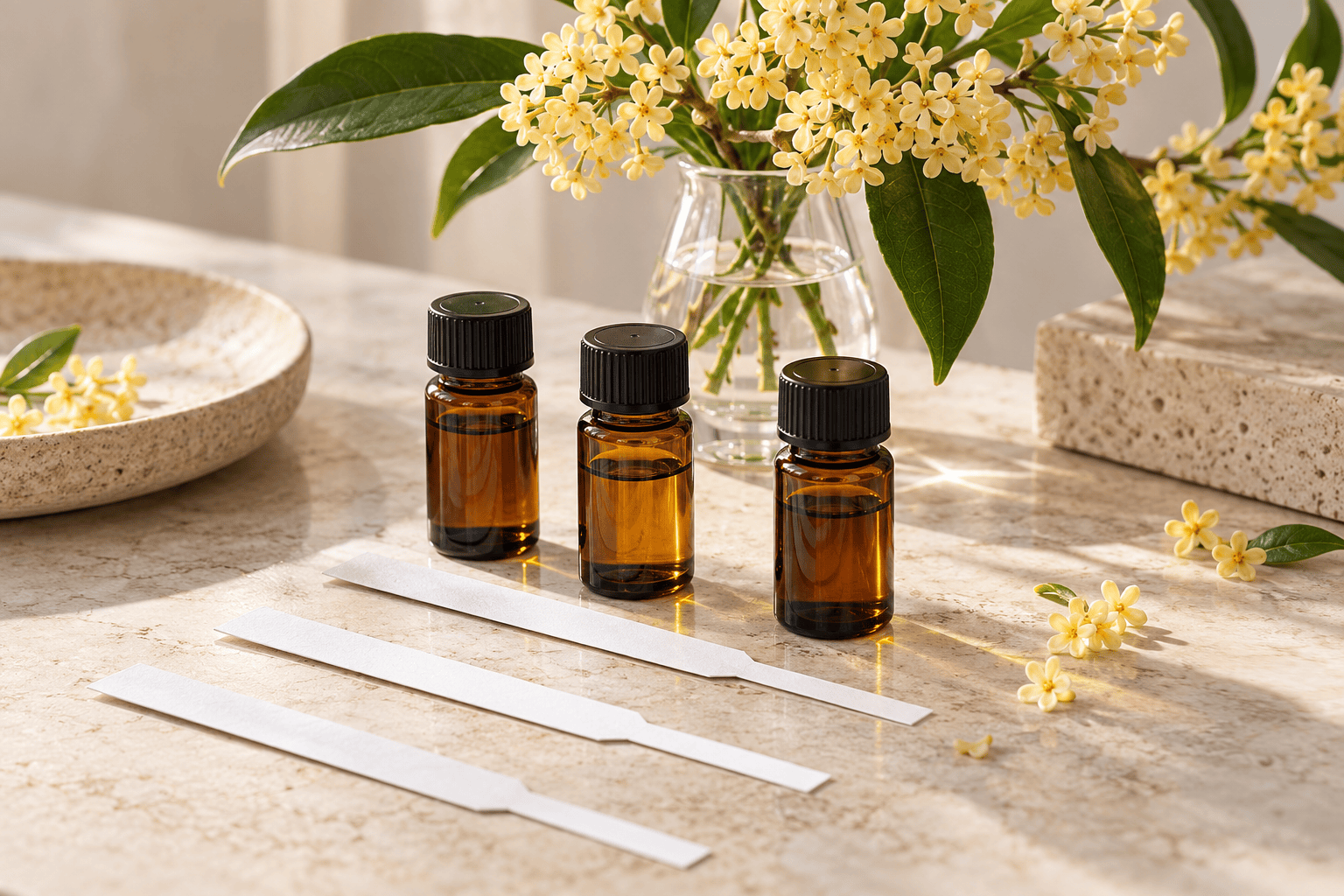
Some interpretations may feel softer, darker or more leathery as the brighter facets recede. Record whether this gives useful depth or conflicts with a light floral positioning. Do not assume that a darker impression proves natural origin or higher quality. Compare the opening and the later odor at consistent observation points using an appropriate evaluation method. Your objective is a coherent product experience, not an isolated first impression that changes into an unrelated fragrance by the time the customer notices it.
Compare samples in the relevant product base
Use an unfragranced control and a small number of candidates at technically reviewed levels. Record floral clarity, apricot-like character, tea presence and unwanted heaviness separately. A pleasant blotter profile is only a screening step; the finished formulation may change what becomes prominent. The table below offers an illustrative briefing structure, not a standard test or claimed result. Check physical compatibility, stability and required documentation independently so a sensory preference does not bypass the rest of product qualification.
| Facet | Selection question | Feedback example |
|---|---|---|
| Floral | Does it remain recognizable? | Keep the floral center |
| Fruit | Apricot softness or generic sweetness? | Reduce syrupy associations |
| Tea | Background or main theme? | Keep tea secondary |
| Dry-down | Useful depth or excessive heaviness? | Soften the darker background |
Request a targeted revision with clear limits
A concise request might be: retain the small-flower and soft apricot impression, keep sweetness moderate and add only a quiet tea-like background. State which version is the reference and what must remain unchanged. SHEAIN can discuss concentrate sample feasibility against your application brief; do not assume a named natural extract or particular formula is already stocked. Confirm the fragrance code, revision and documents for the selected use before moving from sample preference to purchasing approval.
Frequently Asked Questions
Must osmanthus fragrance contain natural osmanthus absolute?
No. A fragrance name describes an odor direction. Any natural-content requirement needs specific supplier confirmation.
Should osmanthus smell like tea?
Tea can be a supporting creative facet, but it is not a universal requirement. Select the balance that fits your product concept.
Why does my sample smell more fruity than floral?
The blend may emphasize its fruit facets, or your base may change their prominence. Compare the concentrate screening and application sample before requesting a targeted adjustment.
Related Guides and Application Support
- Custom Fragrance Development: From Creative Brief to Approved Formula
- Fragrance Sensory Evaluation: How to Build a Reliable Sample-Scoring Process
Contact SHEAIN with your end-use application, target market and scent brief to discuss fragrance oil concentrate samples.


