

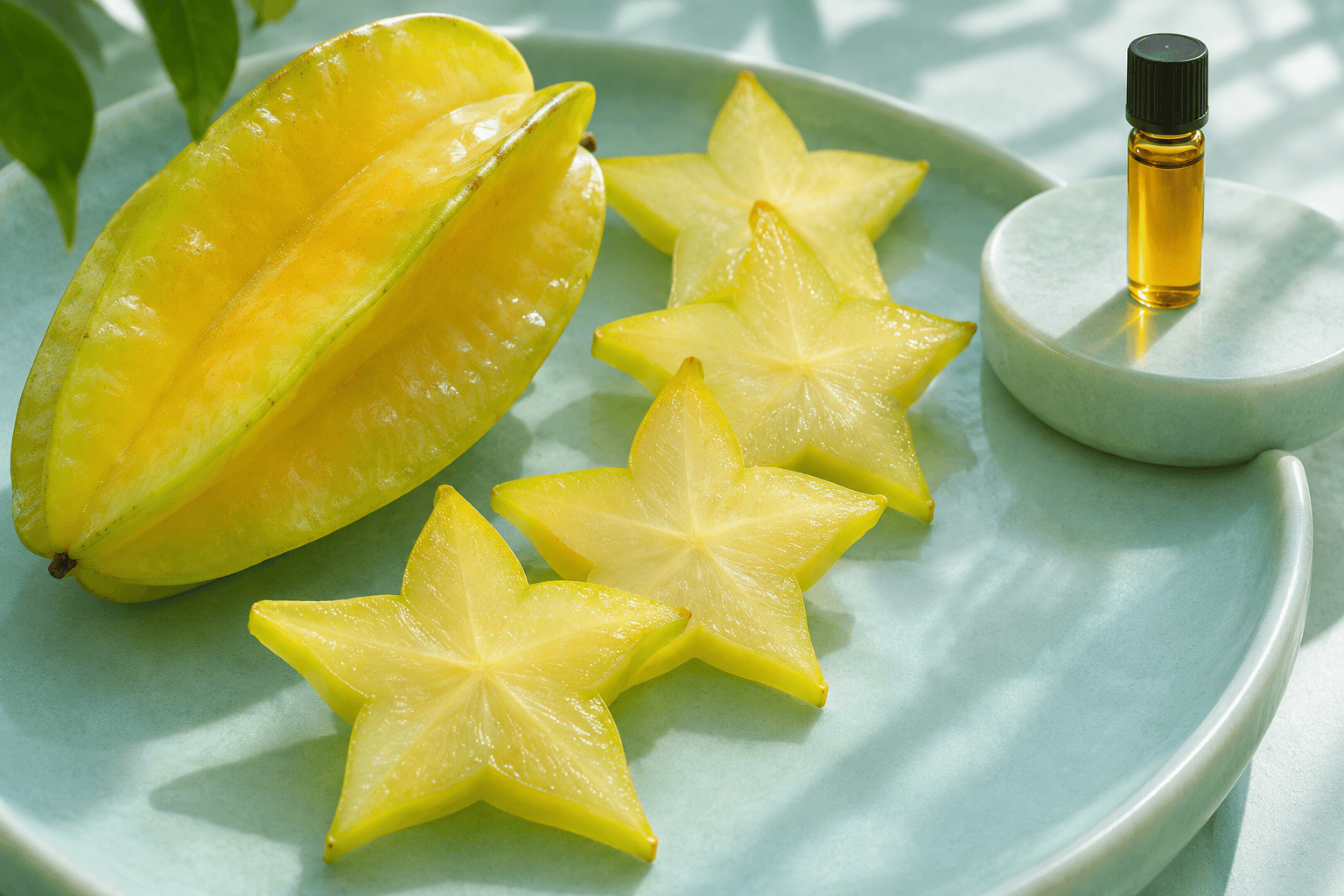
A starfruit fragrance accord can be easy to describe visually and hard to describe by smell. The star-shaped slice gives a useful reference, but it cannot tell a supplier how watery the fruit should feel, how noticeable the green skin should be, or whether the tartness belongs in the opening or later. Decide those three points before requesting samples, particularly if the product already has a fresh or citrus-like base odor.
Use three independent sensory cues
Define watery fruit as a light, juicy impression that still reads as fruit. Define green skin as a thin, crisp edge, not a leafy accord. Define tartness as a bright accent and specify where it should be noticeable. Write these as separate fields. A sample can succeed on watery freshness and fail because the fruit turns into a generic aquatic note; one overall freshness score cannot explain that tradeoff.
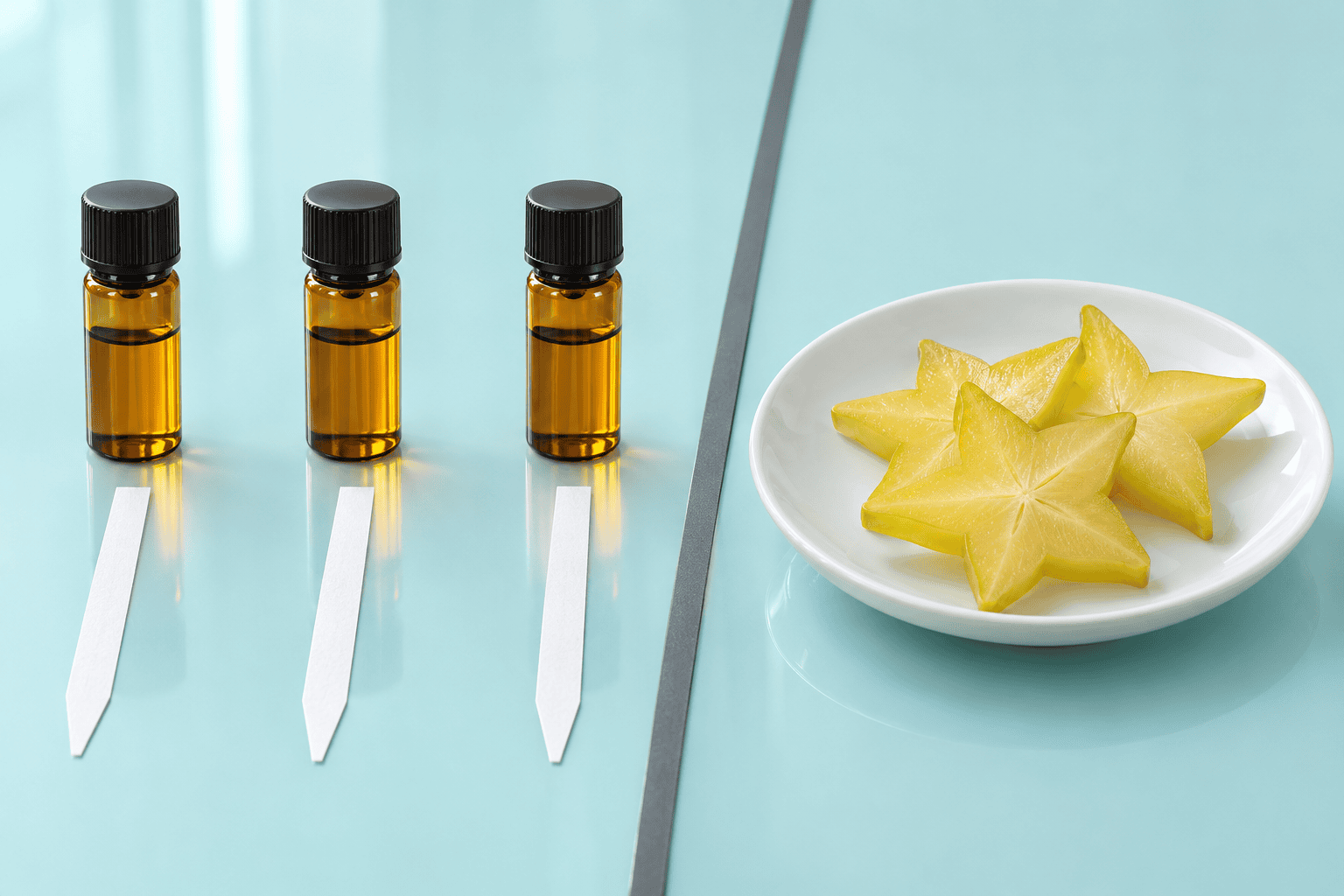
Request three samples with one difference to judge
Ask the supplier to keep the same starfruit direction while varying the dominant cue. One route can lead with watery flesh, a second with a greener edge, and a third with a brighter tart opening. Agree what should stay comparable: the intended use, approximate perceived strength and degree of sweetness. This helps you decide which direction fits before asking for further changes.
| Route | What to look for | When to revise |
|---|---|---|
| Watery fruit | Juicy, light flesh that still reads as fruit | Freshness without any recognizable fruit |
| Green skin | A crisp edge that supports the flesh | Leaves or cleaner-like sharpness dominate |
| Tart opening | Brightness with a distinct fruit underneath | The sample mainly reads as citrus |
Check for adjacent impressions without naming the target
Code the samples, use matched blotters, and collect independent notes before revealing the identities. Ask whether the reviewer perceives light fruit, watery freshness with no fruit, a leafy green effect, or a citrus-led profile. Ask the same question after the opening settles. If the fruit is only recognized after people see the name, use the note breakdown to revise the sample rather than calling it approved.
Allow subtle fruit without making it hard to find
Delicacy and weak delivery are not the same decision. A buyer may want a light impression that is still distinct from the unscented base under agreed use conditions. Record both whether the fruit was detectable and how intense it seemed. If the product has a fresh or citrus odor on its own, compare a blank from the same base lot before deciding that the fragrance needs more of the bright top note.
Choose the moment that matters to the application
The useful check point could be first use, the air just after application, or another stage defined by the product team. Use the same preparation and review procedure for all shortlisted samples in the intended base. At that point, note the main impression and what happened to the three cues. If replacing the base or application, reassess instead of applying the previous decision unchanged.
Send a brief with an exclusion and a review time
Give the supplier a sample identifier, intended application and target market. A useful revision reads: ‘S2 has the right light fruit. Keep it recognizable after opening; reduce the leafy edge, and do not increase the lemon-like note.’ A reliable approval records the sample version and conditions. The name starfruit describes an inspiration, not an ingredient, edible use or a performance claim.
Frequently Asked Questions
Does starfruit fragrance have to be strongly tart?
No. Tartness can be a brief accent. Decide whether the project needs watery fruit, green skin or a brighter opening to lead.
How do I separate watery fruit from a generic aquatic scent?
Ask reviewers to note whether they smell fruit as well as fresh air or water, before telling them the sample name.
What should be approved at the end?
Approve a sample version in the specified base and relevant use stage, with required cues and exclusions documented.
Related Guides and Application Support
- Watermelon vs Cucumber Fragrance Oil: Juicy Fruit or Green Freshness?
- Fragrance Bottle Headspace vs Blotter: Why the Buying Questions Differ
Contact SHEAIN. Share your end-use application, target market and scent brief to discuss fragrance oil concentrate samples.


