

Fragrance oil vs perfume oil is not a dependable concentrate-versus-finished-product distinction. Suppliers and retailers can use these names differently. One perfume oil may be a ready-to-use personal fragrance in a carrier; another may be a concentrate for further formulation. Before ordering, confirm the supplied form, intended application and any required dilution in writing.
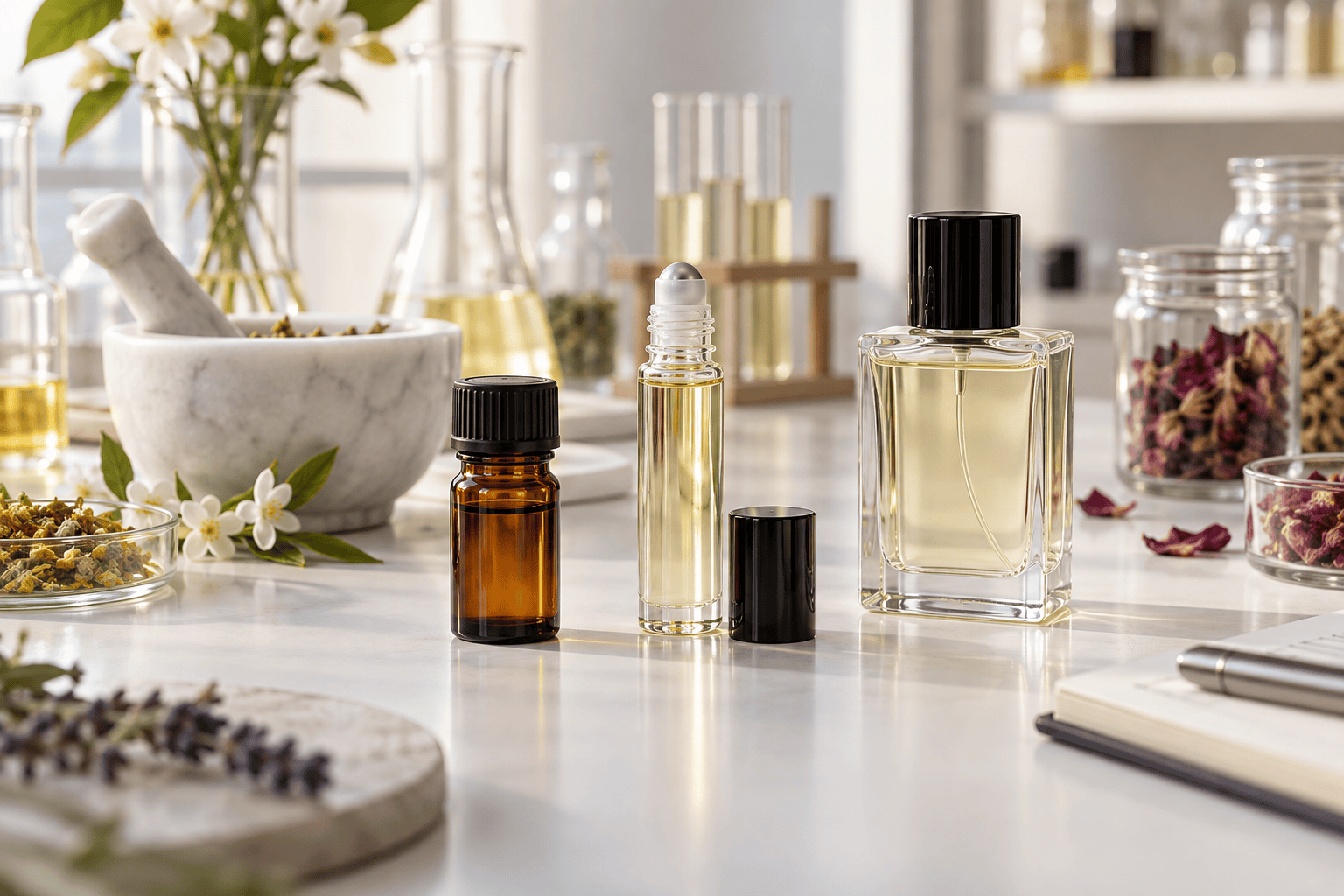
Ask for the supplied form before comparing prices
The first question is not which name sounds more premium. Ask whether the sample is a fragrance concentrate, a premix or a finished consumer product. Request the carrier information needed for your formulation and confirm whether the supplier expects additional processing. Comparing a kilogram of concentrate with a kilogram of a diluted finished perfume on price alone can produce a misleading purchasing decision.
Use a short identity check at the quotation stage
Record the product code, supplied form, intended use, carrier where relevant, and whether the quoted quantity is net mass or volume. Ask which product documentation accompanies that exact code. If a supplier says ready to use, ask ready for what: application to skin, incorporation into a cosmetic base, or filling into a particular home-fragrance system? Those are materially different instructions and should not be left to interpretation.
| Question | Why it matters |
|---|---|
| Concentrate, premix or finished product? | Establishes what work remains before use. |
| Which intended application? | Prevents transfer of instructions between product types. |
| Which carrier or supplied form? | Supports formulation and handling decisions. |
| Which documentation and product code? | Connects approval to the actual supplied material. |
| Price per mass or volume? | Allows like-for-like quotation comparison. |
Do not infer skin suitability from the perfume label
A concentrate must not be applied directly to skin simply because its name includes perfume. Use only a properly formulated finished product suitable for that use. IFRA explains that a supplier’s Certificate of Conformity concerns a fragrance mixture for a specified intended use and does not replace a finished-product safety assessment. IFRA: Standards and the scope of a Certificate of Conformity Verify the actual application rather than treating the presence of a document as universal permission.

Keep the carrier discussion separate from the scent discussion
A carrier can affect how a material fits into a formula and how the finished product is handled. Ask for the relevant technical information rather than assuming an oil-named product is alcohol-free, water-free or compatible with your base. A matching scent description does not make two supplied materials interchangeable. When evaluating replacements, keep both the sensory reference and the supplied-form specification available.
Compare cost on a clearly stated basis
Record price per net kilogram of the supplied material and the validated use level in your intended formula. If a comparison depends on active fragrance content, request a defensible basis from the suppliers rather than estimating it from smell. A cheap premix may or may not be economical for your process. Include relevant processing, packaging and performance requirements, but avoid treating an untested hypothetical dilution as a proven cost advantage.
State SHEAIN’s role correctly in your purchase request
SHEAIN’s website describes fragrance oil concentrate supply for brands and finished-product manufacturers. Ask for a concentrate matched to your application, not a ready-to-retail perfume unless that service has been separately confirmed. Include your base, target scent, destination market and expected quantity. The most useful outcome is a clearly identified material with a documented intended use, not an argument about which commercial term is correct.
Frequently Asked Questions
Can perfume oil be used directly on skin?
Only if it is a finished product explicitly intended and assessed for that use. Do not apply an unidentified concentrate.
Does fragrance oil mean essential oil?
No. Confirm composition and product type; the names are not interchangeable.
Does oil in the name guarantee an alcohol-free product?
No. Obtain the actual specification rather than relying on the commercial name.
Related Guides and Application Support
Contact SHEAIN with your end-use application, target market and scent brief to discuss fragrance oil concentrate samples.


