

A hinoki fragrance oil scent profile can be briefed as a dry wood impression, a green forest atmosphere or a softer woody composition. These are different creative directions. Decide which should lead before judging whether a sample feels authentic. A fragrance inspired by hinoki is not automatically hinoki essential oil, and its name does not establish a particular botanical ingredient.
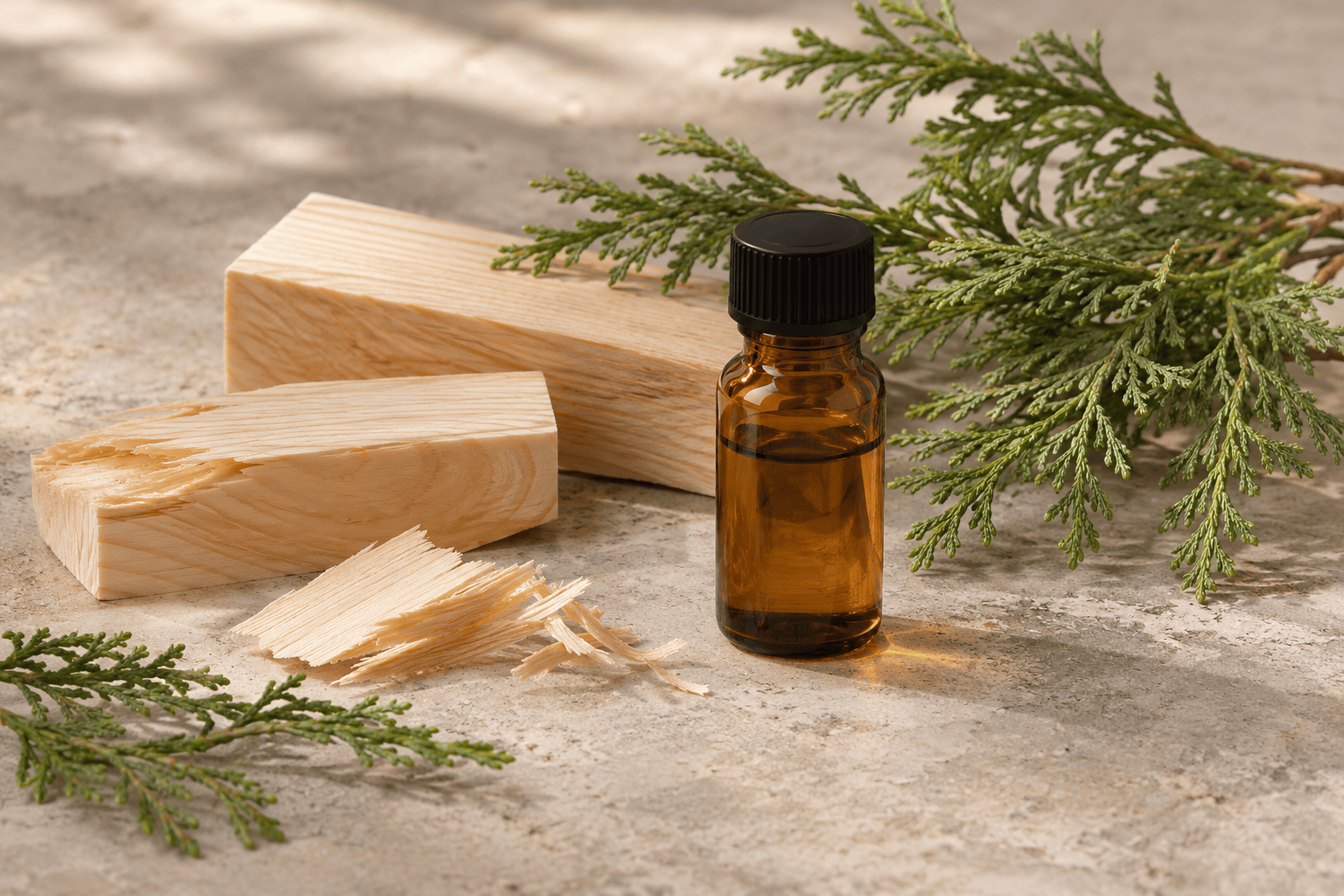
Define the scene without pretending it is a formula
A useful starting point is the scene the product should suggest: clean wood grain, surrounding greenery or a warmer interior wood impression. Le Labo describes its hinoki concept through a Japanese forest inspiration. Source: Le Labo: hinoki forest inspiration That is one brand’s creative reference, not the definition of all hinoki fragrances or a recipe to reproduce. State which part of the scene matters to your project rather than asking a supplier to match a vague feeling of luxury.
Separate dry wood from smoky wood
Dry can mean restrained sweetness, a papery texture or the association of newly cut wood. Smoky is a different request. If the candidate feels too dark, ask whether smoke, resinous weight or background sweetness caused the response. Do not reduce every woody facet when only one is unwanted. Keep a written description of the preferred wood character so a revision can preserve the central hinoki-inspired identity.
Decide how much green forest belongs around the wood
A greener interpretation may suggest foliage rather than wood itself. Compare whether that context strengthens the concept or moves it toward a general conifer fragrance. Evaluate the sample without its descriptive label and note the main impression. If the project is intended to feel quiet and wood-led, say how prominent the foliage should be. Avoid turning green into an unsupported claim of natural composition or environmental benefit.
Check whether softness obscures the main theme
A softer background may make the sample feel rounded, but it can also make several woody products in a range smell similar. Compare the proposed hinoki with the nearest existing wood reference. Ask what remains distinctive after the initial opening. This is not the same task as choosing between sandalwood and cedarwood; keep the article and the sample brief focused on the balance of wood, forest context and supporting warmth within a hinoki-inspired concept.
Evaluate the application rather than promising a mood benefit
Use the intended base and documented, technically reviewed test conditions. Record identity, intensity and product fit separately. Avoid presenting a preferred forest association as evidence that the product reduces stress, improves sleep or has another therapeutic effect. The comparison table is a briefing tool, not experimental evidence. Physical compatibility and finished-product review remain necessary even when the team agrees strongly on the sensory direction.
| Dimension | Selection question | Revision direction |
|---|---|---|
| Wood | Dry grain or dark wood? | Preserve the preferred wood character |
| Forest | Supporting foliage or main theme? | Adjust green prominence |
| Background | Rounded or overly sweet? | Reduce the specific unwanted facet |
| Range | Distinct from existing woody products? | Retain a clear hinoki-inspired identity |
Approve a specific concentrate, not a scenic description
A useful request might be: retain pale dry wood, keep foliage secondary and reduce smoky or sugary background effects. Include the reference code, application, market and important use stage. Ask SHEAIN to confirm sample feasibility and the required documentation. Keep any botanical-content requirement separate from the scent brief and supported by documents. The approved sample and revision record should remain the purchasing reference when later batches are evaluated.
Frequently Asked Questions
Is hinoki fragrance oil hinoki essential oil?
Not by definition. Ask about the supplied product’s composition and documented origin rather than inferring them from its name.
Does hinoki fragrance have to be smoky?
No. Smoke is a possible creative accent, not a compulsory feature. Specify whether it belongs in the brief.
Can a forest fragrance be marketed as therapeutic?
A scent association alone does not substantiate a health benefit. Such claims require appropriate evidence and review.
Related Guides and Application Support
- Sandalwood vs Cedarwood Fragrance Oil: Creamy or Dry Woods?
- Fragrance Sensory Evaluation: How to Build a Reliable Sample-Scoring Process
Contact SHEAIN. Share your end-use application, target market and scent brief to discuss fragrance oil concentrate samples.


