

A tamarind fragrance accord works best as a brief when the buyer names the contrast they want: tart, dark fruit pulp with enough sweetness to round it out. Asking for a ‘tropical’ scent leaves room for a bright mixed-fruit blend or a syrupy perfume that no longer reads as tamarind. Choose where the tartness should appear, what needs to stay identifiable, and what would make you reject the sample.
Start with a sensory reference, not a recipe
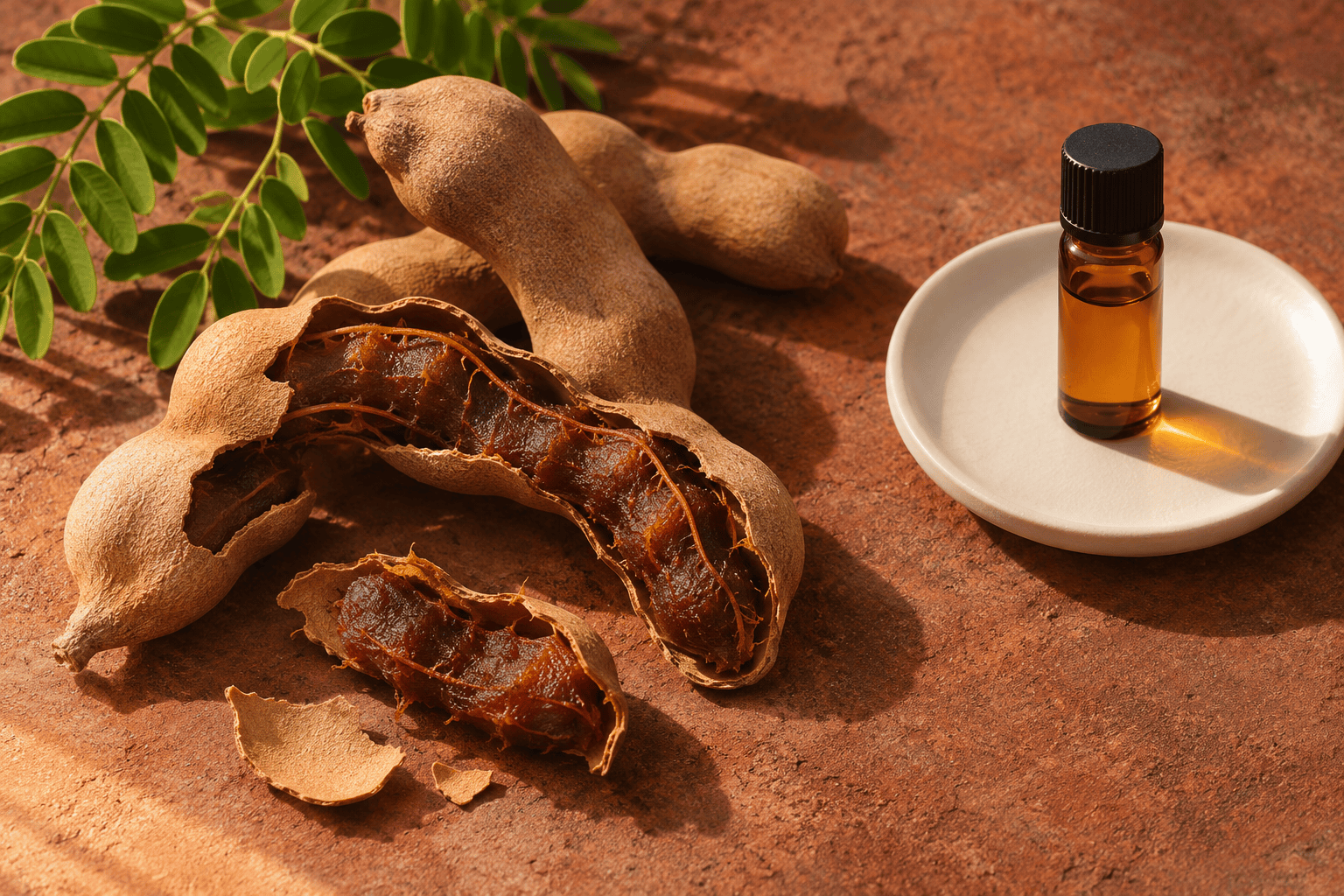
Tell the supplier which impression prompted the brief. A freshly opened pod, lightly sweetened pulp and a tamarind confection point to different scent profiles. Describe the one you want in terms of tartness, sweetness and depth. An aroma brief describes a target perception. A picture or food reference does not tell you which materials the finished concentrate contains, nor does it mean the concentrate is edible.
Ask for three routes that answer different questions
Request a tart-pulp lead, a balanced pulp-and-sweetness route and, if relevant, a warmer sweet route. For the tart option, establish how much lift is too much before it starts reading as lemon. For the warm option, decide how much dark sweetness can be present before the fruit becomes indistinct. The middle route should have its own target, not simply be an average of the other two.
| Sample direction | Cue to preserve | Reason to revise |
|---|---|---|
| Tart pulp | Acidic fruit lift with a dark pulp impression | Opening reads primarily as lemon |
| Balanced fruit | Tartness and sweetness support recognizable pulp | Fruit becomes generic after the opening |
| Warm and sweet | Rounded, dark fruit remains recognizable | Candy or cooked sugar dominates |
Keep the fruit identity separate from liking
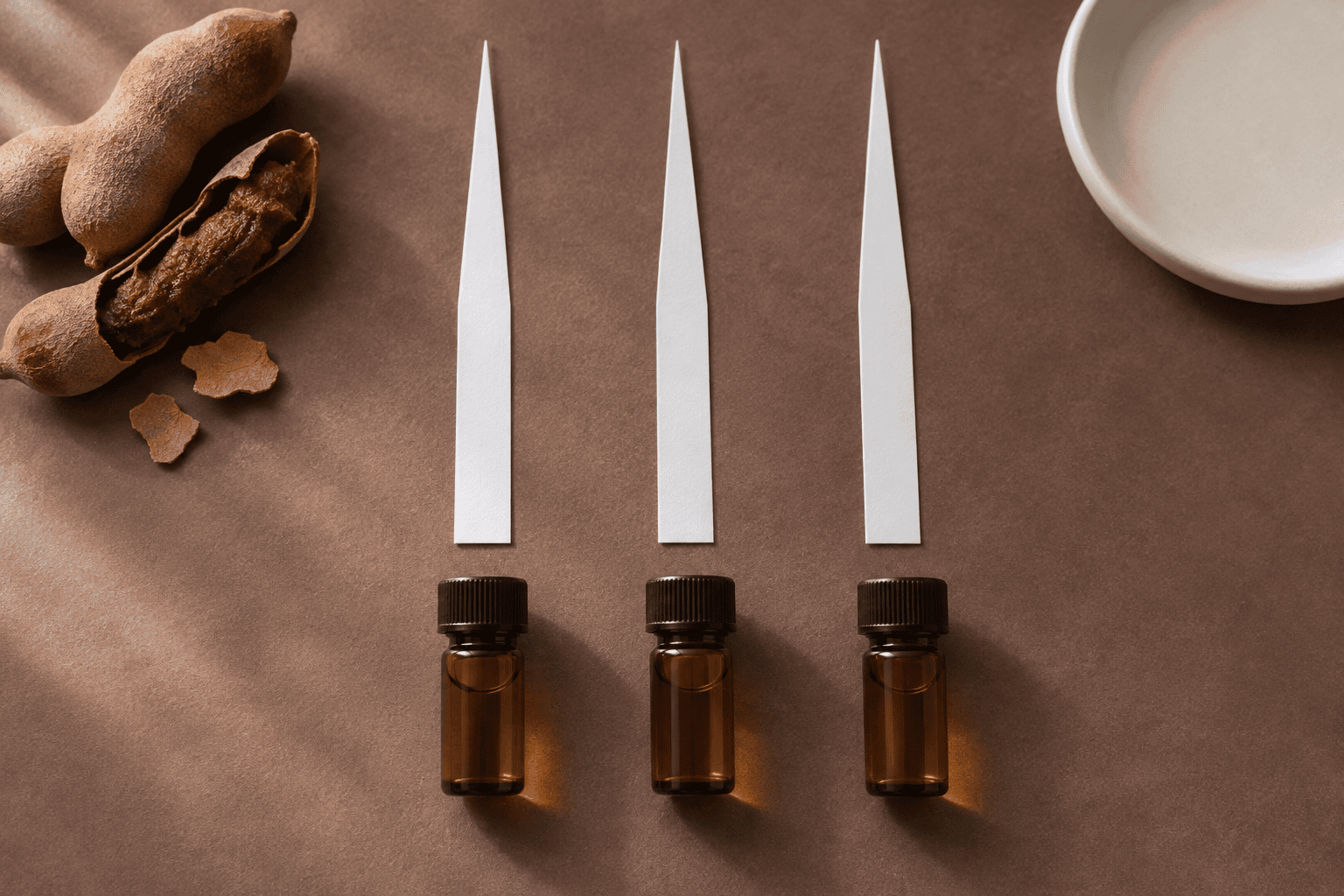
Use blind codes and matched blotters. Have evaluators write down the type of fruit they perceive before sharing the target or their preferences. A warm sample can win on liking while losing on the intended tamarind character. Record opening and later observations separately. If tartness arrives at first sniff but only generic sweetness remains, revise the fruit body before asking for more overall intensity.
Check what the product base contributes
Compare the shortlisted routes against an unfragranced base using your established test procedure. Keep the base and process constant so differences aren’t confused with a change in preparation. If your base already has a sweet or sharp odor, record that observation before you judge the fragranced samples. For a second application, repeat the comparison under that application’s own evaluation and use requirements.
Turn an unexpected note into a clear revision
A comment such as ‘not enough tamarind’ leaves too many possible changes. Try ‘T2 has enough tartness at the opening; once it settles the pulp disappears behind caramel. Keep the opening and reduce the cooked-sugar impression.’ If reviewers disagree, note who perceived the difference and when instead of compressing every observation into a single score.
Send an acceptance brief the supplier can act on
Include intended application, target market, product base and the exact sample code when available. Give one desired fruit cue and one undesirable cue, plus the stage at which each should be judged. For example: recognizably tart pulp after the opening, no lemon-cleaner impression, modest sweetness. Approve a sample version in the intended format, not a fruit name for every product in the range.
Frequently Asked Questions
Does tamarind need to smell like a confection?
No. Specify whether the aim is unsweetened pulp, a balanced fruit profile or a sweeter interpretation.
Does the scent name establish ingredient content?
No. An accord name describes an impression. Ask the supplier for the documentation relevant to your formula and intended use.
What is the most useful first comparison?
Compare coded samples with matched preparation, then carry the two strongest candidates and an unscented reference into the real base.
Related Guides and Application Support
- Guava Fragrance Oil Scent Profile: Fresh Flesh or Sweet Tropical Fruit?
- Gourmand vs Fruity Fragrance: Why Not Every Sweet Scent Is the Same
Contact SHEAIN. Share your end-use application, target market and scent brief to discuss fragrance oil concentrate samples.


